Why the Right Scratcher Matters for Your Cat
Cats scratch to maintain claw health, mark territory, and stretch. A well-chosen cat scratcher gives your cat a safe outlet for this natural behaviour and can save your furniture. The best choice depends on your cat's scratching style, the space you have, and how much effort you want to put into replacement.
This guide walks you through the key decisions so you can pick a scratcher that your cat will actually use.
Material: Cardboard vs Other Options
Cardboard cat scratchers are lightweight, affordable, and easy to replace. They appeal to cats that like to shred and leave visible marks. Many cats are drawn to the texture and the sound of corrugated cardboard.
Other common materials include sisal rope, carpet, and wood. Sisal is durable and stands up to heavy use, but it costs more. Carpet-covered scratchers can confuse some cats into scratching household carpet. Wood scratchers are sturdy but heavy and harder to replace.
Catnip: An Extra Attractant
Many scratchers include catnip to encourage your cat to investigate. The Catkins Catnip Card Cat Scratcher, for example, is a compact cardboard scratcher that comes complete with catnip for extra 'claw attention'. The catnip acts as a natural lure, making the scratcher more appealing, especially for cats that are slow to adopt a new scratching spot.
If your cat does not respond to catnip, a plain scratcher works just as well. You can also add loose catnip to any scratcher later.
What the Catkins Catnip Card Cat Scratcher Offers
-
Catkins Catnip Card Cat Scratcher: Catkins Catnip Card Cat Scratcher is a compact, corrugated cardboard scratcher with catnip included. Its small size fits in tight spaces, and the built-in catnip helps attract your cat without needing extra products.
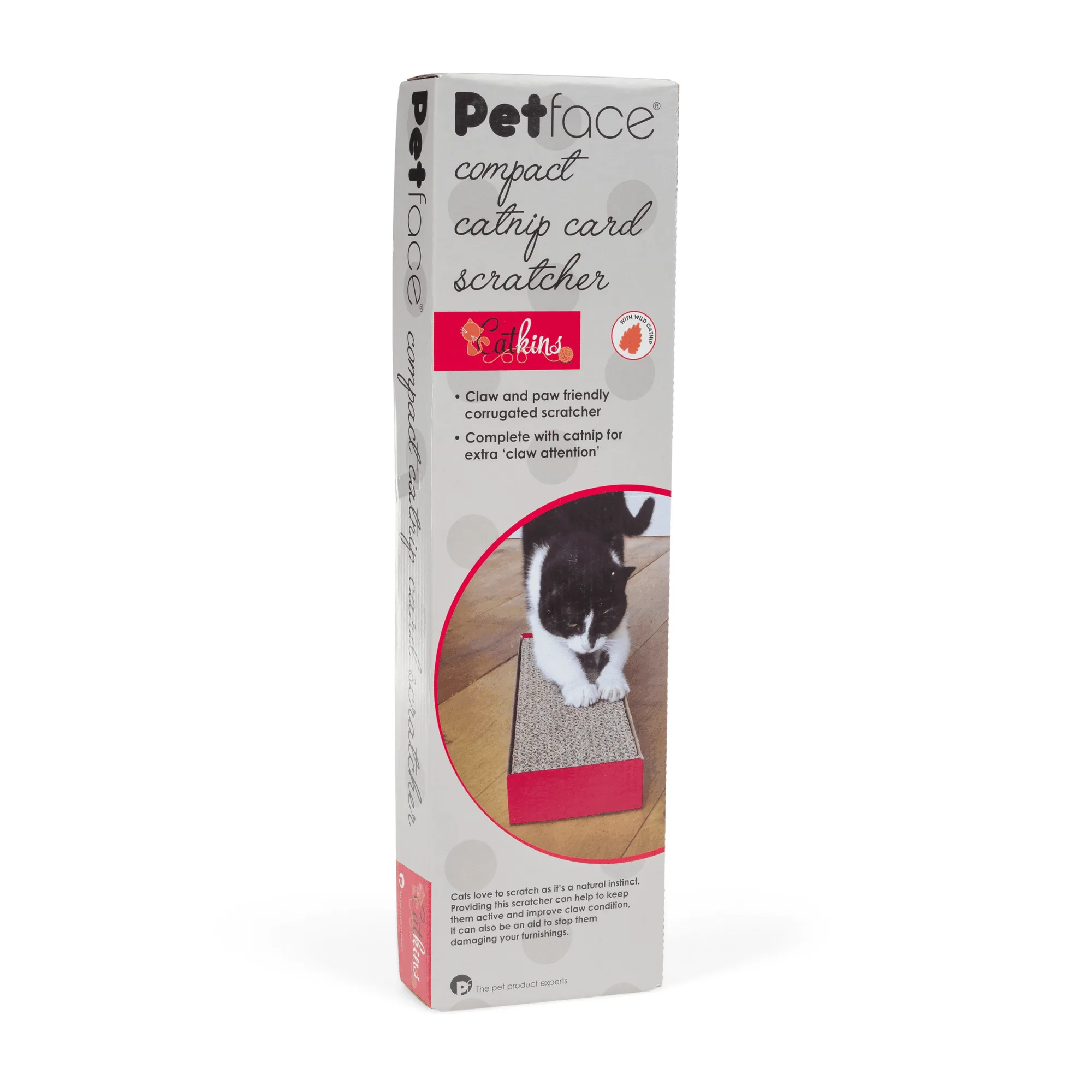
Catkins Catnip Card Cat Scratcher
-
Catkins Catnip Card Cat Scratcher: This toy is not indestructible and will eventually become susceptible to claw damage. Cardboard scratchers wear out with use. Plan to replace them periodically, especially if your cat scratches vigorously.
-
Catkins Catnip Card Cat Scratcher: Examine regularly for wear and replace if any damage could represent a health hazard. Regular checks let you spot loose pieces or sharp edges before they become a problem, keeping your cat safe.
Size and Placement
A compact cardboard scratcher works well for small spaces, such as a corner of a room or a cat tree shelf. Larger cats or those that like to stretch fully while scratching may prefer a longer horizontal pad or a tall vertical post.
Place the scratcher near where your cat already scratches, or near a favourite resting spot. You can also try rubbing a little catnip on it to encourage first use.
Maintenance and Replacement
Cardboard scratchers are disposable by design. Check the scratcher regularly for worn areas, loose cardboard fibres, or any sharp edges. The Catkins Catnip Card Cat Scratcher's supplied information states that the material will deteriorate with use and that you should replace it if damage could represent a health hazard.
If you prefer a longer-lasting option, a sisal or wood scratcher may be a better fit, though it will cost more upfront.
What the Supplied Information Does Not Settle
The product record does not specify exact dimensions, weight limits, or the percentage of catnip included. It also does not confirm whether the scratcher is suitable for kittens or senior cats with brittle claws. For these details, check the packaging or contact the manufacturer directly.