Quick Answer
For daily commutes, choose a compact travel umbrella that fits your bag, stands up to wind, and lasts through frequent use—prioritize closed length and windproof construction over weight alone.
Why Size and Fit Matter More Than Weight
When you carry an umbrella every day, the closed length is the first spec to check. A model that collapses to about 10–12 inches slips into a backpack or tote without awkward bulging, while longer models may not fit smaller bags or briefcases. Weight matters, but only after you confirm the umbrella fits your daily carry—an ultra-light umbrella that doesn't fit your bag is useless.
Also consider the canopy diameter when open. A wider canopy keeps your shoulders and bag drier, but it usually means a longer or heavier closed umbrella. For solo commutes, a canopy around 38–42 inches is a practical balance. If you often walk with a partner or child, you might trade portability for a larger canopy.
Windproofing: The Trade-Off Between Flexibility and Strength
Windproof travel umbrellas use flexible frames that bend without breaking. This design absorbs gusts, so the umbrella can invert in strong wind but snap back into shape. The trade-off is that these frames can feel less rigid than cheaper fixed frames, and they may cost more. However, for daily commutes in unpredictable weather, the flexibility is worth it—a rigid frame is more likely to snap under pressure.
Look for materials like fiberglass or reinforced aluminum in the ribs and shaft. These are more durable than basic steel, which can rust or bend permanently. If you live in a particularly windy city, prioritize a windproof model even if it means a slightly heavier or bulkier umbrella.
Durability: What to Check Before You Buy
A compact umbrella for daily use takes a beating: in and out of bags, up against doors, and occasionally left in a car. Check the canopy fabric—ripstop nylon or polyester with a water-repellent coating dries quickly and resists tears. The frame joints and the opening mechanism should feel sturdy when you test them; a flimsy button can fail after a few months.
Consider the warranty or return policy. A limited-edition umbrella might be a keepsake, but if you need a workhorse, a model with a repair or replacement policy is a safer bet. Remember that no umbrella is truly indestructible; even the best will eventually wear out with heavy use.
Decision Rules for Choosing Your Commute Umbrella
- Measure your bag first: Before browsing, measure the main compartment of your daily bag. Choose an umbrella with a closed length at least 1–2 inches shorter than that space, so it fits without forcing. Write down your bag's dimensions and keep them handy when comparing models.
- Prioritize windproof construction if you face gusts: If your commute involves open streets or bridges, choose a model with a flexible frame and fiberglass or reinforced aluminum ribs. Expect to pay a bit more for this protection. Check product descriptions for 'windproof' or 'flexible frame' and avoid rigid steel frames in windy areas.
- Balance canopy width with portability: For solo use, a canopy around 38–42 inches is a good compromise. If you often walk with others, consider a larger canopy, but be ready for a longer closed length and more weight. Decide your typical use (solo vs. shared) before comparing canopy sizes.
Product Spotlight
-
Fireworks Travel Umbrella: The Fireworks Travel Umbrella is a limited-edition design created exclusively by Mary Engelbreit in partnership with the White House Historical Association, featuring a festive fireworks-inspired design commemorating America's 250th birthday. If you want a compact umbrella that doubles as a collectible keepsake, this model offers a unique design while serving your daily commute needs.
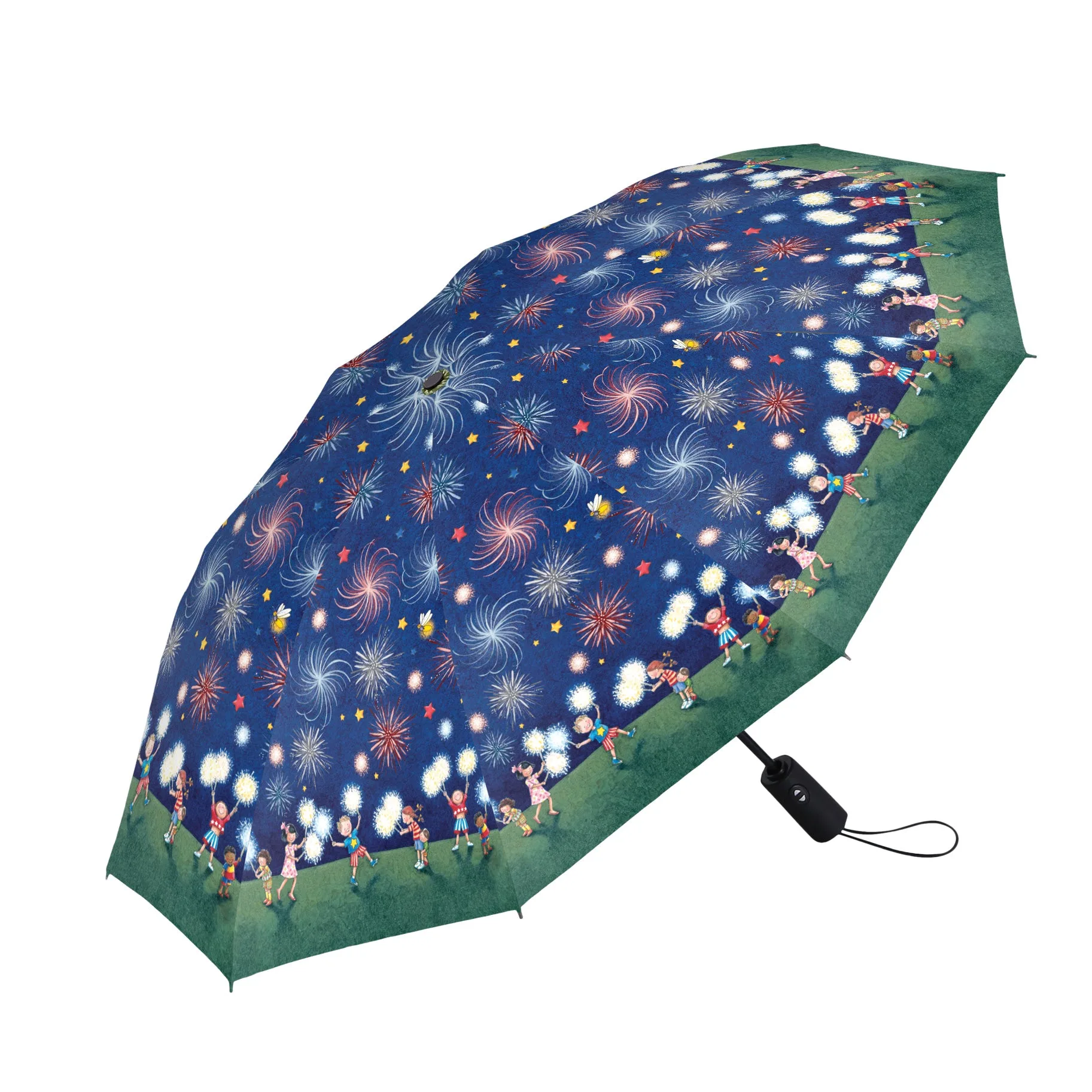
Fireworks Travel Umbrella
Who Should Choose What
Best for
- Daily commuters who need a compact umbrella that fits in a bag and handles moderate wind
- Collectors or fans of limited-edition designs who want a functional keepsake
Not for
- Those who need maximum wind protection in hurricane-level storms—consider a full-size, heavy-duty umbrella
- Minimalists who prioritize ultra-light weight over durability and wind resistance