Quick Answer
For most kids, a simple tabletop telescope like the Celestron FirstScope is the best first choice because it's easy to set up and use. If you want a more traditional kit with extra accessories and a lower price, the Australian Geographic 60mm Discover Telescope Kit is a solid alternative.
Why Simplicity Matters More Than Power
When choosing a first telescope for kids, the most important factor is ease of use. A complicated mount or a high magnification can frustrate a young child and turn them off astronomy. Look for a telescope that is quick to set up, simple to aim, and sturdy enough to handle a bit of rough handling.
Tabletop vs. Tripod: Which Is Better?
Tabletop telescopes like the Celestron FirstScope are compact and can be placed on any flat surface, making them very stable and easy for kids to use. Tripod telescopes, like the Australian Geographic 60mm Discover Telescope Kit, are more traditional and can be adjusted to different heights, but they can be wobbly if not set up properly. Consider your child's age and patience level when deciding which style suits them best.
What to Look for in a Kid-Friendly Telescope
A good first telescope should have a decent aperture (at least 60mm) to gather enough light, a finder scope to help aim, and a few eyepieces to provide different magnification levels. It should also be made of durable materials that can withstand drops and bumps. Avoid telescopes with flimsy tripods or overly high magnification, as these can be frustrating for beginners.
Decision Rules for Choosing a First Telescope
- Age 3-5: Choose a sturdy tabletop model like the Celestron FirstScope. It's easy to place on a table and won't tip over easily. Avoid tripods that can be knocked over. Check that the telescope is stable on a flat surface.
- Age 6-9: Look for a telescope with a finder scope and multiple eyepieces, like the Australian Geographic 60mm Discover Telescope Kit. This allows kids to learn how to aim and switch magnifications. Ensure the finder scope is easy to align.
- Age 10+: Consider a telescope with a larger aperture (like 76mm or more) for better views of the Moon and planets. The Celestron FirstScope's 76mm mirror is a good step up from smaller models. A larger aperture will show more detail, but may be heavier.
Our Top Picks
-
Celestron Firstscope Tabletop Telescope - Robert Reeves Signature Edition: The Celestron FirstScope is a Dobsonian-style tabletop telescope with a 76mm spherical glass mirror and a wide field of view, designed in collaboration with lunar imager Robert Reeves. The larger aperture and wide field make it excellent for bright, sharp views of the Moon's craters and mountains, and its tabletop design is very stable and easy for kids to use.
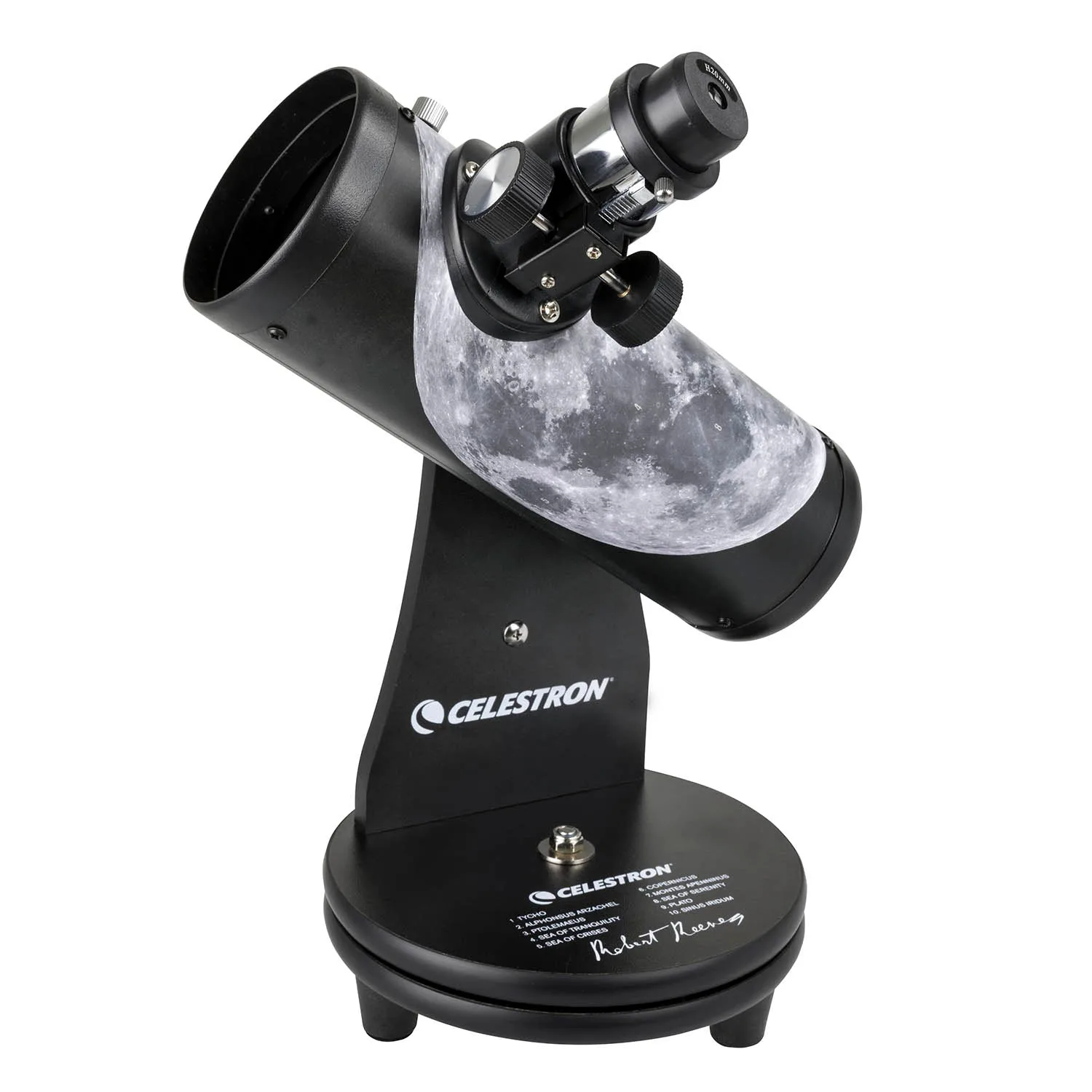
Celestron Firstscope Tabletop Telescope - Robert Reeves Signature Edition
-
Australian Geographic 60mm Discover Telescope Kit: The Australian Geographic 60mm Discover Telescope Kit includes a 60mm glass lens, two magnification settings (50x and 100x), a 3x finder scope, and a mirrored diagonal eyepiece. This kit offers a more traditional tripod setup and extra accessories at a lower price, making it a great value for families who want a complete starter package.
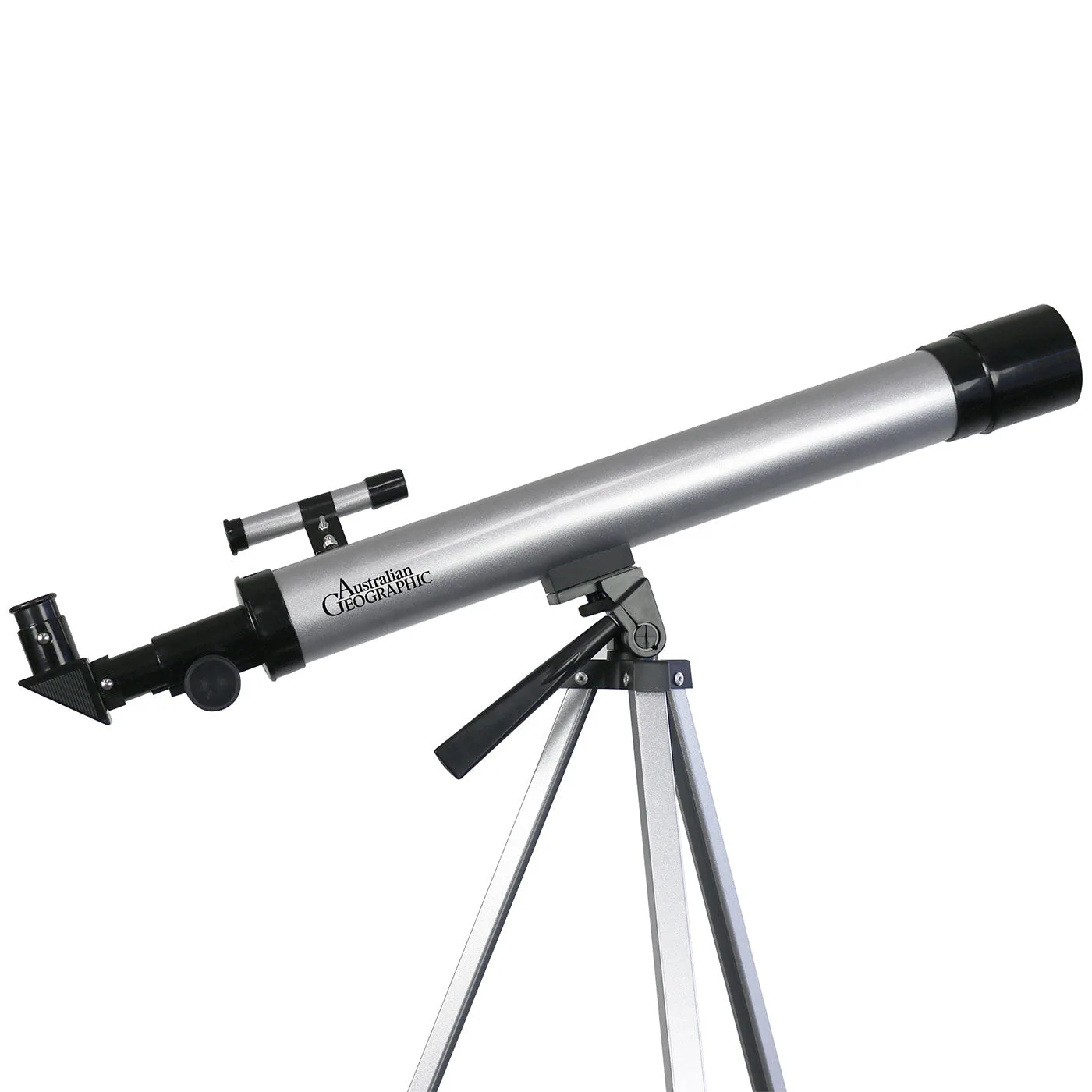
Australian Geographic 60mm Discover Telescope Kit
Which Telescope Fits Your Child?
Best For
- Young children (ages 3-5) who need a simple, stable tabletop telescope like the Celestron FirstScope
- Families on a budget who want a complete kit with tripod and accessories, such as the Australian Geographic 60mm Discover Telescope Kit
Not For
- Serious young astronomers who want to see faint deep-sky objects – these entry-level telescopes are best for the Moon and bright planets
- Kids who expect to use high magnification – these telescopes are designed for wide, bright views, not extreme close-ups