Quick answer
For low ceilings, choose a flush mount that sits close to the ceiling, provides adequate light, and fits the room's proportions. Consider the fixture's depth, clearance needs, and style to match your space.
Why flush mounts work for low ceilings
Flush mounts are designed to attach directly to the ceiling, saving vertical space compared to pendants or semi-flush mounts. This makes them ideal for rooms with 8-foot ceilings or lower, where hanging fixtures can feel cramped or pose a head-bumping risk.
A well-chosen flush mount can still make a style statement. Modern designs with wooden canopies or opal glass shades add warmth and character without overwhelming the room.
Size and proportion matter
The fixture's diameter should be proportional to the room size. A common rule is to add the room's length and width in feet, then convert that sum to inches for the ideal diameter. For example, a 10x12-foot room would suit a 22-inch fixture, but for flush mounts, you may need to adjust based on ceiling height and available space.
Also consider the fixture's depth. In low-ceiling rooms, a shallower depth (like 6-8 inches) feels less intrusive and provides better clearance for tall individuals.
Light output and bulb type
Check the lamping specifications to ensure the fixture provides enough light for the room. For general lighting, aim for a total of about 20 lumens per square foot. Flush mounts with a single bulb may be sufficient for small spaces, while larger rooms may need fixtures with multiple bulbs.
Some fixtures include bulbs, while others require separate purchase. Plan for bulb cost and availability when budgeting.
Decision rules for choosing a flush mount
- Measure your ceiling height: For ceilings 8 feet or lower, choose a flush mount with a depth of 8 inches or less to ensure comfortable clearance. Use a tape measure to confirm the fixture's depth before ordering.
- Match diameter to room size: Add the room's length and width in feet, then convert to inches for the ideal diameter. For example, a 10x12-foot room suggests a 22-inch fixture, but adjust down if the space feels tight. For hallways or narrow spaces, reduce the diameter by 2-4 inches to avoid overwhelming the area.
- Check light output: Determine the room's square footage and aim for about 20 lumens per square foot. If the fixture uses a single bulb, verify the bulb's lumen output; for larger rooms, consider multi-bulb fixtures. If a fixture doesn't include bulbs, factor in the cost of compatible bulbs with the desired brightness.
- Consider the style: Match the fixture's finish and materials to your room's decor. Wooden canopies add warmth, while opal glass provides a soft, diffused light. Look at the 'as shown' finish to see if it complements your existing furniture and accents.
Flush mounts to consider
-
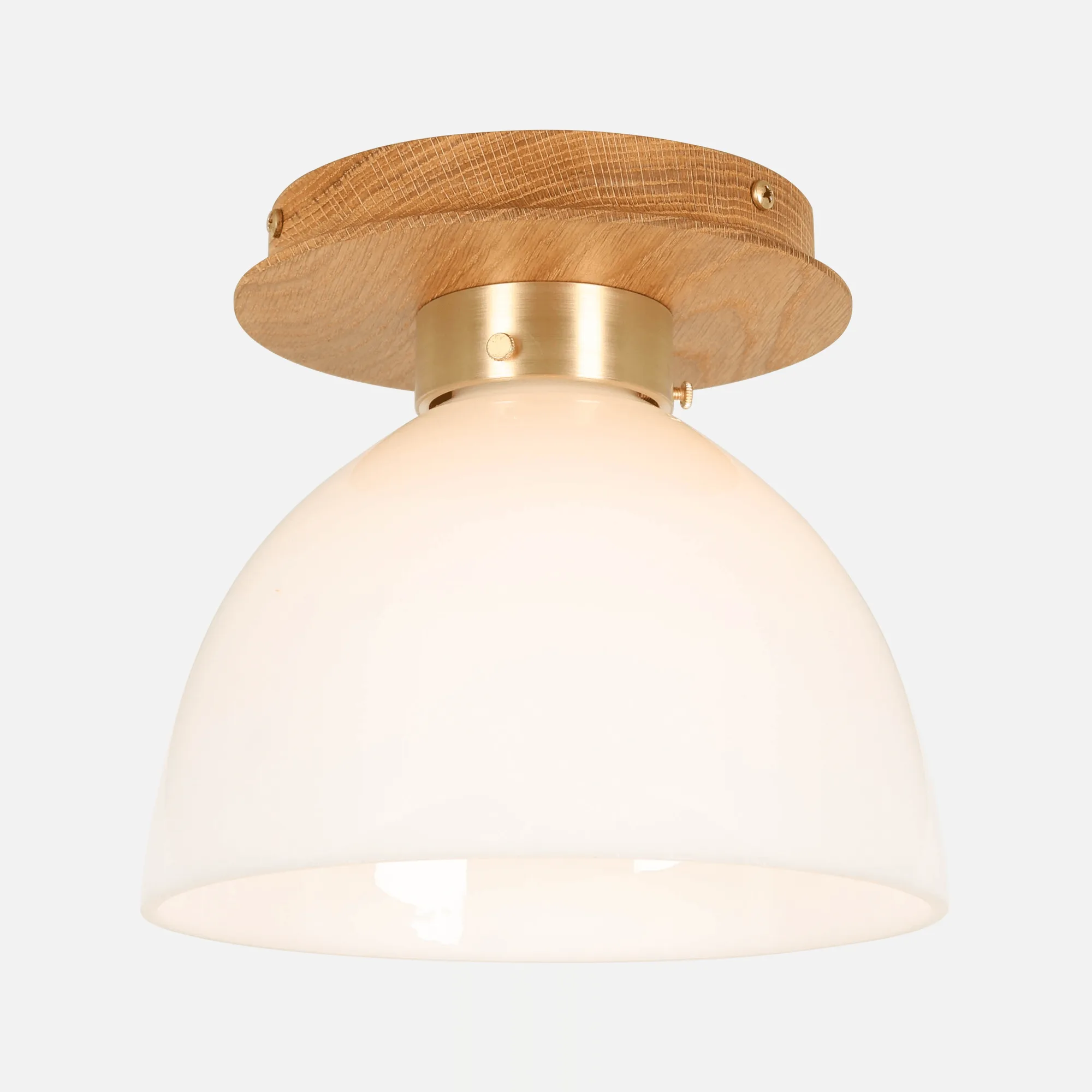
Opal Flush Mount: The Opal Flush Mount features a classic opal glass shade and a wooden canopy, with dimensions of 8 inches in depth, width, and height. Its compact size and shallow depth make it a good fit for low ceilings without sacrificing a warm, glowing light.
Opal Flush Mount
-
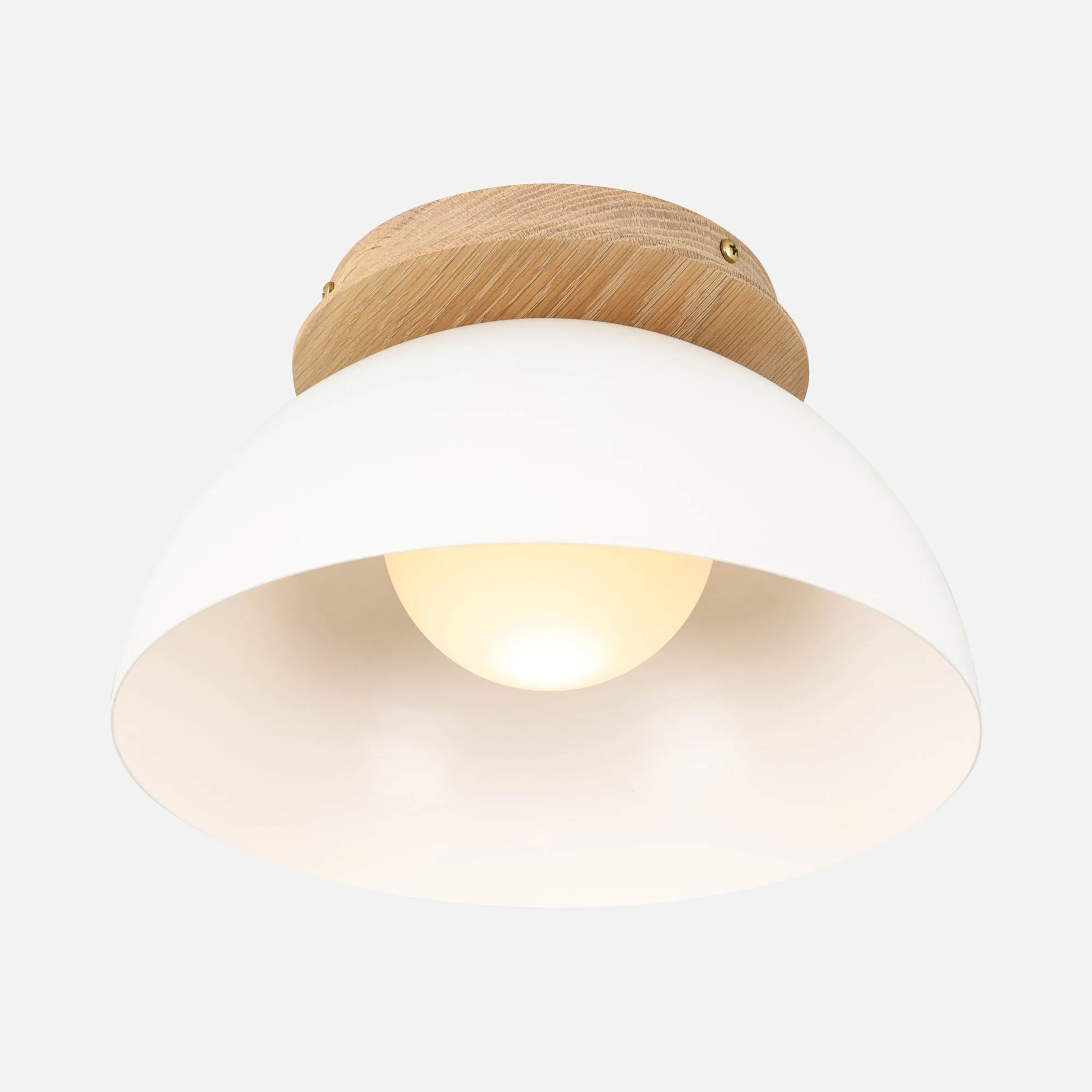
Tupelo Dome Flush Mount 10": The Tupelo Dome Flush Mount has a dome shade with a glass orb and a patterned wooden canopy, measuring 10 inches in diameter and 6 inches in height. The slightly larger diameter adds presence, while the low profile keeps clearance, and the included bulb simplifies setup.
Tupelo Dome Flush Mount 10"
Is a flush mount right for you?
Best for
- Rooms with 8-foot ceilings or lower where hanging fixtures would be too low
- Spaces needing a low-profile light that still makes a style statement
- Hallways, bedrooms, and dining areas where a compact fixture is preferred
Not for
- Rooms with very high ceilings where a pendant or chandelier could add drama
- Areas requiring focused task lighting, where adjustable fixtures might be better