Quick answer
Look for a firm, flat foam mattress that fits your cot with no gaps, has a breathable or ventilated cover, and meets safety standards. Size and thickness matter, but firmness and hygiene are non-negotiable.
Why foam over other materials?
Foam mattresses are lightweight, affordable, and easy to clean. They offer consistent support without the weight of spring or latex models. However, not all foam is the same — density and breathability vary widely, so you need to check the specific construction.
Size and fit come first
A mattress that is too small leaves dangerous gaps where a baby can trap an arm or leg. Too large, and it may buckle or create pressure points. Measure your cot's internal length and width, then choose a mattress that matches exactly. Standard cot sizes include 120x60 cm and 140x70 cm, but always confirm.
Firmness is for safety, not comfort
Babies need a firm surface to reduce the risk of suffocation and Sudden Infant Death Syndrome (SIDS). A foam mattress should not sink more than a few millimeters under your hand. If the foam feels soft or plush, it is unsuitable for an infant under 12 months.
Breathability and cover materials
A breathable core and ventilated cover help regulate temperature and reduce carbon dioxide buildup. Look for removable, machine-washable covers made from hypoallergenic or water-resistant materials. This makes cleaning easier and protects sensitive skin.
Your foam mattress decision rules
- Measure the cot interior: Use a tape measure to get the exact internal length and width of your cot. The mattress should fit snugly — no more than two fingers of space on any side.
- Check firmness with the hand test: Press the center of the mattress with your palm. If it sinks more than a few millimeters, it is too soft for an infant. A firm mattress supports safe sleep. Replace any mattress that shows permanent indentations.
- Look for a breathable or ventilated design: Choose a mattress with a breathable core or ventilation holes. A removable, machine-washable cover keeps the surface clean and reduces allergens. Wash the cover every two weeks or after any spill.
- Confirm thickness and age suitability: For a standard cot, a thickness of 5–10 cm is typical. Thinner mattresses (under 5 cm) may lack support for older babies. Check the manufacturer's age recommendation. If your baby is over 12 months, a slightly thicker mattress (7–10 cm) can offer more comfort.
Foam mattress options to consider
-
Hauck Sleeper Travel Cot Mattress 120x60cm: Hauck Sleeper Travel Cot Mattress 120x60 cm has a 5–6 cm thick foam core and is lightweight and foldable for travel. Great for parents who need a portable mattress that still fits standard travel cots and provides a firm, familiar sleep surface on the go.
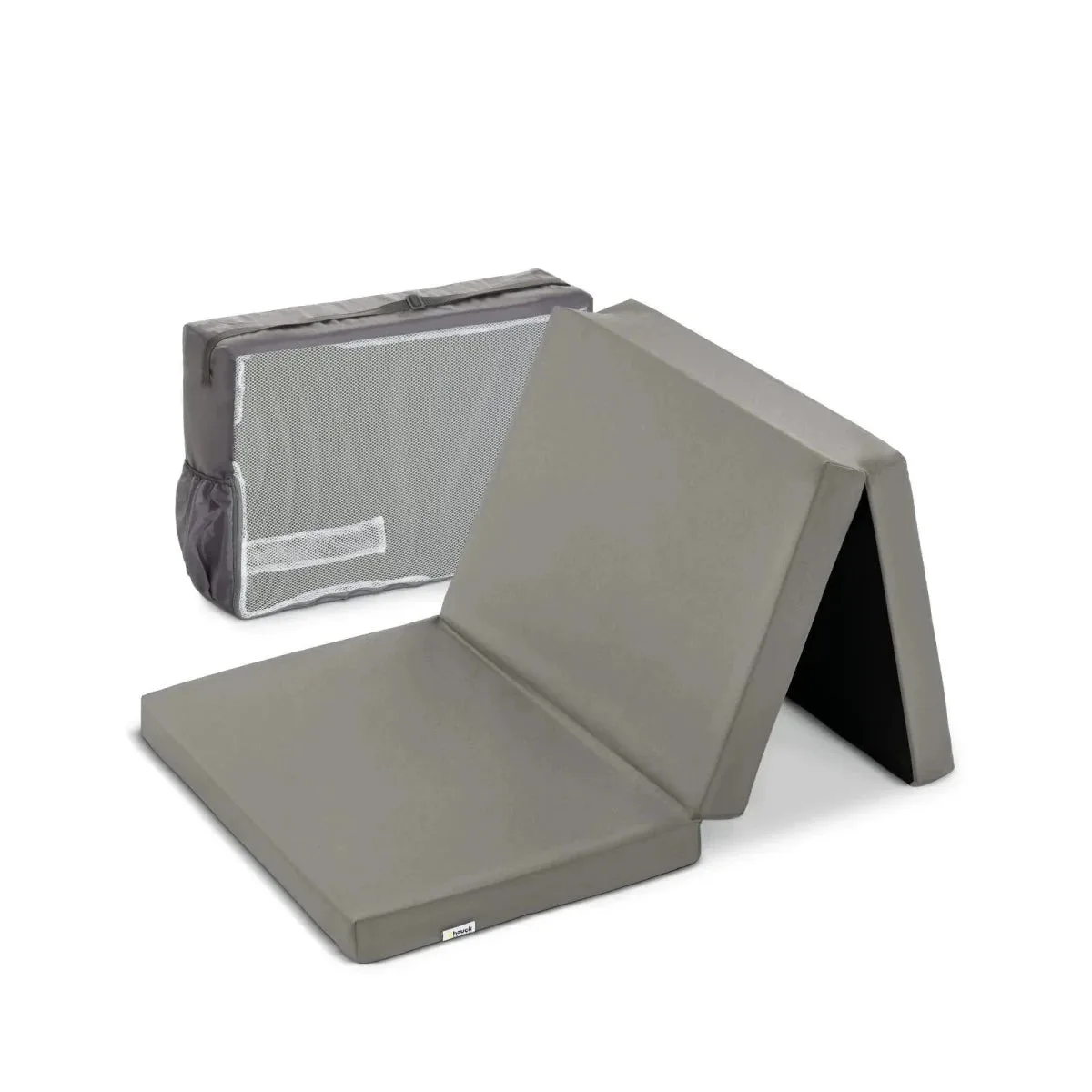
Hauck Sleeper Travel Cot Mattress 120x60cm
-
Mollydoo Mattress Foam Inner 140 x 70 x 7cm: Mollydoo Mattress Foam Inner 140x70x7 cm features a hypoallergenic cover and a water-resistant layer for spill protection. Ideal for full-size cots where you want a slightly thicker mattress with easy-to-clean, allergy-friendly materials.
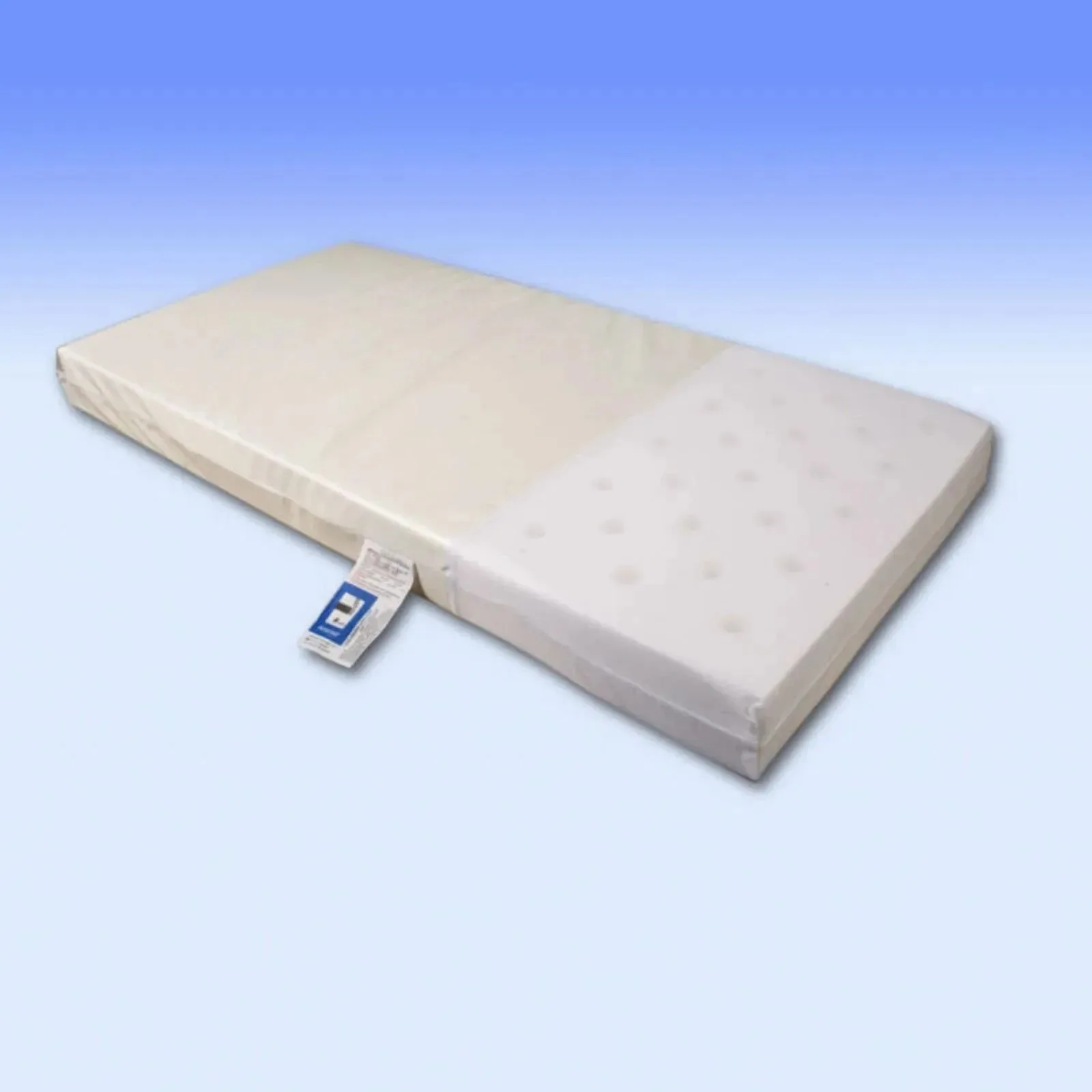
Mollydoo Mattress Foam Inner 140 x 70 x 7cm
Who should choose what?
Best for
- Parents who need a travel-friendly foam mattress that fits standard travel cots — consider the Hauck Sleeper Travel Cot Mattress (120x60 cm).
- Families with a full-size cot who want a thicker, water-resistant foam mattress with hypoallergenic cover — the Mollydoo 140x70x7 cm is a solid choice.
Not for
- Parents looking for a natural latex or organic cotton mattress — these foam options use synthetic materials.
- Cribs or bassinets with non-standard dimensions — always measure first to ensure a snug fit.