Quick Answer
To choose the right garden parasol, match the canopy size to your seating area, consider the shade you need, and pick a durable frame and fabric that suits your climate.
Size Matters: Match the Parasol to Your Space
The most important factor is the canopy size. Measure the area you want to shade, including the table and chairs. A parasol that's too small leaves you squinting, while one that's too large can overwhelm a small patio or catch the wind.
Consider the height and tilt mechanism. A tilting parasol lets you follow the sun, while a fixed one is simpler but less flexible. If you have a large dining table, you may need a cantilever parasol that stands to the side, but these take up more floor space.
Material and Build: Durability and Maintenance
The frame material affects both weight and longevity. Cedar wood is naturally weather-resistant and develops a lovely patina over time, but it requires occasional oiling. Aluminum and steel are lighter or stronger, but may rust if not coated.
The canopy fabric should be UV-resistant and water-repellent. Look for a fabric that won't fade quickly and is easy to clean. Some parasols come with a cover for storage, which extends the life of the fabric.
Consider the operating mechanism. A traditional pulley and pin system is reliable and easy to repair, while a crank system is more convenient but may have more parts that can wear out.
Style and Aesthetics: Make It Your Own
Your parasol is a focal point in your outdoor space, so choose a style that complements your furniture and garden. Stripes are classic and add a playful touch, while solid colors are versatile and modern.
Think about the base too. A heavy base is essential for stability, especially with larger canopies. Make sure the base is compatible with your parasol pole diameter.
Decision Rules for Choosing a Garden Parasol
- Measure your space: Measure the diameter of the area you want to shade. For a standard dining table, a 2.5m parasol is usually enough; for larger tables or lounging areas, consider a 3m or larger canopy. Always measure before buying to avoid a parasol that's too small or too large.
- Choose the right base: Select a base that matches the pole diameter and is heavy enough to keep the parasol stable. A rule of thumb is at least 20kg for a 2.5m canopy, and more for larger ones. Check the base weight and compatibility before purchase.
- Pick a durable fabric: Look for a canopy fabric that is UV-resistant and water-repellent. Acrylic fabrics are fade-resistant and breathable, while polyester is more budget-friendly but may fade faster. Invest in a higher-quality fabric if your parasol will be exposed to strong sun.
- Consider the frame material: Choose cedar or teak for a natural look and weather resistance, or aluminum for lightweight durability. Steel is strong but may rust if not coated. Match the frame to your climate and maintenance preferences.
- Think about the mechanism: If you want to adjust the angle, choose a tilting parasol. A pulley system is simple and reliable, while a crank is easier but may have more parts to break. Decide how often you'll adjust the parasol and choose accordingly.
Product Spotlight
-
Polperro Parasol, Pink Stripe: The Polperro Parasol features a softly scalloped canopy in a fresh tricolour stripe of soft blues, browns, and warming parchment. This design adds a charming, coastal-inspired touch to your garden while providing generous shade for long, lazy gatherings.
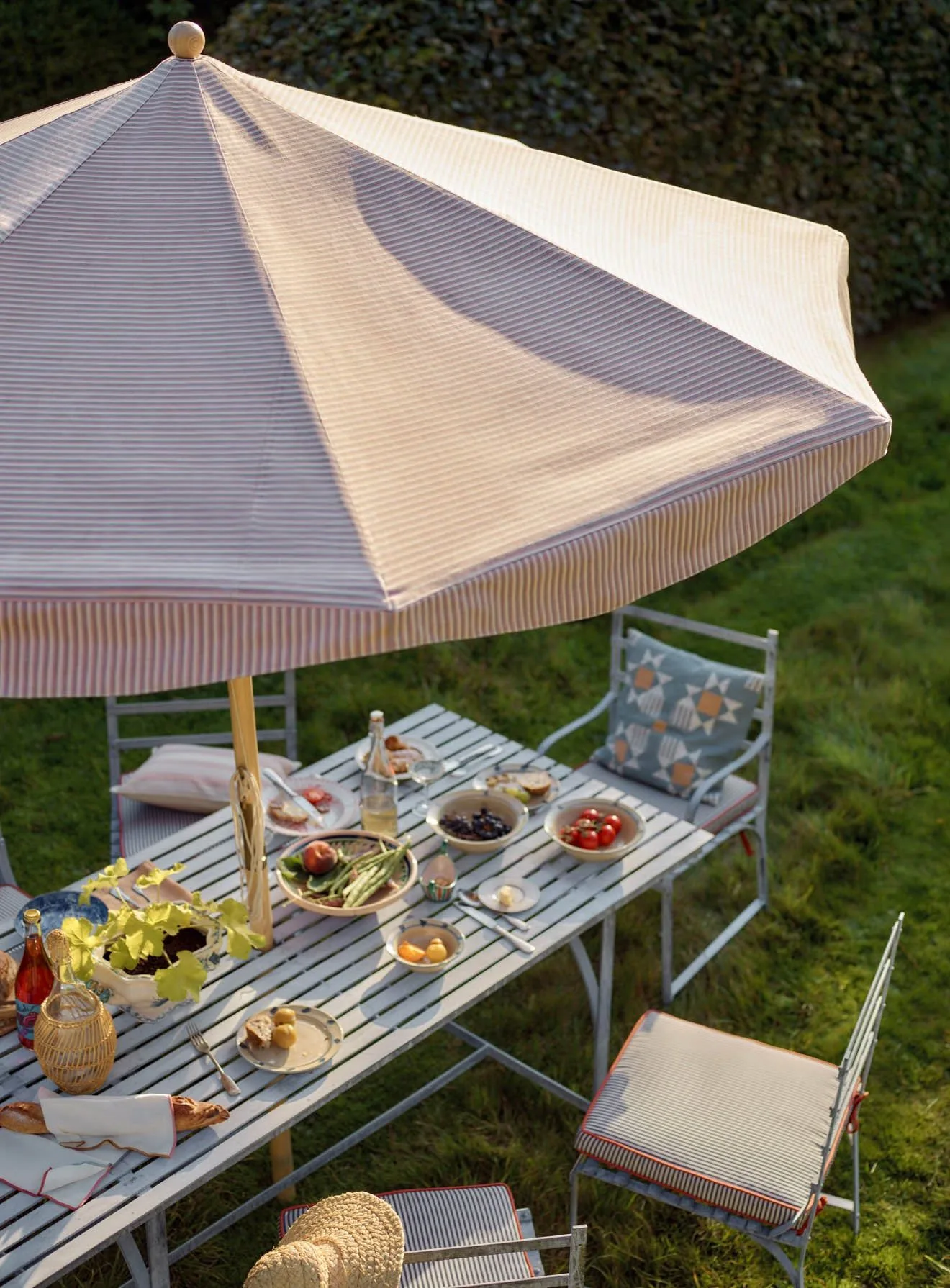
Polperro Parasol, Pink Stripe
-
Polperro Parasol, Pink Stripe: It has a natural cedar wood frame that patinas beautifully over time and adjusts via a traditional pulley rope and pin system. The durable wood frame and simple mechanism are easy to maintain and operate, making it a reliable choice for regular outdoor use.
Who Should Choose What
Best for
- Those who want a classic, natural look and are willing to maintain a wooden frame
- People with a medium to large dining or lounging area who need reliable shade
Not for
- Those seeking a lightweight, low-maintenance option (consider aluminum or steel frames)
- Small balconies or compact spaces where a large canopy would overwhelm the area