Quick answer
For a holiday birthday, choose a dual-occasion card like a 'Merry Birthday' card when the recipient has a sense of humor about the overlap and you want one simple gesture. Choose separate cards when the person feels their birthday is already overshadowed or you want to give equal weight to both occasions.
Why the holiday birthday card dilemma matters
People born in December, especially close to Christmas, often feel their birthday gets lumped in with holiday celebrations. A single card that tries to cover both can feel thoughtful or dismissive, depending on the person and how it's presented.
The key is reading the recipient's relationship with their birth date. Some lean into the overlap with humor, while others prefer a clear separation. Your card choice signals which camp you're in.
When a dual-occasion card works best
A card that combines both messages, like a hand-lettered 'Merry Birthday' design, works well for people who openly joke about their 'holiday birthday' or who appreciate efficiency. It also suits casual acquaintances, coworkers, or group gifts where one card from many people feels right.
The trade-off: you lose the chance to personalize each message. If the recipient values long, separate notes, this approach may feel like a shortcut.
When separate cards are the better choice
Choose two distinct cards when the birthday person has expressed frustration about their birthday being forgotten or merged with holiday plans. Separate cards show you put thought into each occasion individually.
This also works well for close family or partners where the relationship deserves the extra effort. The downside is cost and clutter—two cards, two envelopes, two stamps.
Decision rules for choosing a holiday birthday card
- Rule 1: Assess the recipient's attitude: If the person regularly jokes about their 'Christmas birthday' or posts memes about it, a dual-occasion card is a safe bet. If they've ever said 'my birthday gets forgotten,' choose separate cards.
- Rule 2: Consider your relationship depth: For casual coworkers, neighbors, or group gifts, a single combined card is appropriate. For a partner, sibling, or best friend, two cards show you value each occasion equally.
- Rule 3: Match the card to the celebration plan: If you're attending a single party that celebrates both events, one card works. If there are separate gatherings (a birthday dinner and a holiday party), bring separate cards. When in doubt, err on the side of separate cards—they're harder to misinterpret.
Featured product
-
Merry Birthday card - Holiday Birthday card: A2 size card (4.25 x 5.5 inches), blank inside, comes with a kraft envelope and cello sleeve. Features hand lettered 'Merry Birthday' over a hand drawn holiday birthday cake. The blank interior lets you write a personal birthday message without holiday pressure, while the design acknowledges the date overlap with humor.
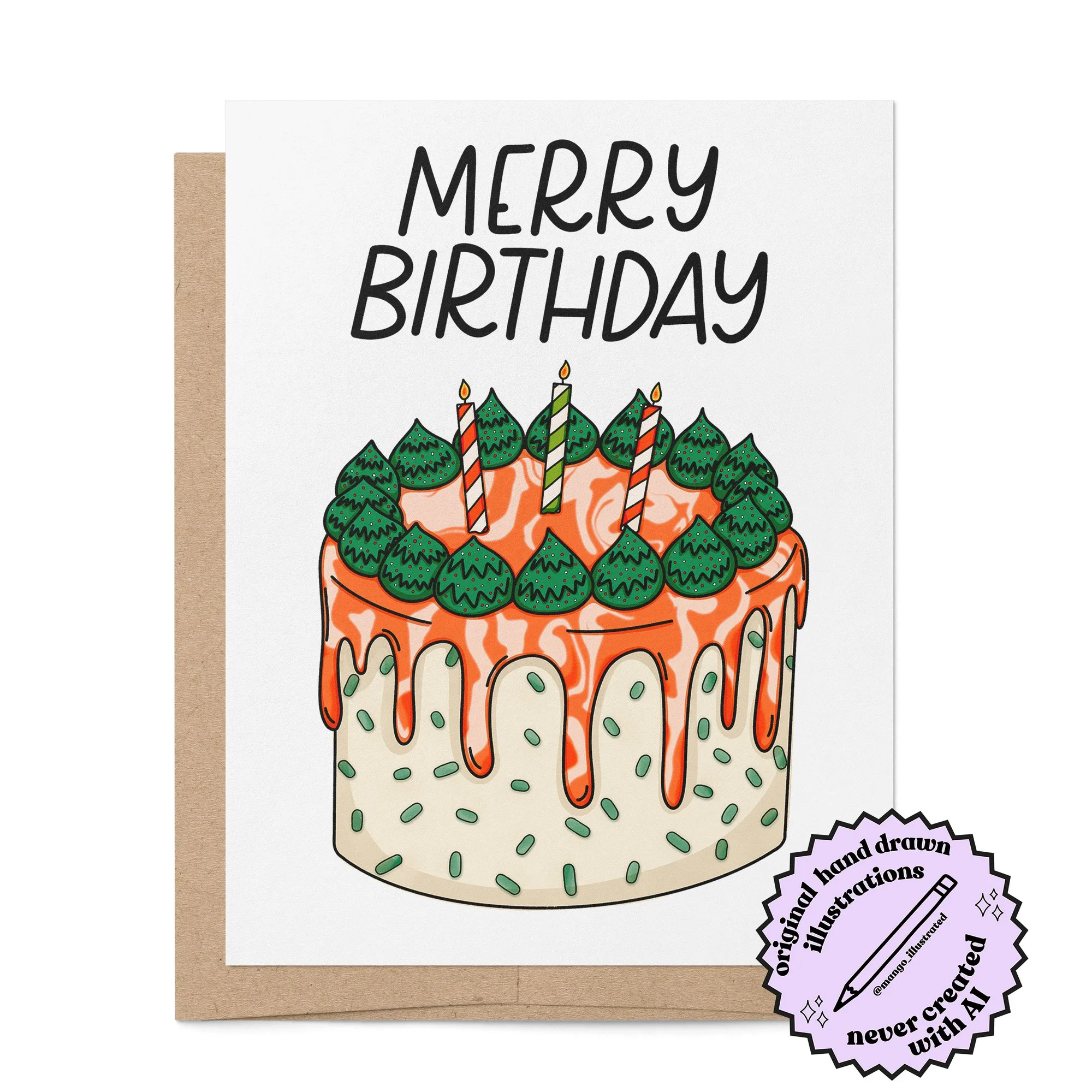
Merry Birthday card - Holiday Birthday card
Who should choose which approach
Best for a dual-occasion card
- Someone born near a holiday who openly jokes about the overlap
- A casual acquaintance or coworker where one gesture is sufficient
- A group gift where multiple people sign one card
Better off with separate cards
- Someone who feels their birthday is overshadowed by the holiday
- A close family member or partner where the relationship merits extra effort
- A recipient who values long, separate personal messages