Quick answer
To choose a keychain that won't tarnish or break, prioritize solid metal hardware (brass or stainless steel), reinforced stitching on fabric options, and avoid plated finishes that wear off over time.
Why material matters for durability
The material of a keychain determines how well it stands up to daily wear. Metal keychains made from solid brass or stainless steel resist rust and tarnish far better than zinc alloys or nickel-plated options. Fabric keychains, like embroidered twill, are lightweight and less prone to scratching surfaces, but their longevity depends on the stitching and hardware attachments.
Hardware is the weak point
Even a well-made keychain can fail if the ring or clasp is cheap. Look for split rings made of tempered steel or solid brass—they hold their shape and won't snap open. Lobster clasps should have a spring that feels firm, not loose. Avoid keychains where the attachment point is glued rather than stitched or riveted.
How to choose a keychain that lasts
- Check the metal type: Solid brass or stainless steel hardware resists tarnish and corrosion. Avoid plated metals—they look shiny at first but wear off within months.
- Inspect the attachment point: The ring or clasp should be securely attached. For fabric keychains, look for reinforced stitching or a metal grommet rather than a simple glued loop. A loose attachment is the most common failure point.
- Consider your daily environment: If you carry keys in a pocket with coins or tools, choose metal over fabric to avoid fraying. If you want to avoid scratching phone screens or glasses, fabric or leather is safer. Match the material to where the keychain lives most of the time.
- Look for double-sided or reinforced stitching: Embroidered or fabric keychains with stitching on both sides are less likely to come apart. Single-sided designs can curl and wear unevenly.
Keychain options to consider
-
"Pine Fresh Oregon" Embroidered Keychain: This embroidered keychain is made from twill fabric with double-sided stitching and measures about 3.5 x 2 inches. The double-sided embroidery reinforces the fabric, reducing fraying, and the twill material won't tarnish like metal can—ideal if you want a lightweight, scratch-free option.
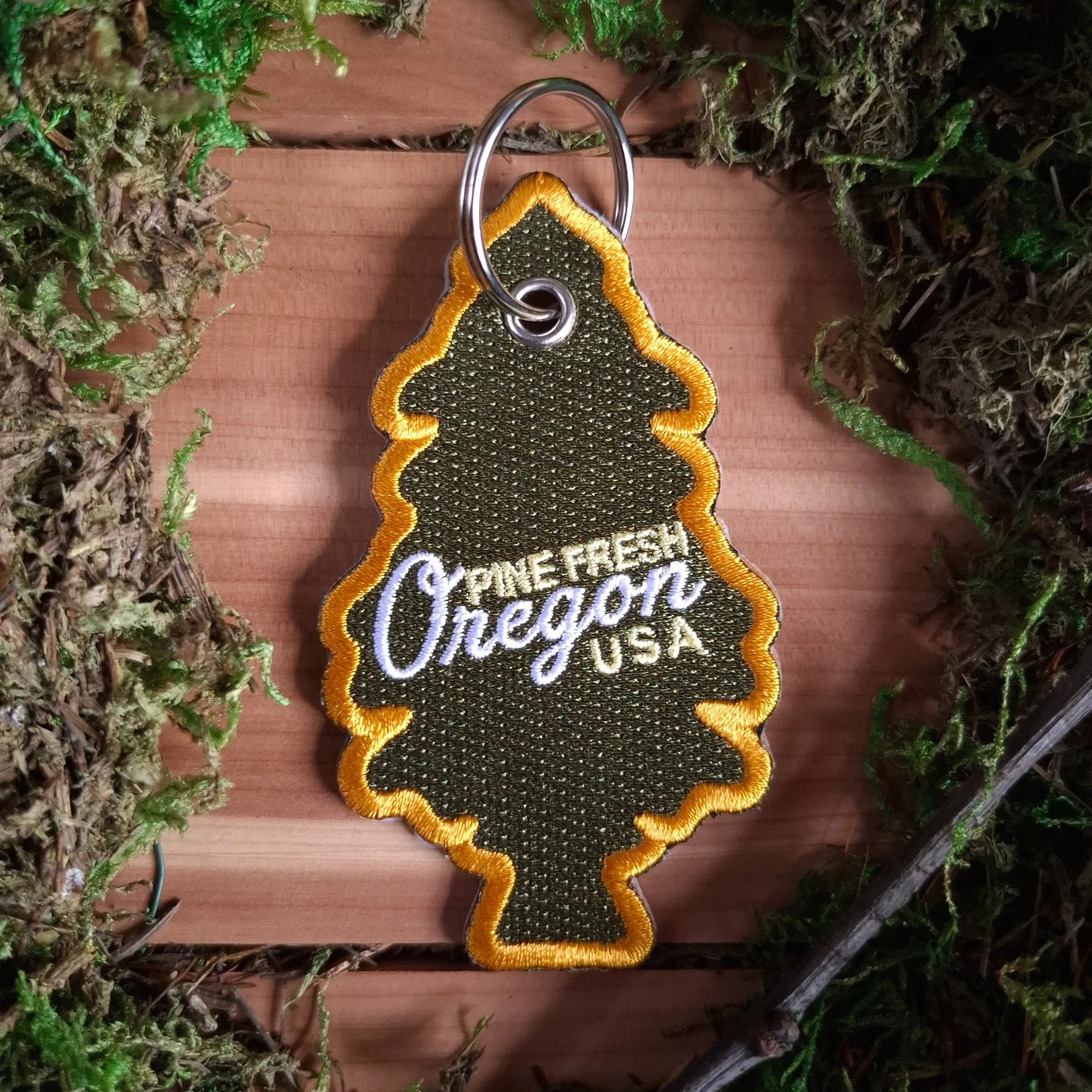
"Pine Fresh Oregon" Embroidered Keychain
Which keychain is right for you?
Best for
- Someone who carries keys in a bag or pocket with electronics—fabric keychains won't scratch surfaces
- Anyone who wants a lightweight, tarnish-free option that still looks detailed and handmade
Not for
- Heavy daily use with abrasive items like tools or coins—fabric can fray over time
- People who prefer a classic metal feel or need a keychain that can double as a small tool