Quick answer
Match the postcard's tone, material, and size to the occasion and the recipient's relationship to you. For a thank-you note, pick a design that feels personal but not overly sentimental. For a birthday, lean toward bold, celebratory imagery. For a casual hello, choose something that reflects your shared humor or interests. When in doubt, a 4x6 matte cardstock postcard is the safest all-purpose choice.
Picking a postcard should take about as long as writing one, but the wrong design can make even a heartfelt message feel off. The good news is that you do not need a drawer full of options. You need a simple way to match the card to the moment.
This guide gives you concrete decision rules for choosing a postcard design for occasions, from birthdays and thank-you notes to just-because mail. It also covers material and size trade-offs so you can buy with confidence, whether you are sending one card or a small stack.
Start with the occasion, not the artwork
The most common mistake is browsing designs first and then trying to force one into an occasion. Flip the order. Write down the occasion, the recipient, and the one feeling you want the card to carry. That single sentence becomes your filter.
For a thank-you note, the feeling is usually warmth and sincerity. For a birthday, it is celebration. For a get-well or sympathy card, it is quiet care. Once you name the feeling, you can quickly rule out designs that are too loud, too dark, or too generic for the moment.
- If you cannot describe the feeling in one word, the design is probably not the right fit.
- Occasion-first shopping also prevents duplicate buys when you already own similar cards.
Match the message side to how you write
A postcard gives you very little room, so think about how much you actually plan to say. If you write long, newsy notes, choose a card with a clean back and minimal printed clutter. If you send short, punchy messages, a busier design can carry more of the personality for you.
Double-sided cards are the most flexible because the front carries the design and the back gives you a full writing area. That format works for both quick hellos and slightly longer notes, which is why it is the default recommendation for most senders.
- Check that the back is uncoated or matte enough to take pen ink without smearing.
- If you use gel pens, test one card before writing a stack.
Choose a size and material that survive the mail
The standard 4x6 size is the easiest to mail because it fits common postcard rates and does not require an envelope. Larger or irregular sizes can look impressive but often cost more to send and may need extra protection.
Material matters just as much as size. Heavier matte cardstock holds up better in transit and feels more substantial in hand than thin glossy stock. If the card is going on a wall or fridge instead of through the mail, you have more freedom, but sturdy stock still looks better over time.
- For international mail, stick to standard sizes to avoid extra postage.
- Matte finishes hide fingerprints and pen smudges better than high-gloss finishes.
Use tone to narrow your shortlist
Once you have two or three candidates, compare tone rather than subject. A card can be funny, sweet, bold, or minimal, and the tone should match both the occasion and your relationship with the recipient. A joke card works for a close friend but can land wrong with a coworker or an older relative.
If you are unsure, choose the warmer option. Warmth reads well across nearly every occasion and relationship, while edgy humor is the riskier pick. Save the bold, in-joke designs for people who will immediately understand the reference.
- When sending to a workplace, keep the design neutral and the message personal.
- For milestone birthdays, a slightly more designed card feels more intentional than a basic one.
Buy in small batches, not one-offs
Shipping costs rarely make sense for a single card. If you already know you will send birthday notes, thank-yous, and casual hellos over the next few months, buy two or three designs at once. You will save on shipping and always have something on hand.
A simple starter set is one warm design, one funny design, and one neutral design. That trio covers most occasions without turning into clutter. Restock when you notice you are down to only the cards you keep skipping over.
- Store cards flat in a dry place so corners stay crisp.
- Keep stamps with the cards so you can write and send in one sitting.
Decision rules for picking the right postcard
- Thank-you note: Choose a warm, sincere design with a clean back so your message stays the focus. Avoid joke cards unless the recipient is a close friend who shares the humor. If you are unsure, pick the warmer option.
- Birthday: Go bolder and more celebratory than you would for everyday mail. A design with color or a playful theme signals the occasion before the message is even read. For milestone birthdays, choose a more designed card.
- Casual hello or just-because: Use a design that reflects a shared interest or in-joke. This is the category where quirky or specific artwork works best. Match the card to the relationship, not just the date.
- Professional or acquaintance: Stay neutral and skip edgy humor. A simple, well-made card with a handwritten note reads as thoughtful without risk. When in doubt, choose the more neutral design.
- Material check: Prefer heavyweight matte cardstock for mail. It survives sorting better and feels more substantial than thin glossy stock. If the card will be mailed, weight and finish matter more than the artwork.
Product facts that help you decide
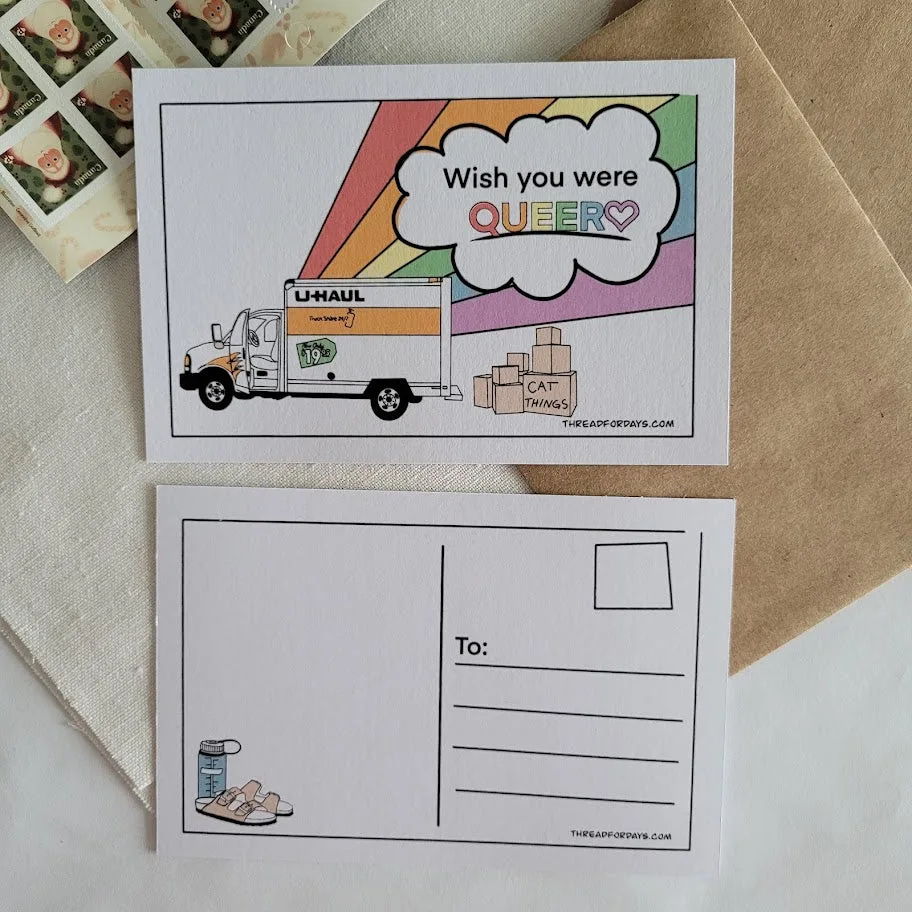
- Wish You Were Queer | 4x6 Postcard: Digitally drawn, designed, and handmade 4x6 double-sided postcard printed on durable matte 110lb heavyweight cardstock paper. The heavier matte stock resists bending in transit and takes pen ink well, while the double-sided format gives you a full back for writing.
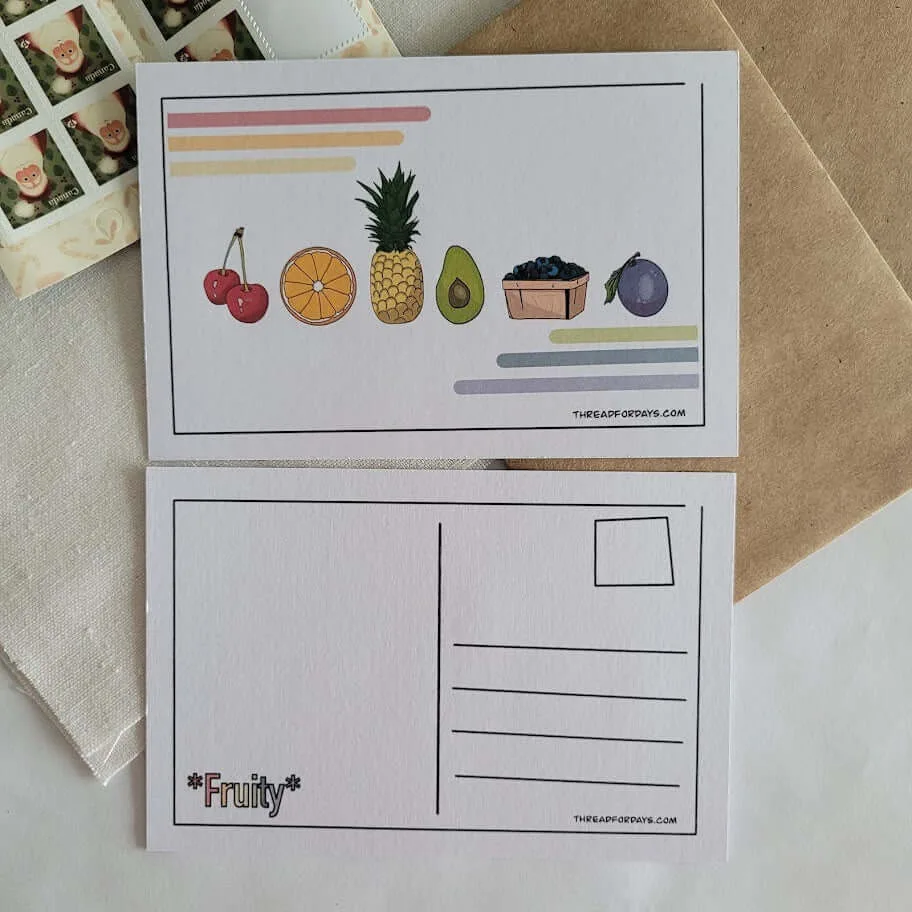
- *Fruity* | 4x6 postcard: Whimsical 4x6 double-sided postcard printed on durable matte 110lb heavyweight cardstock paper. A playful, lighthearted option that suits casual hellos and friendly occasions where a serious tone would feel stiff.
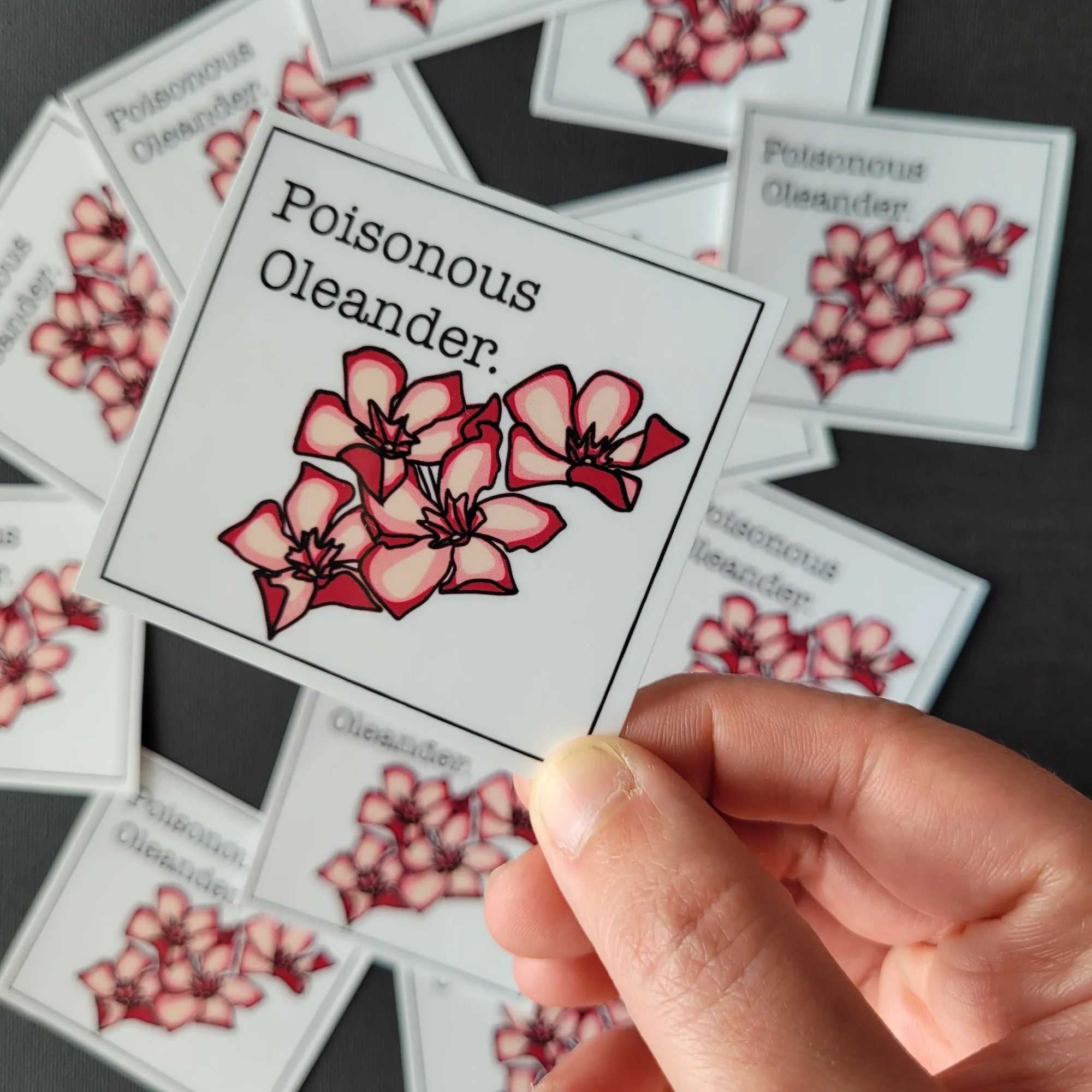
- Oleander | Waterproof Vinyl Sticker: Limited edition glossy waterproof vinyl sticker, laminated for extra protection, approximately 2.5 x 2.5 inches. Not UV proof; it will fade with prolonged exposure to UV rays. If you like to seal a postcard with a small extra, this sticker handles moisture but should stay out of direct sun to avoid fading.
- Dead Silence Vinyl Sticker: Limited edition glossy water-resistant vinyl sticker, 2 x 3.5 inches, easy to peel and can be moved 1-2 times before stickiness wears. A repositionable sticker is useful for decorating an envelope or card back, but plan your placement before pressing it down.
Who this approach is for
Best for
- People who send a mix of birthday, thank-you, and casual postcards throughout the year
- Shoppers who want a simple rule set instead of browsing dozens of designs
- Anyone mailing standard 4x6 cards who wants durable matte cardstock
Not for
- Collectors seeking vintage or rare postcards for display rather than mailing
- Senders who need custom printed messages or personalized bulk mailers
- Anyone looking for oversized or shaped cards that require special postage
Choosing a postcard design for a specific occasion comes down to three checks: name the feeling, match the material to the mail, and pick the tone that fits the relationship. Keep one warm, one funny, and one neutral design on hand, and you will rarely be stuck without the right card.