Quick answer
For cold weather, choose a puffy down jacket that is rated for the temperatures your child will face, has adjustable features for a snug fit, and includes practical details like pockets and a fleece lining for extra comfort.
Why warmth rating matters
A puffy down jacket's primary job is to keep your child warm. Look for a jacket that specifies a temperature rating, such as one made for -10 degree weather. This gives you a clear benchmark for how much insulation the jacket provides. A jacket without a stated rating may still be warm, but you'll need to rely on other clues like fill power or thickness.
Adjustability and fit for active kids
Kids grow fast and move a lot. An adjustable pull inside the jacket lets you tighten the fit as needed, which helps trap warmth and prevents the jacket from riding up. Inner shoulder straps can also help keep the jacket in place when your child is running or playing. Side zip pockets are a practical bonus for storing small items or warming hands.
Material and lining considerations
A fleece lining adds softness and an extra layer of warmth against the skin. This is especially nice on cold days when your child might not want a bulky sweater underneath. The outer shell should be durable and water-resistant, though down jackets typically aren't fully waterproof—so consider a separate rain shell for wet conditions.
Your decision rules for choosing a puffy down jacket
- Check the temperature rating: Look for a jacket that specifies the lowest temperature it can handle, like -10°F or -10°C. This is the most reliable indicator of warmth.
- Prioritize adjustability: Choose a jacket with an internal adjustable pull or drawcord to cinch the waist or hem. This helps seal in warmth and improves fit as your child grows. If the jacket lacks adjustability, consider sizing down or using a layering strategy.
- Look for practical features: Side zip pockets are great for keeping hands warm or storing small items. A fleece lining adds comfort, and inner shoulder straps help the jacket stay put during active play.
- Consider the outer fabric: Down jackets are warm but not usually waterproof. For wet snow or rain, you may need a separate waterproof shell. For dry cold, the down jacket alone works well. If you expect wet conditions, look for a jacket with a DWR finish or plan to layer under a raincoat.
Product features to consider
-
puffy down jacket: This puffy down jacket is made for -10 degree weather and includes side zip pockets, an adjustable pull, fleece lining, and inner shoulder straps. The temperature rating ensures your child stays warm in serious cold, while the adjustable pull and shoulder straps help the jacket fit well during active play.
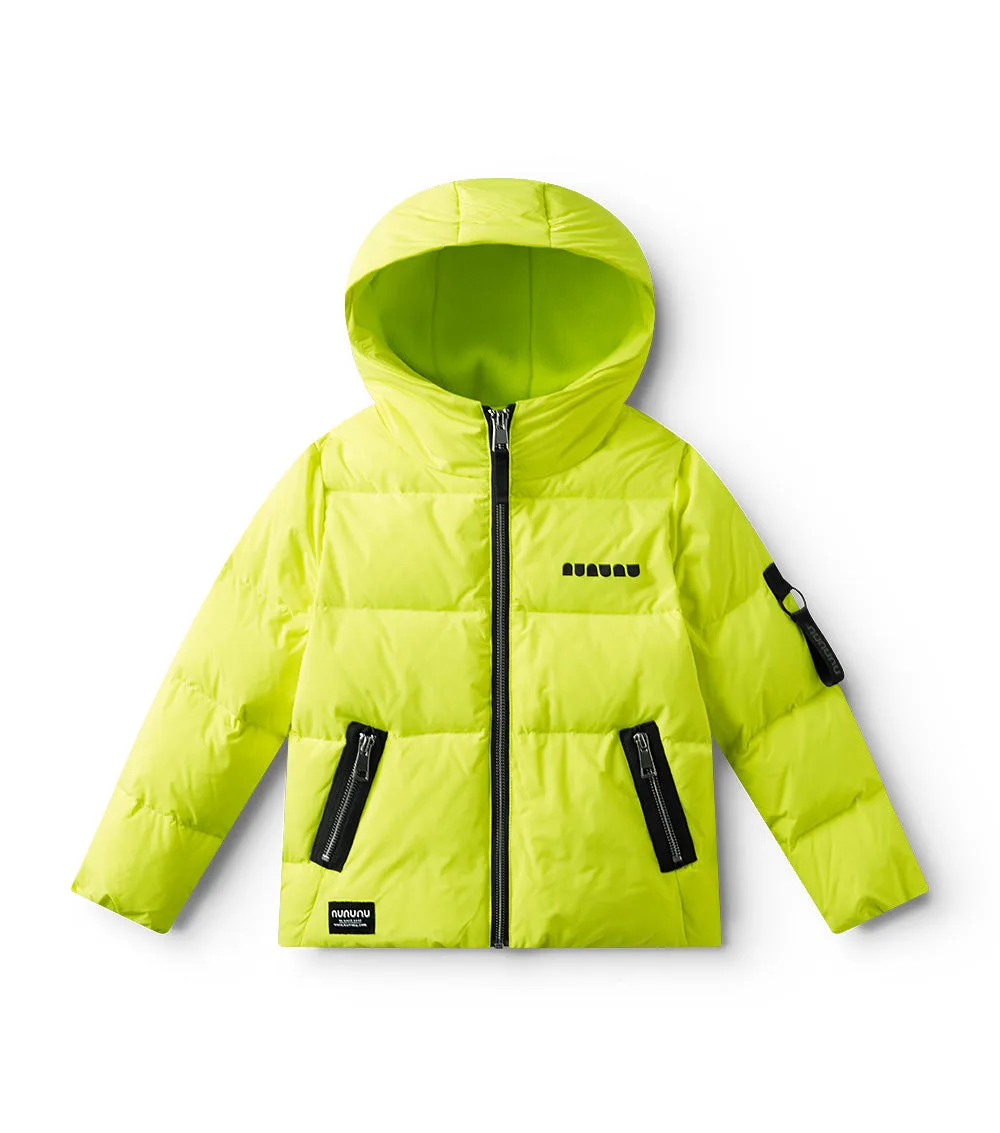
puffy down jacket
Who is this jacket for?
Best for
- Children who play outdoors in cold, dry winter weather (down to -10°F)
- Parents who want a lightweight, packable jacket that still provides serious warmth
Not for
- Heavy rain or wet snow conditions (down is not waterproof)
- Extreme cold below -20°F without additional layering