Quick answer
For most birdwatchers, an angled spotting scope with a 60-80mm objective lens and ED glass offers the best balance of brightness, comfort, and image quality. Compact options like the Nikon ED50-A work well for hiking, while larger scopes like the Pentax PF-80EDA deliver superior light gathering for dawn or dusk viewing.
Angled vs Straight: Which Viewing Angle Suits You?
An angled spotting scope lets you look downward into the eyepiece, which is more comfortable when sharing the scope with others or when the bird is high in a tree. A straight scope is easier to use for quick, intuitive aiming but can strain your neck on elevated targets.
If you watch birds from a vehicle or often scan from a tripod at eye level, a straight scope may feel more natural. For group use or extended sessions on uneven terrain, angled is usually the better choice.
Objective Lens Size: Brightness vs Portability
A larger objective lens (e.g., 80mm) gathers more light, giving you brighter views in low-light conditions like early morning or overcast days. The trade-off is weight and bulk—scopes with 80mm lenses are heavier and need a sturdier tripod.
A 50mm scope like the Nikon ED50-A is much lighter and easier to pack for long hikes, but you lose some brightness and resolution at high magnification. Choose based on how far you typically carry the scope and the light conditions you most often encounter.
ED Glass: Why It Matters for Birdwatching
Extra-low Dispersion (ED) glass reduces chromatic aberration—the color fringing you see around high-contrast edges like a white bird against a dark sky. This is especially important for birdwatching, where fine feather detail and accurate color matter.
Both the Pentax PF-80EDA and Nikon ED50-A use ED glass, which means they deliver crisp, true-to-life images with minimal false color. If you often watch birds at long distances or in challenging light, ED glass is worth the investment.
Decision rules for choosing your birdwatching scope
- Angled vs Straight: Choose angled if you share the scope or watch birds in trees. Choose straight for quick panning and vehicle use.
- Objective lens size: 80mm for maximum brightness in low light; 50mm for portability on long walks. A 60-65mm size is a good middle ground. If you mostly watch in open fields at dawn/dusk, prioritize a larger objective lens.
- ED glass: Always opt for ED glass if your budget allows. It eliminates color fringing and improves detail, which is critical for identifying subtle plumage differences.
- Eyepiece compatibility: Many spotting scopes, including the Pentax PF-80EDA and Nikon ED50-A, are sold without an eyepiece. Factor the cost and availability of compatible eyepieces into your decision. Check whether the scope includes an eyepiece or requires a separate purchase before finalizing your budget.
Product facts
-
Pentax PF-80EDA 80mm Angled Spotting Scope (Requires Eyepiece): The Pentax PF-80EDA features an 80mm objective lens with ED glass for superior light-gathering and color correction. This scope delivers bright, sharp images even in low light, making it ideal for early-morning or late-afternoon birdwatching sessions.
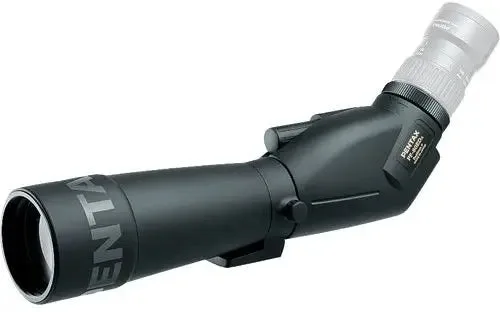
Pentax PF-80EDA 80mm Angled Spotting Scope (Requires Eyepiece)
-
Nikon ED50-A Grey Fieldscope: The Nikon ED50-A has a 50mm ED objective lens in a compact, lightweight body. Its small size and weight make it a great travel companion for birders who hike long distances, though it gathers less light than larger scopes.
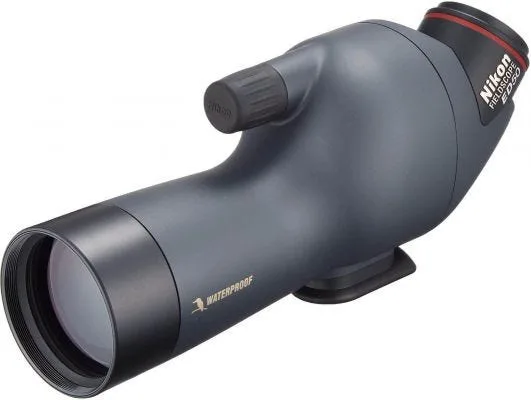
Nikon ED50-A Grey Fieldscope
Which scope fits your style?
Best for
- Serious birders who watch in low-light conditions and want maximum image quality
- Birdwatchers who frequently share their scope with others and need a comfortable angled view
Not for
- Hikers who need the lightest possible gear for long treks
- Budget-conscious beginners who may prefer a bundled kit with eyepiece included