Quick answer
Choose a steel camp cup that nests with your purifier bottle if you want to save pack space; pick a standalone mug if you prefer a larger capacity for meals or coffee.
Nesting vs standalone design
A nesting cup fits over or inside a water purifier bottle, saving critical space in your pack. This is ideal for backpackers who count every cubic inch. Standalone mugs offer more volume and often a wider mouth, making them better for rehydrating meals or brewing coffee with a pour-over setup.
If you already carry a Grayl or GeoPress purifier, a dedicated nesting cup eliminates the need for a separate bowl or mug. If you cook freeze-dried meals directly in the cup, a standalone design gives you more room to stir and eat comfortably.
Material weight and heat retention
Steel drinkware is heavier than titanium but holds heat longer — a welcome trade-off when you want your coffee to stay hot through a cold morning. Titanium camp cups are lighter and cool down faster, which matters if you drink straight from the cup without a handle.
For most car camping or basecamp use, the weight penalty of steel is negligible. For ultralight backpacking, a titanium cup shaves ounces, but you'll sip your coffee sooner.
Lid and stackability
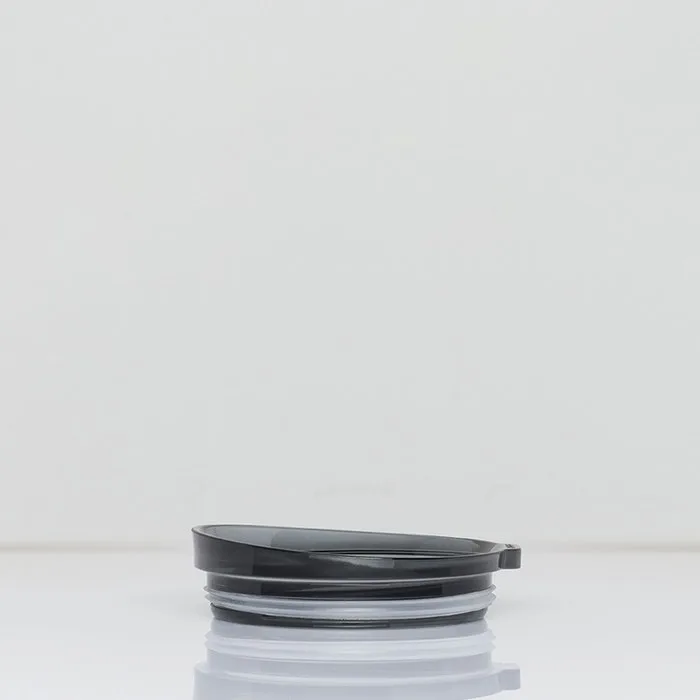
A lid keeps heat in and prevents spills during travel. Some steel cups come with a press-fit lid; others are open-top. If you plan to drink while hiking or store the cup with food inside, a lid is a practical addition.
Stackable shapes nest securely with other cookware or purifier bottles. Look for a cup that fits your existing kit — the best camp cup is the one you don't have to think about packing.
Decision rules for choosing your steel camp cup
- Pack space is tight: Choose a nesting cup that fits over or inside your purifier bottle. This eliminates a separate mug and keeps your kit compact. Measure your bottle's diameter before buying to ensure a snug nest.
- You drink coffee or eat meals from the cup: Pick a cup with at least 12–16 oz capacity for coffee and 20–30 oz for one-pot meals. A lid helps keep food hot and prevents spills.
- Weight is your top priority: Go with a titanium camp cup. You'll lose some heat retention, but you save ounces compared to steel. Titanium is best for ultralight trips; steel is fine for car camping or basecamp.
- You want multi-use gear: Look for a cup that also works as a bowl or measuring cup. Nesting cups often double as a bowl for dehydrated meals. A nesting cup can replace both your mug and your bowl — one less item to pack.
Product facts
-
Earthwell® xGrayl Camp Cup: The Earthwell xGrayl Camp Cup is optimized with a stackable shape and laser-finishing, and it clips to your pack or belt. It pairs directly with a Grayl purifier bottle, saving space and giving you a dedicated cup that stays accessible on the trail.
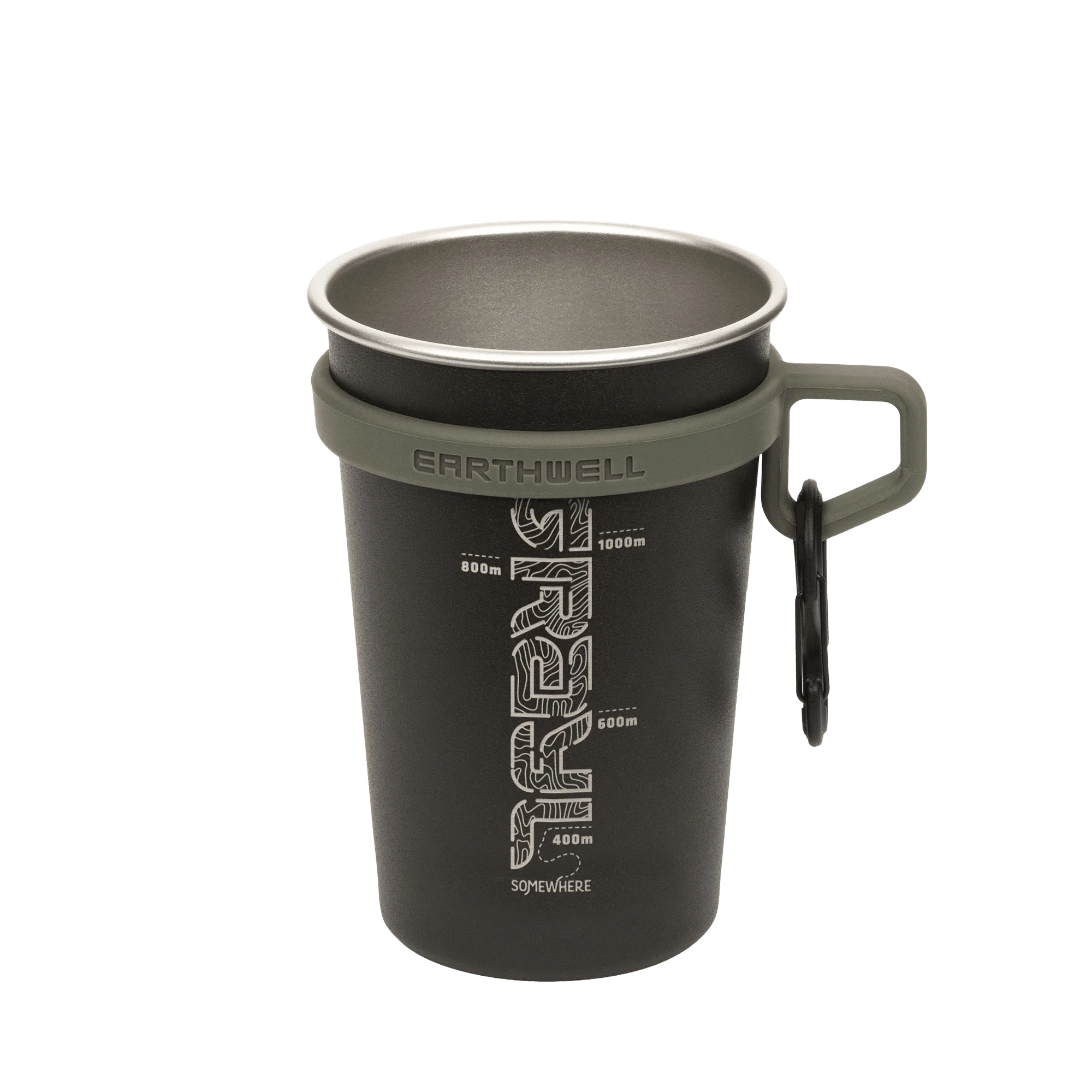
Earthwell® xGrayl Camp Cup
-
30oz GeoPress® Nesting Cup & Lid: The 30oz GeoPress Nesting Cup & Lid is designed as a nesting companion for the GeoPress bottle. Its larger 30oz capacity works for rehydrating meals or brewing coffee, and the included lid helps retain heat and prevent spills.
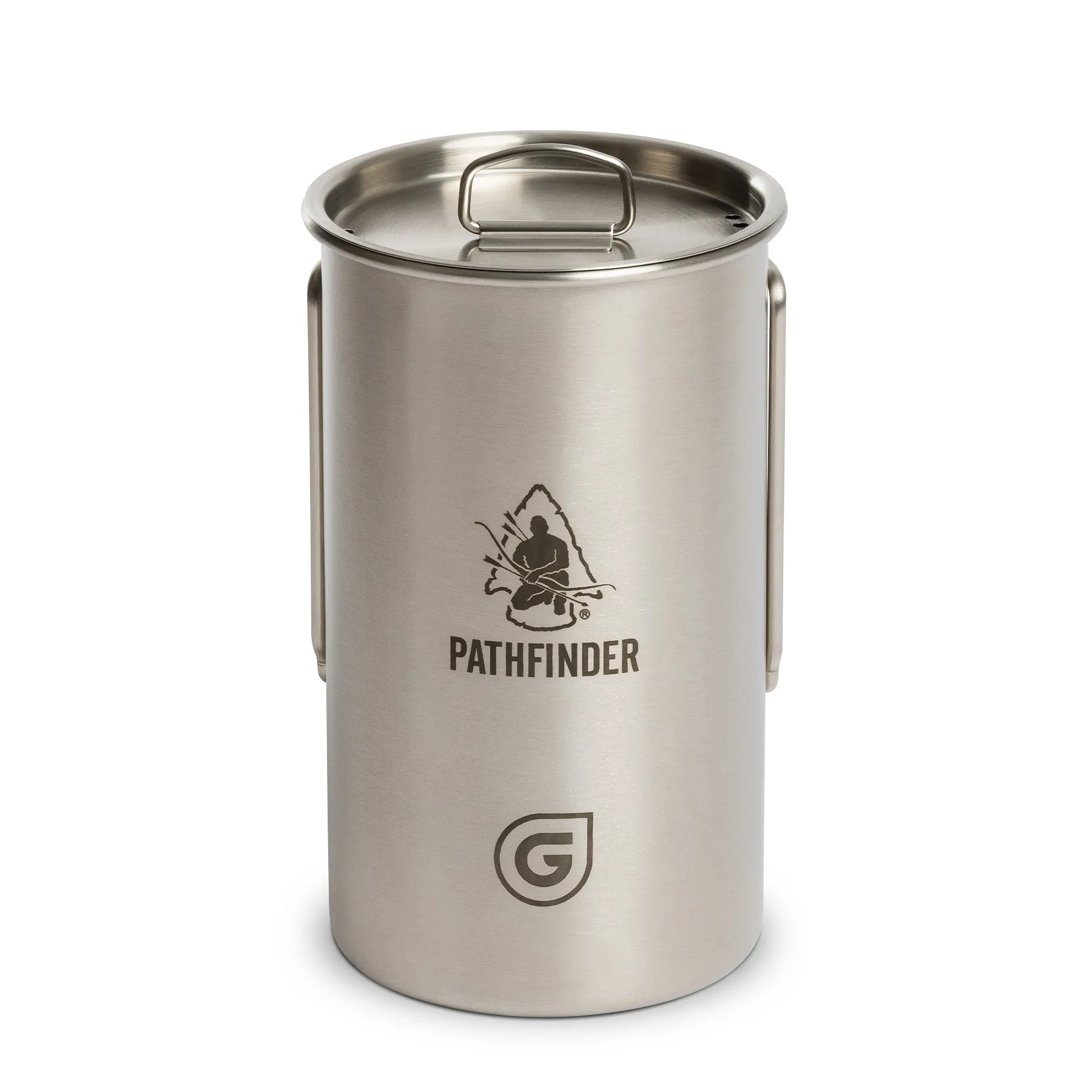
30oz GeoPress® Nesting Cup & Lid
Who should choose what
Best for
- Backpackers who carry a Grayl or GeoPress purifier and want to save pack space with a nesting cup
- Car campers or basecamp users who prefer a larger steel mug with a lid for coffee and meals
Not for
- Ultralight hikers who prioritize weight over heat retention — consider a titanium camp cup instead
- Anyone who needs a full cookset with a handle — a cup alone won't replace a pot