Quick Answer
For a Tesla Model 3 rear diffuser, prioritize fitment compatibility with your model year and body trim, then choose a material—carbon fiber for show and weight savings, or a durable alternative for daily driving.
Material Comparison: Carbon Fiber vs. Alternatives
Carbon fiber diffusers, like those made from pre-pregnated 2x2 weave, offer a high-end look and can be lighter than stock plastic or ABS parts. They also tend to hold a glossy finish that matches carbon accents on other aftermarket parts.
However, carbon fiber is more brittle than ABS plastic or polyurethane, and can crack under impact or during improper installation. If you frequently park on curbs or drive on rough roads, a more flexible material may last longer.
Thermoplastic or ABS diffusers are less expensive and more forgiving, but they may not provide the same visual depth or weight savings. The choice depends on whether visual flair or daily durability matters more to you.
Year and Trim Fitment Variations
Not all rear diffusers fit every Tesla Model 3. The 2017-2020 models have a different rear bumper contour compared to the 2021+ Highland refresh. Always check the product description for specific model year ranges.
Some diffusers are also designed for specific trims, such as the Performance or Long Range, because of exhaust or valance differences. A universal fit may require extra trimming or adapters, so it's safest to choose a part listed for your exact trim.
The Vorsteiner Volta Rear Diffuser, for example, is made for all 2017-2023 Tesla Model 3 trims, which covers a wide range without needing modifications.
Decision Rules for Choosing a Diffuser
- Check fitment first: Confirm the diffuser matches your Model 3's production year (e.g., 2017-2020 vs. 2021+) and trim level (Standard, Long Range, Performance). Avoid parts that only say 'universal' without year coverage. A part like the Vorsteiner Volta covers 2017-2023, simplifying fitment.
- Choose material by use case: Select 2x2 carbon fiber for a premium appearance and weight savings, or choose ABS/plastic for impact resistance and lower cost. If you track the car, carbon fiber's aero benefits matter more; for daily driving, durability may be the priority.
- Inspect installation complexity: Some diffusers require drilling or removing existing trim. Look for designs that use factory mounting points or include detailed instructions. Fit and finish depend on proper installation. Review install guides before buying to see if you need professional help.
Product Facts
-
Vorsteiner Tesla Model 3 Volta Rear Diffuser Carbon (Track Edition) Fiber PP 2x2 Glossy: Crafted from high-grade, pre-pregnated 2x2 carbon fiber with a glossy finish. This construction ensures a consistent weave and a durable glossy surface that resists fading, while also adding rigidity for improved aerodynamics.
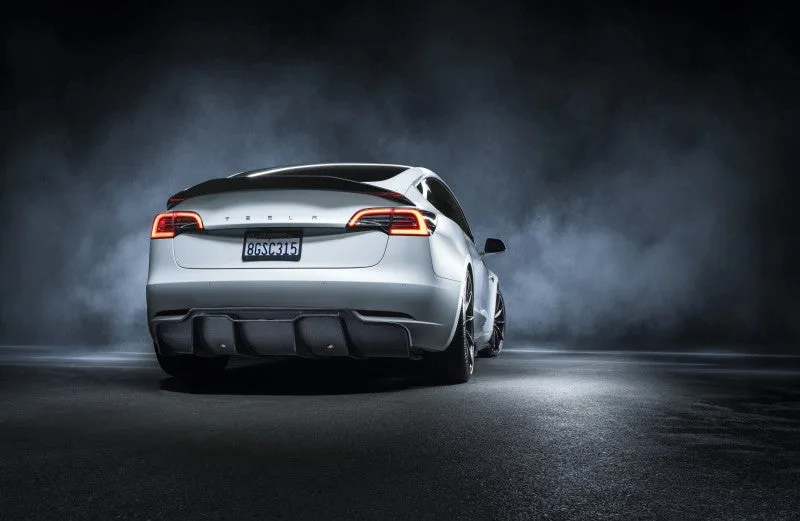
Vorsteiner Tesla Model 3 Volta Rear Diffuser Carbon (Track Edition) Fiber PP 2x2 Glossy
Who Should Get Which Type
Best For
- Enthusiasts who want a visual upgrade and track-oriented aero benefits
- Drivers who can accept a higher upfront cost for carbon fiber's weight and gloss
Not For
- Budget-focused buyers who need a durable, low-maintenance daily driver solution