Quick answer
Choose a toddler beanie by matching the material and fit to the season: lightweight bamboo for mild weather and a chunky cable knit beanie for cold days. Always check the size chart rather than relying on age labels.
Why material matters more than style
A beanie's fabric determines how well it works in different temperatures. Bamboo blends are naturally breathable and moisture-wicking, making them ideal for spring and fall when temperatures fluctuate. Chunky knits trap more warmth but can overheat a toddler if worn indoors or during active play.
Consider your local climate and your child's activity level. A toddler who spends most of the day indoors may need a lighter hat even in winter, while outdoor excursions demand more insulation.
The trade-off between warmth and breathability
Thicker beanies provide excellent warmth but reduce airflow, which can lead to sweating and irritation. Thinner beanies offer less insulation but allow heat to escape. There is no single perfect hat for every situation, so owning two different weights gives you flexibility.
For example, the Chunky Cable Knit Beanie in bamboo is a good middle ground: it is thick enough for cold days but the bamboo fibers wick moisture away, reducing the risk of overheating compared to synthetic knits.
How to choose a toddler beanie for each season
- Winter (cold, dry, or snowy): Choose a chunky cable knit beanie or a lined knit. Look for a snug fit that covers the ears. Avoid overly loose weaves that let cold air in. Check that the beanie reaches just below the ears without sliding down over the eyes.
- Spring/Fall (mild, variable temps): Pick a lightweight bamboo or cotton beanie. A thinner knit allows heat to escape when the sun comes out but still provides light warmth on cool mornings. A beanie with a ribbed cuff can be rolled up for extra ventilation on warmer afternoons.
- Summer (hot, sunny): Skip the beanie entirely unless you need sun protection. Use a wide-brimmed sun hat instead. If you must use a beanie, choose the thinnest bamboo option and only in air-conditioned spaces. No beanie is breathable enough for active outdoor play in summer heat.
- Sizing: measure, don't guess: Measure your toddler's head circumference just above the eyebrows and ears. Compare with the brand's size chart. A beanie should fit snugly without leaving red marks or slipping off. If between sizes, size up for a looser fit that can be rolled at the brim.
Product spotlight
-
Chunky Cable Knit Beanie in: Made from ultra soft cable knit bamboo, this beanie is designed to keep little heads cozy and warm on cold days. Smooth, breathable bamboo fibers prevent unruly hat hair and wick away moisture. This makes it a versatile choice for cold weather because it provides warmth without the sweatiness of many synthetic beanies.
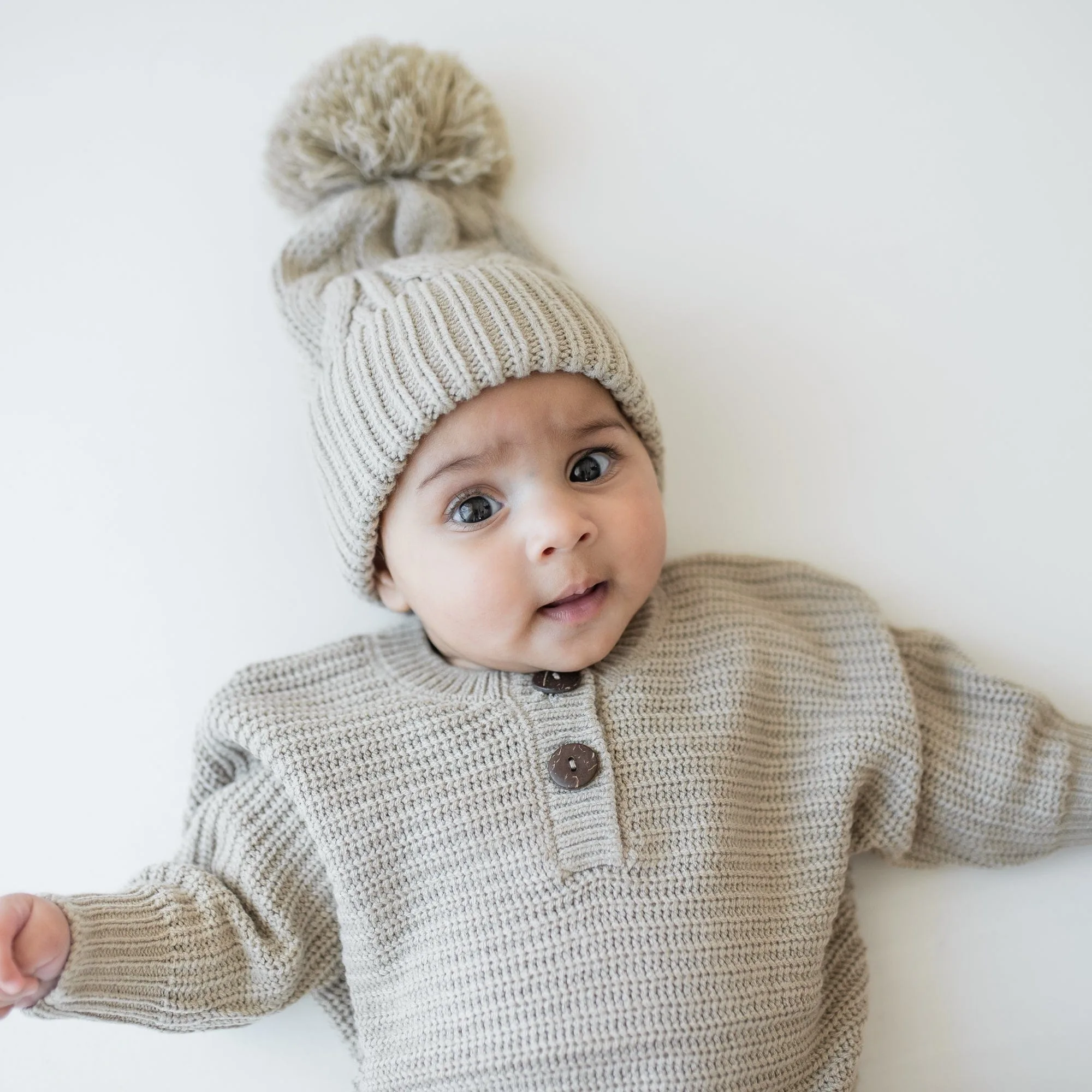
Chunky Cable Knit Beanie in
Who should use this guide
Best for
- Parents looking for a single beanie that works across multiple seasons
- Caregivers who want practical sizing and material advice without marketing hype
Not for
- Parents seeking a beanie for summer sun protection (choose a sun hat instead)
- Those who only need a beanie for indoor use (a thin cotton cap may suffice)