Why Choose a Used Manual Focus Lens for Your DSLR?
A used manual focus lens can give you excellent image quality, unique character, and a much lower price than modern autofocus glass. But buying one for a DSLR isn't as simple as picking any vintage lens. You need to match the mount, understand manual-only operation, and accept that some features you're used to won't work.
This guide walks through the real decisions and trade-offs when shopping for a used manual focus lens for your DSLR.
Two Used Manual Focus Lenses with Different Mounts
-
Used Opteka 500mm f6.3 DG Mirror Lens - Canon: Compact mirror lens delivering impressive 500mm focal length in a lightweight, portable design. Canon EF mount ensures seamless compatibility with Canon systems. This lens mounts directly to Canon DSLRs without an adapter — no extra cost or compatibility guesswork. The f6.3 aperture is fixed, so you lose the ability to stop down for depth of field control.
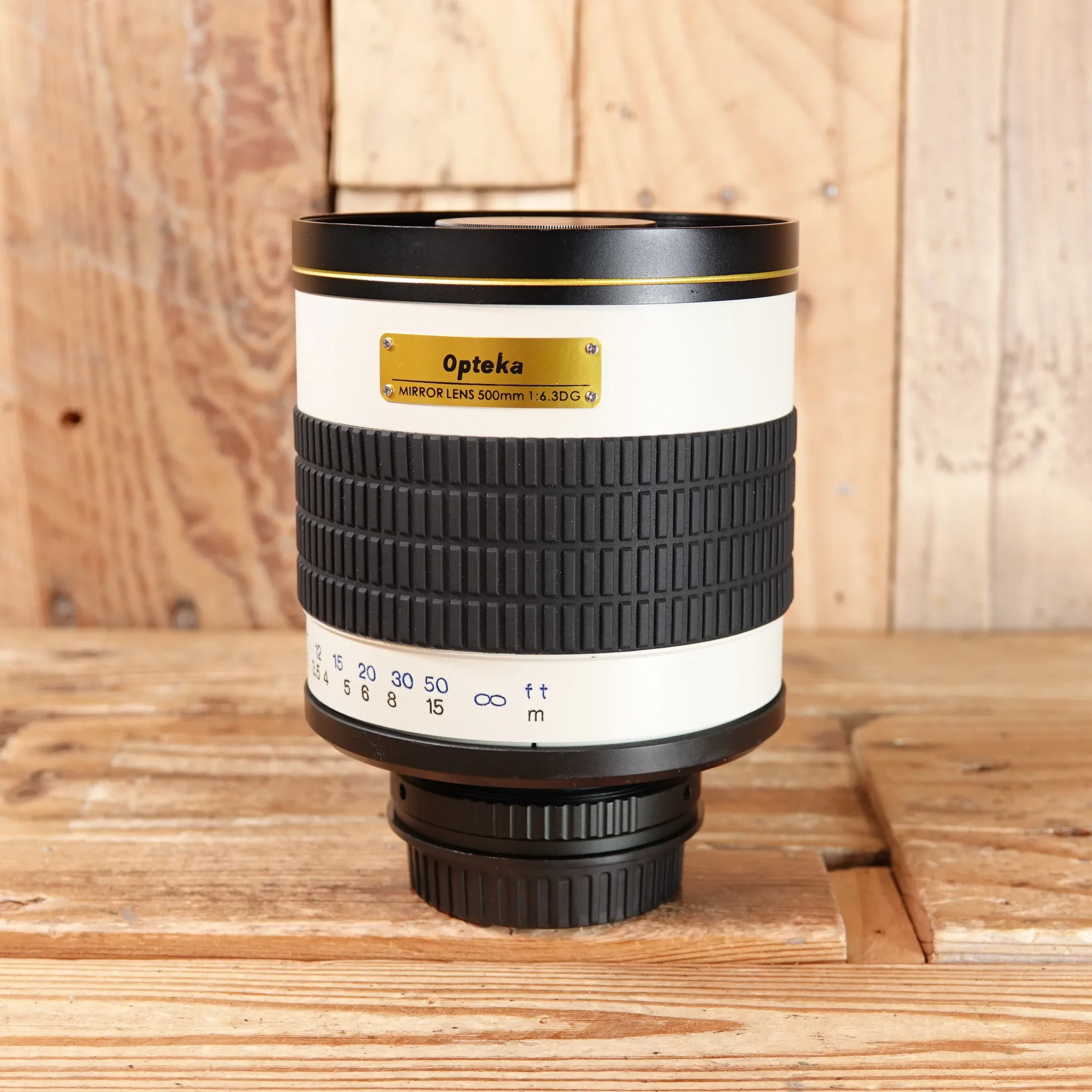
Used Opteka 500mm f6.3 DG Mirror Lens - Canon
-
Used Minolta MD Zoom Rokkor 35-70mm F3.5 Lens: Fully manual focus and aperture control. A reliable choice for film photographers and digital mirrorless users with MD-mount adapters seeking an affordable, practical zoom option. The Minolta MD mount requires an adapter for Canon or Nikon DSLRs. You'll have full manual control, but autofocus and electronic aperture coupling won't exist. That's fine if you're comfortable shooting manually.
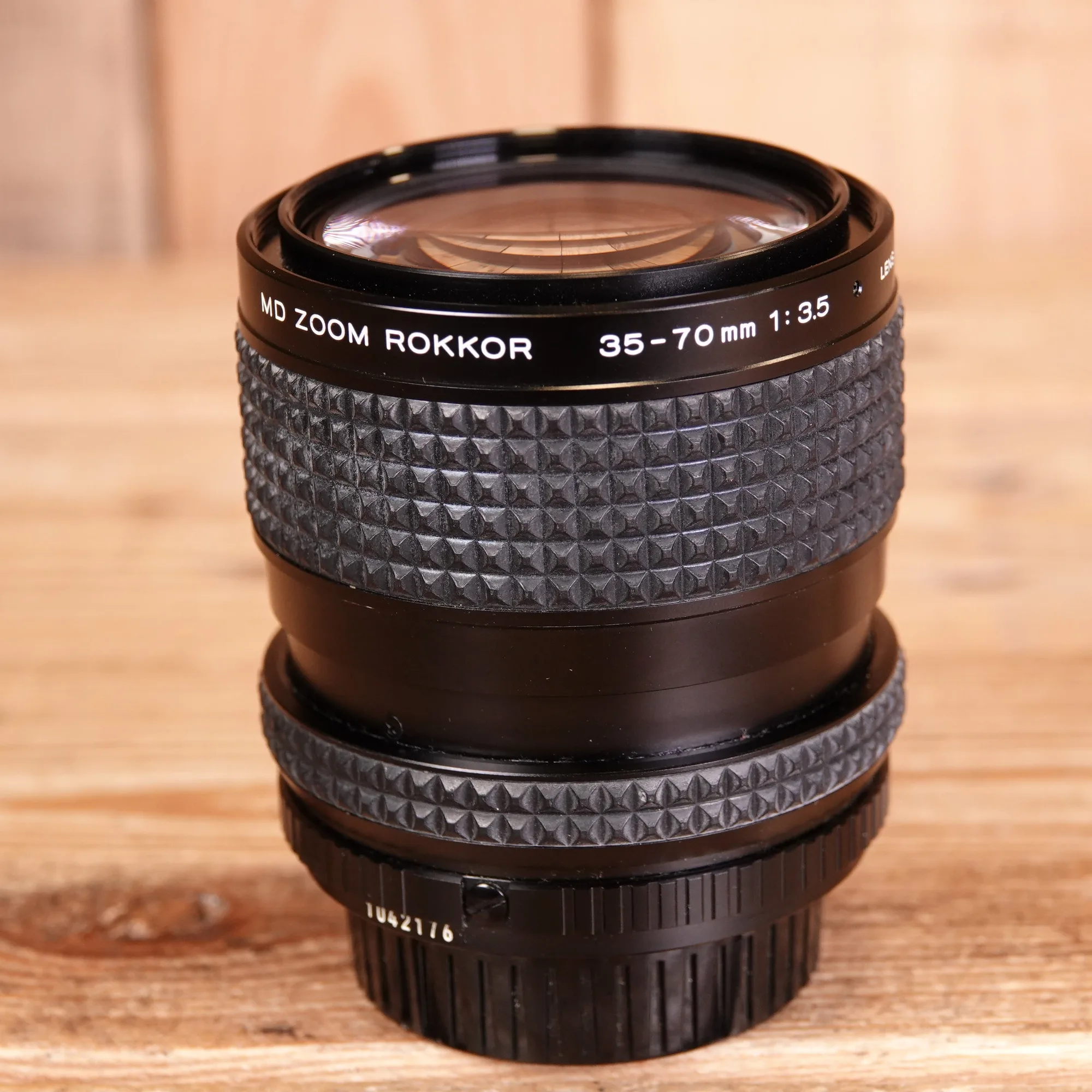
Used Minolta MD Zoom Rokkor 35-70mm F3.5 Lens
Key Compatibility Checks Before You Buy
Not every vintage lens will work easily on your DSLR. Here's what to look for:
- Mount type: Lenses with the same mount as your camera body (like Canon EF) need no adapter. Lenses with other mounts (Minolta MD, Nikon F, Pentax K, etc.) require a mechanical adapter. Check that an adapter exists for your camera brand.
- Flange distance: DSLRs have a longer flange distance than mirrorless cameras. Lenses designed for rangefinders or older SLRs may not focus to infinity on a DSLR without corrective optics. This is less of an issue with SLR-mount lenses like Minolta MD.
- Electronic compatibility: Manual focus lenses have no electronic contacts. Your DSLR won't record aperture data in EXIF, and you'll need to use stop-down metering or manual exposure mode. Some bodies offer focus confirmation with a chip adapter.
Condition: What to Expect from Used Lenses
Used lenses are sold as-is, with honest descriptions of wear. The Opteka 500mm f6.3 DG Mirror Lens is listed as "Used - Excellent" but has "a little dust" — common in mirror lenses and usually harmless. The Minolta MD Zoom Rokkor 35-70mm F3.5 is also "Used - Excellent" with no mention of dust or damage, suggesting clean glass.
Always check for haze, fungus, scratches, and smooth focus ring operation. Dust inside the optic is common and rarely affects image quality, but heavy haze or fungus will soften your photos.
Trade-Offs of Manual Focus on a DSLR
Manual focus on a DSLR is slower than autofocus, especially with a telephoto lens. The Opteka 500mm f6.3 mirror lens has a fixed aperture and no autofocus — you'll need good light and a steady hand. The Minolta 35-70mm zoom is more forgiving for general shooting but still requires patience.
On the plus side, you gain full control over focus placement, often sharper results at your chosen focus point, and a much lower price than modern equivalents.
Real Examples from Harrison Cameras
- Used Opteka 500mm f6.3 DG Mirror Lens - Canon: The f6.3 aperture provides excellent light-gathering capability for wildlife, sports, and distant subject photography. DG optical formula minimizes aberrations. A 500mm lens at this price is rare. The fixed f6.3 aperture means it's best for bright conditions, but the compact mirror design makes it portable enough to carry on hikes.
- Used Minolta MD Zoom Rokkor 35-70mm F3.5 Lens: F3.5 maximum aperture provides decent low-light performance and shallow depth-of-field capability. Compact and lightweight design typical of vintage Minolta glass. This zoom covers 35-70mm — a practical range for everyday use. The constant f3.5 is faster than many vintage kit zooms, and the all-metal build feels solid. Just remember you'll need an MD-to-EF or MD-to-F adapter.
Making Your Decision
If you want the longest reach for the lowest cost, a used mirror lens like the Opteka 500mm f6.3 is a straightforward choice — it mounts directly to Canon DSLRs and is ready to shoot. For a versatile everyday zoom with classic rendering, the Minolta MD 35-70mm f3.5 offers great value but requires an adapter.
The best used manual focus lens for your DSLR is one that matches your mount, fits your shooting style, and comes with a clear condition report. Take your time, check the details, and enjoy the process.