Why Face Shape Matters for Your Veil
A veil frames your face during the ceremony and in photos. The right length and embellishment placement can balance your features, while a mismatched veil may draw attention away from your best angles. This guide helps you match veil details to your face shape using real bridal designs.
Veil Options That Affect Your Look
-
Adeline Veil: The Adeline Veil is a floor-length or cathedral-length soft tulle veil with hand-beaded floral sprays along the entire edge, including glass beads, sequins, faux pearls, and pleated silk chiffon buds. The all-over edge beading creates a horizontal line that can widen a narrow face, but may overwhelm a round or heart-shaped face if the blusher is worn forward.
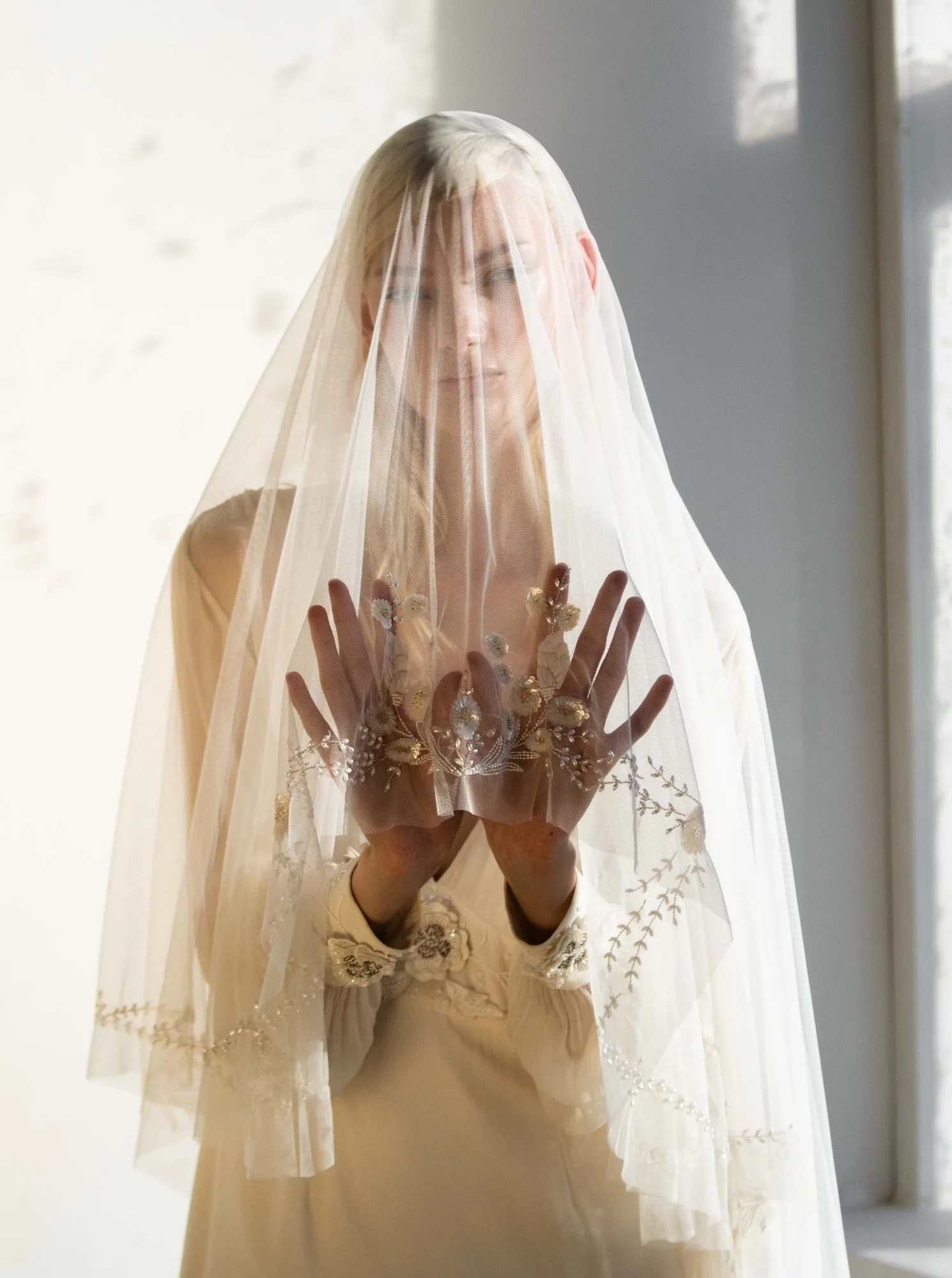
Adeline Veil
-
Sitaara Veil: The Sitaara Veil is a cathedral-length veil with hand-embroidered faceted crystals, bugle beads, and moonstones in a celestial motif. The embroidery is densest at the crown, with a degradé effect of falling stars. The dense crown embroidery draws the eye upward, which can elongate a round or square face. The degradé effect softens the transition, suiting most face shapes.
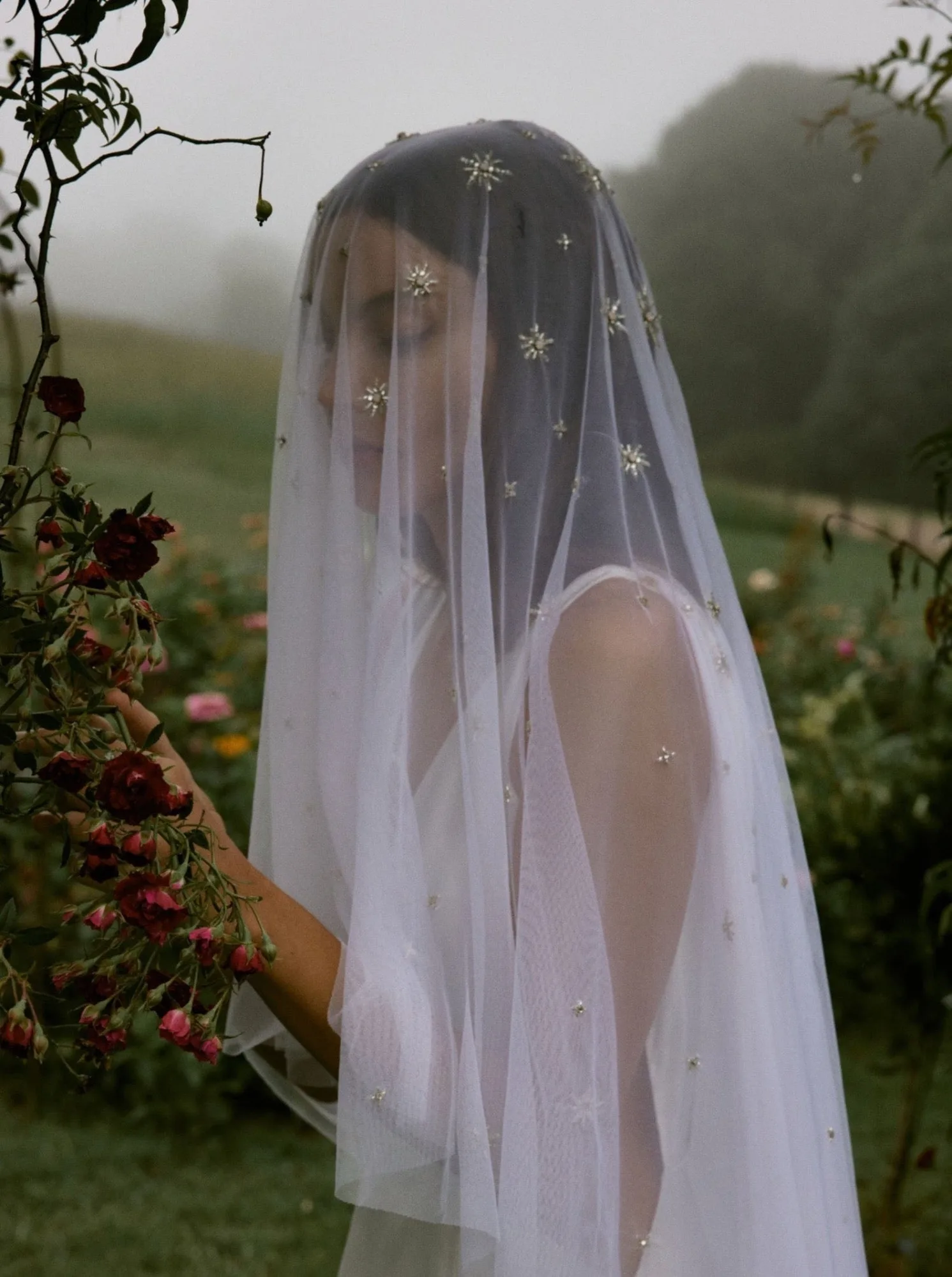
Sitaara Veil
-
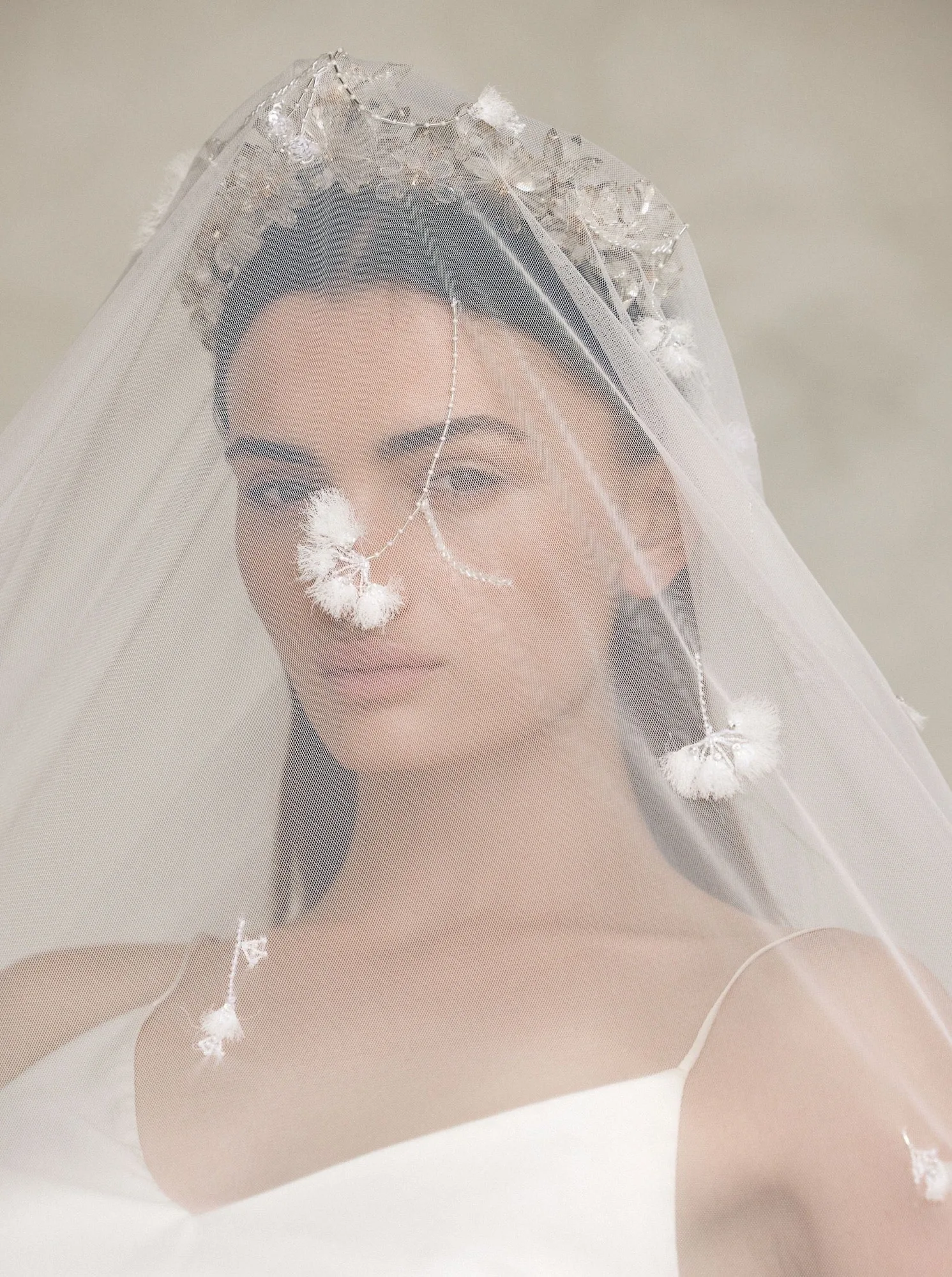
Zinnia Veil: The Zinnia Veil is a cathedral-length veil with a delicate design of branching dandelions in soft ivory and pale silver, using glass beads, sequins, hand-cut georgette petals, and faceted crystals. The embroidery is densest at the crown with a degradé effect of falling flowers. Like the Sitaara, the crown-heavy embroidery lifts the visual focus. The branching pattern can complement angular features by adding softness.
Matching Veil Length to Face Shape
Veil length is not just about dress silhouette—it also affects how your face is framed. Floor-length veils (like the Adeline Veil in floor length) end around the hem, which can make a long face appear more balanced by adding width at the bottom. Cathedral-length veils (available for all three veils here) extend beyond the train, drawing the eye downward and elongating the overall line. For round or heart-shaped faces, a cathedral length with crown-heavy embroidery (like the Sitaara or Zinnia) can create a lengthening effect.
Embellishment Placement and Your Features
Where the beads and embroidery sit changes how your face is perceived. Veils with edge-only beading (Adeline Veil) create a border that can emphasize the width of your face, so they tend to suit oval or longer face shapes. Veils with dense crown embroidery that fades downward (Sitaara and Zinnia) pull attention upward, which flatters round, square, and heart-shaped faces by creating vertical lines. The degradé effect means the heaviest detail is near your face, then softens—so the focus stays on your eyes and cheekbones.
Blusher Position Changes the Frame
All three veils include a traditional blusher—a layer that can be worn over the face or flipped back. Wearing the blusher forward creates a soft, opaque frame that can minimize a strong jawline or a prominent forehead. Flipping it back reveals the full face and the crown embroidery, which is ideal for oval or diamond-shaped faces that carry detail well. The Adeline Veil's edge beading is visible when the blusher is back, adding a decorative frame around your shoulders.
Veil Recommendations by Face Shape
- Oval Face: Almost any veil works. The Adeline Veil's edge beading or the Sitaara's crown embroidery both complement balanced proportions.
- Round Face: Choose a cathedral-length veil with crown-heavy embroidery (Sitaara or Zinnia) to create vertical lines and lengthen the face.
- Square Face: A veil with soft, downward-fading embroidery (Zinnia) softens angular features. Avoid heavy edge beading that emphasizes width.
- Heart Face: A cathedral veil with dense crown detail (Sitaara) draws attention upward, balancing a wider forehead and narrower chin.
- Long Face: A floor-length veil (Adeline Veil in floor length) with edge beading adds horizontal interest and can make the face appear shorter.