Quick answer
The best outdoor vest for you balances warmth, breathability, and packability against your primary activity. For high-output mountain sports choose a hybrid design; for all-around layering a synthetic insulated vest works year-round.
Why insulation type matters for your activity
Synthetic insulation like Primaloft® Gold retains warmth when damp and dries faster than down, making it ideal for sweat-prone activities or wet conditions. If you run hot or do stop-start sports, a hybrid vest that combines different fabrics in one garment can give you targeted warmth where you need it and breathability where you don't.
Weight and packability trade-offs
A lighter vest is easier to stow in a pack or wear under a shell, but may not provide enough insulation for cold rest breaks. Heavier vests offer more warmth but take up more space. The key is to match the vest's weight to the coldest temperature you'll encounter during your activity, not just the start temperature.
Fit and layering considerations
A vest meant for layering should fit close to the body without restricting movement. Look for a cut that allows a base layer and a thin mid-layer underneath, but isn't so loose that it bunches under a shell. For high-tempo activities, a trimmer fit reduces flapping and improves moisture transfer.
How to choose your outdoor vest: decision rules
- Match insulation to output: If your activity is high-output (running, fast hiking, ski touring) choose a hybrid vest with breathable panels. For low-output or static use (camping, commuting) a fully insulated vest works better.
- Check packability: If you need to stow the vest in a pack or pocket when not worn, look for a lightweight synthetic model that compresses small. Heavier vests are less packable but warmer. A packable vest is only useful if you actually bring it; test that it fits in your pack or jacket pocket.
- Prioritize breathability for active use: For aerobic activities, choose a vest with mesh or stretch panels over the back and sides. Full insulation can trap heat and lead to overheating.
Vest options that match different needs
-
W's Dunfri Vest: The W's Dunfri Vest uses Spinner Ripstop fabric and Primaloft® Gold synthetic insulation, making it lightweight and durable. This combination gives you reliable warmth even if you sweat or get caught in light rain, and the tough face fabric resists snags from pack straps or brush.
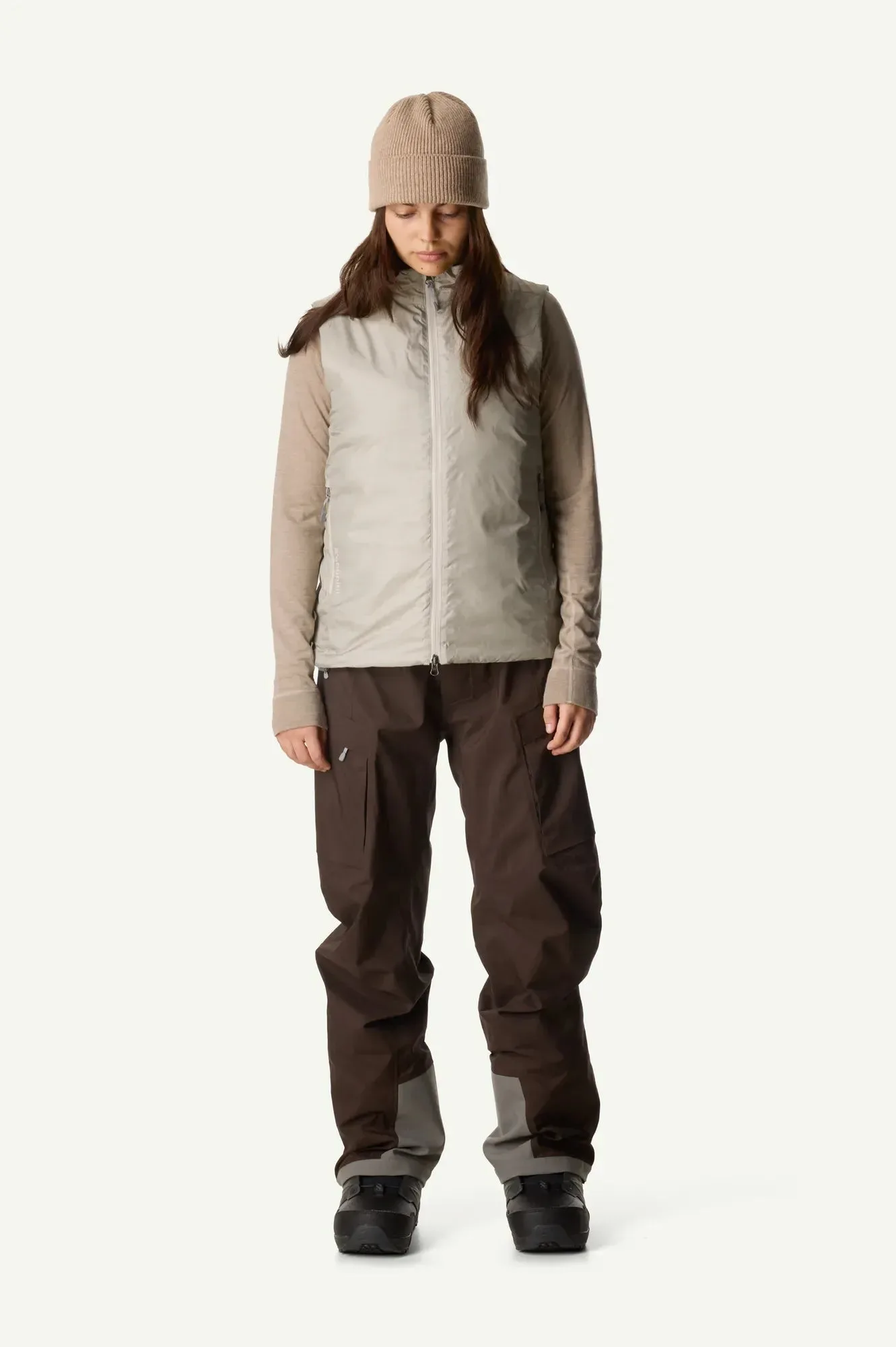
W's Dunfri Vest
-
W's Moonwalk Vest: The W's Moonwalk Vest features a hybrid design that combines different fabrics for a balance of weather protection, weight, warmth, and breathability. The hybrid construction lets you stay warm on exposed ridges while staying cool on climbs, making it a versatile choice for alpine missions with variable effort.
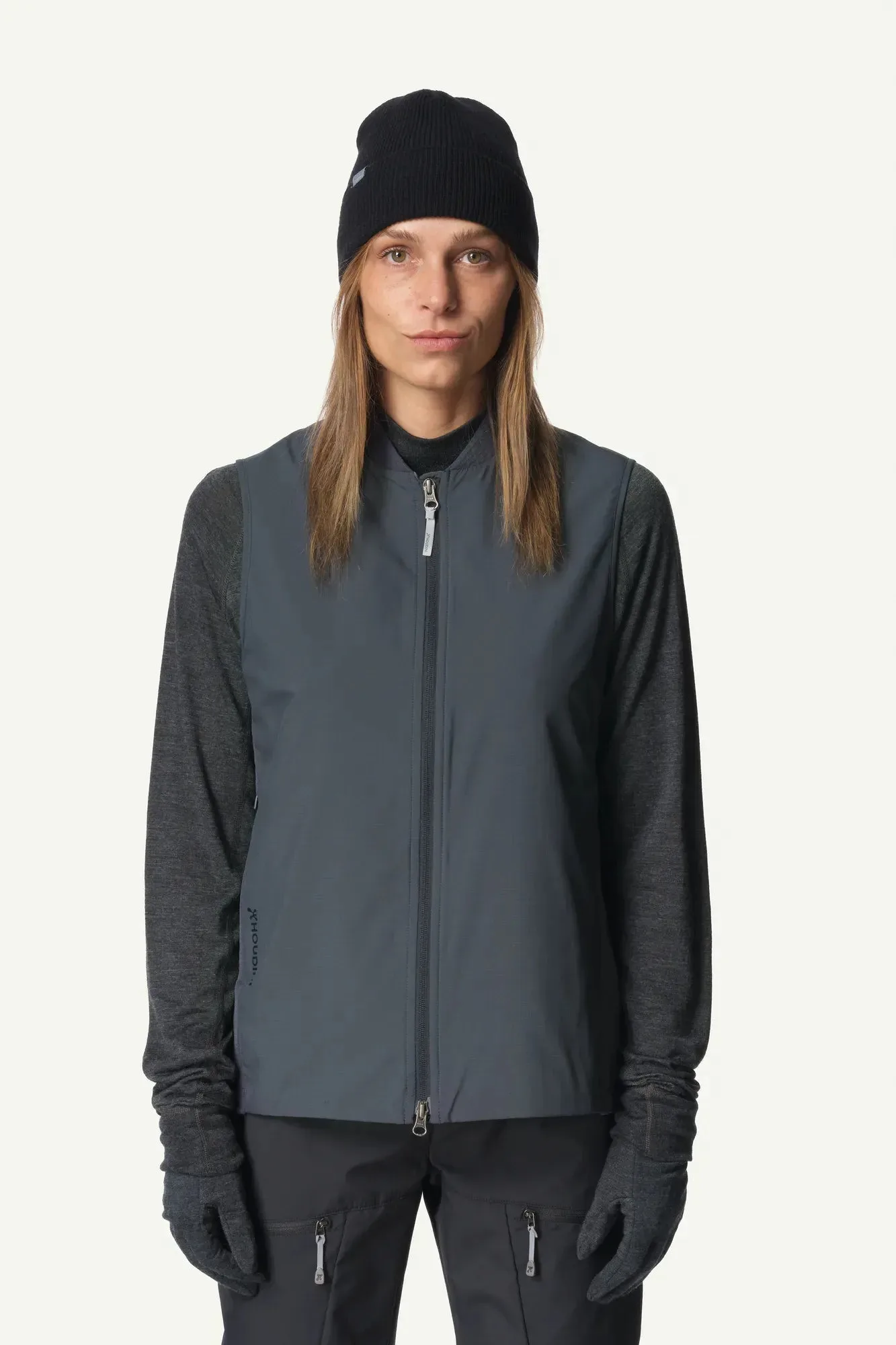
W's Moonwalk Vest
Who each vest style suits best
Best for
- High-output mountain sports where you need targeted warmth and breathability (e.g., Moonwalk Vest hybrid design)
- All-around layering in variable conditions where durability and synthetic insulation are key (e.g., Dunfri Vest)
Not for
- Extreme cold or static use where a heavier insulated jacket or down vest would be more appropriate
- Budget-first buyers who need the lowest price point regardless of features