What a Wheeled Walking Frame Does Differently
A wheeled walking frame is a mobility aid that adds front wheels to a standard walking frame, making it easier to push forward without lifting the entire frame. This can reduce fatigue and improve walking rhythm for users who need support but still have some weight-bearing ability.
The right choice depends on the type of support you need, your home's layout, and any specific conditions like arthritis or dementia. Below we break down the key differences between three common wheeled frame designs.
Three Wheeled Frame Designs for Different Needs
-
Wheeled Gutter Walking Frame: The Wheeled Gutter Walking Frame is a lightweight, adjustable mobility aid with padded forearm supports for enhanced comfort and stability. Ideal for users with limited grip strength, arthritis, or neurological conditions. Padded forearm troughs distribute weight along the forearm, reducing stress on wrists and hands. This makes it a strong choice if you have arthritis, weak grip, or conditions that affect hand control.
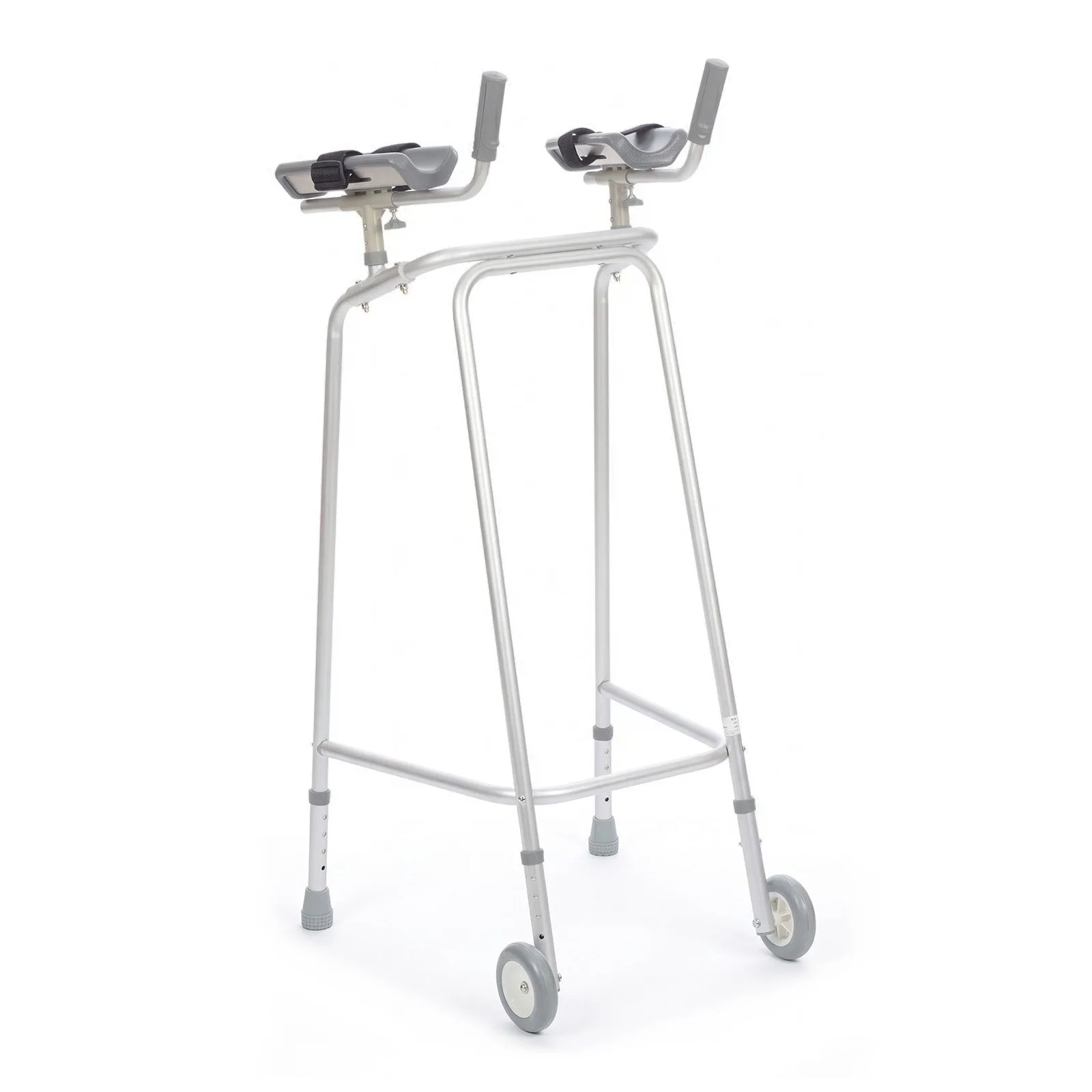
Wheeled Gutter Walking Frame
-
Aluminium Narrow Walking Frame with Wheels: These Narrow Walking Frames are easily manoeuvrable through most domestic doorframes. They feature 2 wheels at the front and 6 position height adjustment for extra flexibility. If your home has narrow doorways or tight corners, a narrow frame is essential. The 2 front wheels help it glide forward, while the height adjustment lets you set a comfortable hand position.
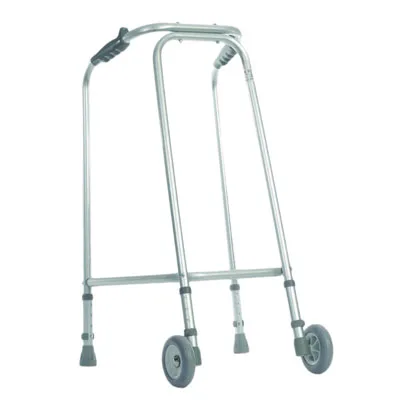
Aluminium Narrow Walking Frame with Wheels
-
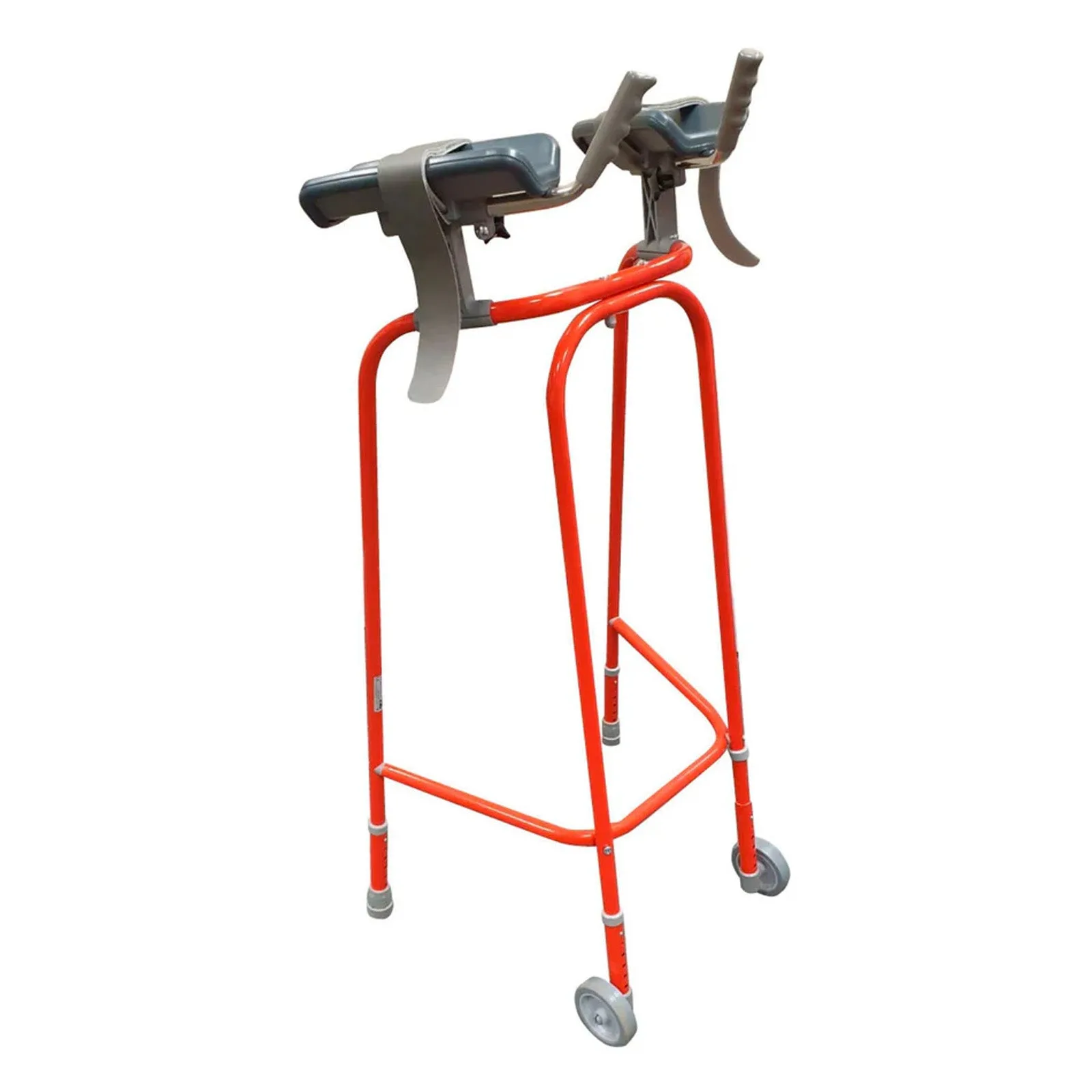
Red Dementia Wheeled Trough Frame: The Red Dementia Wheeled Trough Frame is a specialist mobility aid designed for users with dementia, visual impairments, and mobility challenges. Featuring padded forearm troughs, adjustable handles, front wheels, and a 160kg capacity. The padded troughs and adjustable handles offer similar forearm support to the gutter frame, but with a higher weight capacity (160kg) and a design that suits users who may have reduced spatial awareness or vision.
Gutter Frame vs Narrow Frame vs Dementia Frame
The table below compares the three frames across key decision factors. Use it to quickly see which design matches your situation.
- Support type: Gutter frame and dementia frame both use padded forearm troughs, which support the forearm and reduce hand strain. The narrow frame uses standard handles, so you rely more on hand grip.
- Maneuverability in the home: The narrow frame is specifically designed to fit through standard domestic doorways. Gutter and dementia frames are not described as narrow, so measure your doorframes before choosing.
- Size options: All three frames come in Small, Medium, and Large sizes. The gutter frame also offers an Extra Tall option, which may suit taller users better.
- Weight capacity: The dementia frame has a confirmed 160kg capacity. The catalog does not specify capacities for the gutter or narrow frames, so check with the supplier if weight is a concern.
- Special conditions: The dementia frame is explicitly designed for dementia and visual impairment. The gutter frame is recommended for arthritis and neurological conditions. The narrow frame is a general-purpose design.
Measuring Your Home and the User
Before choosing a frame, measure the width of your doorframes and hallways. A narrow frame is your best bet if you need to navigate tight spaces. Also measure the user's height and compare it to the available size options (Small, Medium, Large, and Extra Tall for the gutter frame). The frame should allow a slight bend in the elbows when the hands rest on the handles or troughs.
The catalog does not provide exact height ranges for each size, so contact customer support or refer to the product page for detailed sizing guides if available.
What the Catalog Does Not Cover
The supplied information does not include assembly instructions, care guidelines, or safety ratings for any of the three frames. It also does not specify whether the frames fold for storage or transport. If these details matter to you, check the product page or contact the seller before ordering.
Similarly, load limits are only confirmed for the dementia frame (160kg). For the other frames, assume standard adult use unless confirmed otherwise.