Quick answer
Choose an illuminated globe with a physical map for geography lessons, a kid-friendly illustrated globe for younger learners, or a compact celestial globe for stargazing. Your choice depends on who will use it and where it will sit.
Size and placement matter
A 30cm desktop globe works well on a desk, shelf, or side table. Smaller 10cm globes are portable and fit easily into a backpack or a child's room. Measure your space before buying – a globe that's too large for its spot will feel cramped, while one that's too small may be hard to read from across the room.
Illuminated vs. non-illuminated
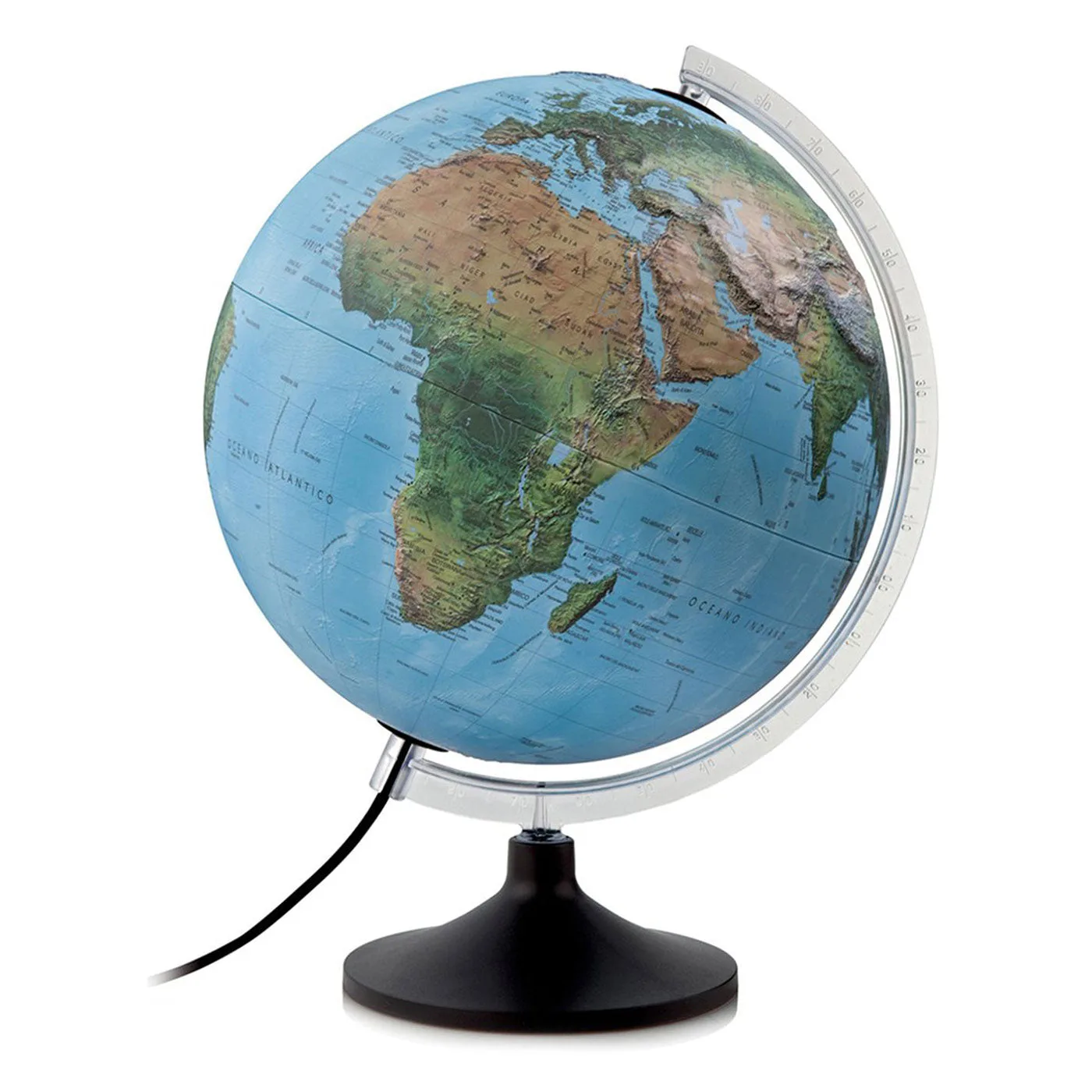
An illuminated globe doubles as a nightlight and a learning tool. When the light is off, you see a physical map with mountain ranges; switch it on and political borders appear. This two-in-one feature is especially useful in classrooms where you want to switch between geography and current affairs. Non-illuminated globes are simpler and often less expensive, but they lack that interactive layer.
Map style: physical, political, or illustrated
Physical globes show terrain features like mountains and ocean depths. Political globes highlight country borders and cities. Illustrated globes replace standard maps with drawings of landmarks and animals – great for sparking curiosity in young children but less useful for serious geography study. Decide what you want to teach or explore before picking a style.
How to choose: decision rules
-
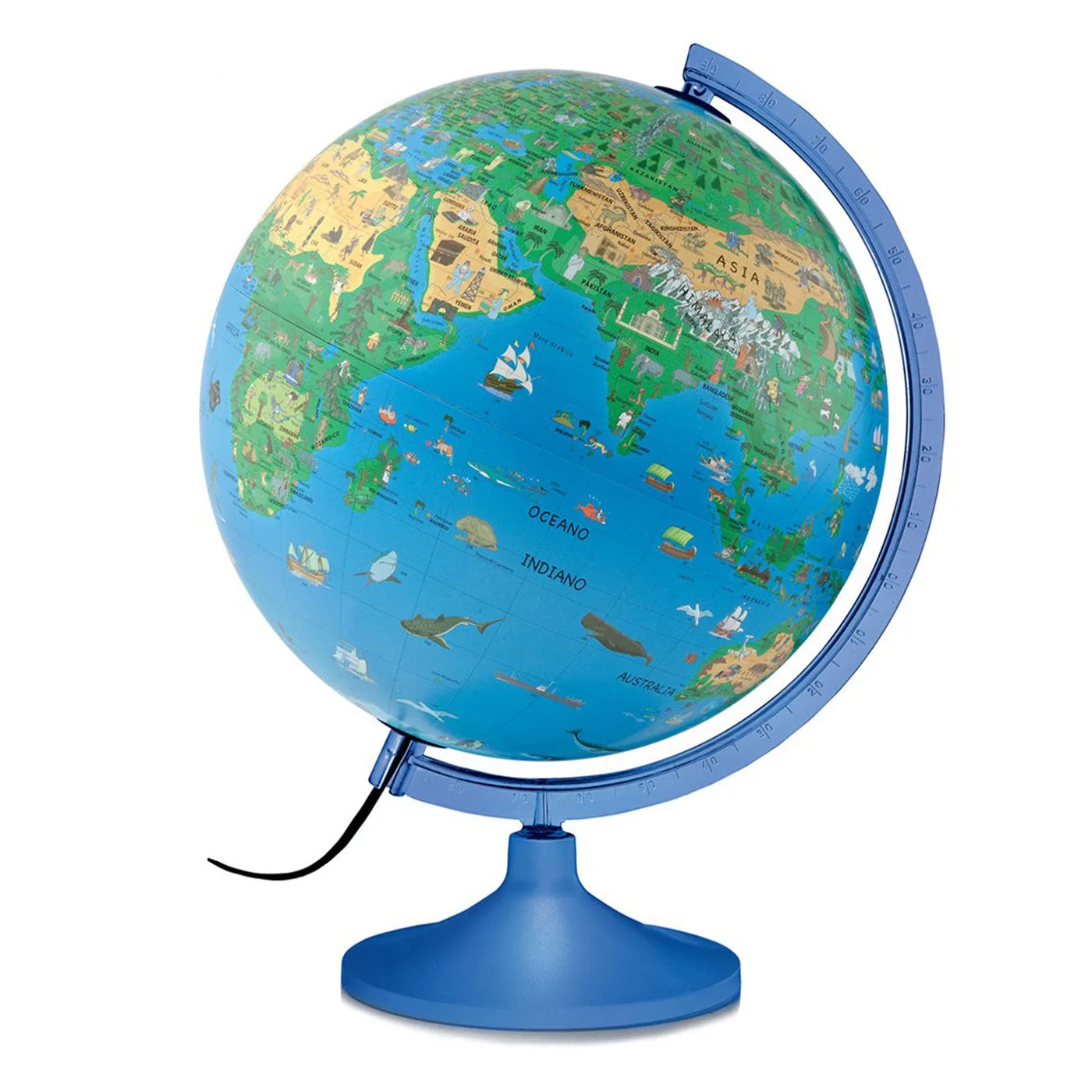
For a young child (ages 4–8): Choose an illustrated globe like the Family S Solid. The animal and landmark drawings capture attention and make geography feel like a story.
-
For a classroom or home school: Pick an illuminated relief globe such as the Solid R Relief. The raised mountains and light-up political map support multiple lessons in one tool. Check that the power cable (USB) reaches your desk or shelf.
-
For a small space or on-the-go learning: A compact 10cm globe works well. The Discovery Zone Terrestrial Globe is clear and portable, while the Celestial Globe adds a stargazing layer.
-
For astronomy fans: Add a celestial globe. The Discovery Zone 360 Degree Celestial Globe charts constellations and fits alongside a terrestrial globe for a complete set. Pair it with the terrestrial version if you want both Earth and sky in the same compact size.

Discovery Zone 360 Degree Celestial Globe
Product facts
-
Family S Solid 30cm World Globe: The Family S Solid 30cm globe features an illustrated surface with famous landmarks and animals instead of a traditional map, and includes an illustrated index. This makes it ideal for younger learners who respond to visual storytelling, but less suited for older students needing detailed political boundaries.
Family S Solid 30cm World Globe
-
Solid R Relief 30cm World Globe: The Solid R Relief 30cm globe displays an up-to-date physical map with raised mountain ranges you can trace, and transforms into a political map when the halogen light is switched on. The tactile relief and dual-map feature make it a versatile teaching tool for classrooms and home schools where you want to explore both landforms and borders.
Which globe fits you?
Best for
- Parents who want a fun, visual introduction to world geography for young children
- Teachers and home-schoolers who need a dual-map (physical/political) teaching globe
- Space-conscious buyers who want a portable globe for desk or backpack
Not for
- Serious geography students who need detailed political boundaries without illustrations
- Anyone seeking a large floor-standing globe for a library or office