Quick answer
Focus on three things: a tread pattern that grips loose dirt and rocks, enough cushioning to absorb uneven terrain, and a secure fit that prevents your foot from sliding inside the shoe.
Why all-terrain shoes differ from road-running shoes
Road-running shoes prioritize smooth heel-to-toe transitions on pavement. All-terrain athletic shoes use deeper lugs, stiffer midsoles, and often a wider base to handle mud, gravel, and roots. The trade-off is that an aggressive tread can feel less comfortable on hard, flat surfaces.
Cushioning versus ground feel
More cushioning protects your joints on rocky descents but can reduce your ability to feel the trail underfoot. Less cushioning improves stability and balance on technical sections but may leave your feet sore after long miles. Your choice depends on the terrain you run most often.
How to choose the right all-terrain shoe
- Check the lug pattern and depth: Look for lugs that are at least 4–6 mm deep and spaced widely enough to shed mud. Chevron-shaped or multi-directional lugs provide grip on both ascents and descents. A flat or shallow tread is a common mistake — it will slip on loose dirt and wet rock.
- Match cushioning to your typical trail surface: If you run on smooth, hard-packed dirt, moderate cushioning (around 20–25 mm stack height) offers a good balance of comfort and stability. For rocky or root-filled trails, choose a shoe with more cushioning and a protective midsole plate. Too much cushioning on technical trails can make you feel unstable; too little on long descents can lead to sore feet.
- Test the fit with your running socks: Try the shoe on with the socks you actually run in. Your heel should not lift, and you should have about a thumb's width of space beyond your longest toe. All-terrain shoes often have a snugger midfoot to prevent sliding on side slopes. A loose heel is a common issue — it causes blisters and reduces control on uneven ground.
Shoe features that matter
-
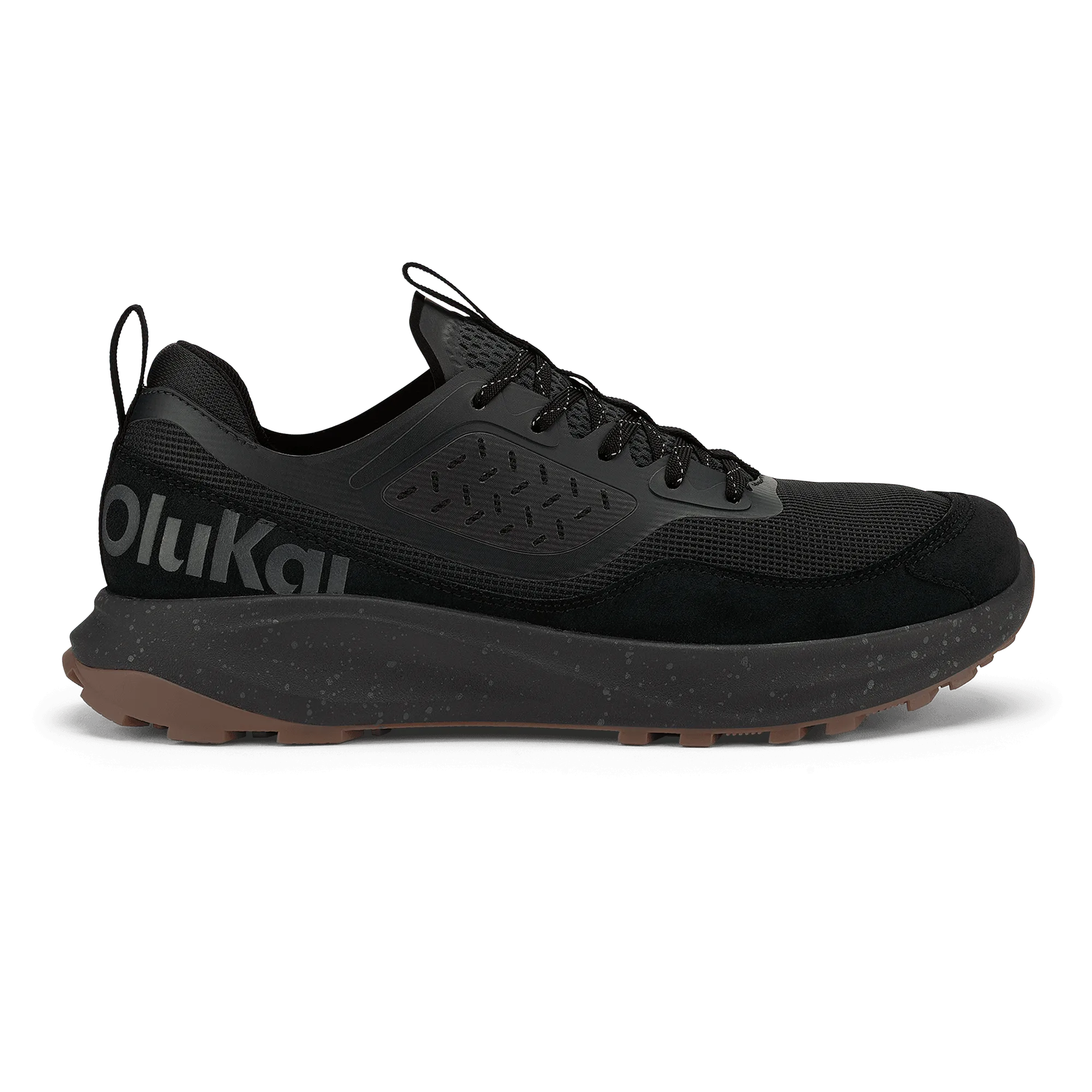
Makiki: The Makiki features a lightweight, breathable upper and responsive cushioning, with trail-ready traction and a streamlined silhouette. This combination gives you enough support for moderate trails while keeping the shoe light enough for everyday wear, so you don't need separate shoes for casual runs and errands.
Makiki