What to Look for in a Door Stop
A door stop does more than hold a door open: it protects your walls, baseboards, and door hardware from repeated impact. When choosing a door stop for interior doors, consider the material, the style, and how it attaches to your wall or floor. Copper models like the Aro Door Stop offer durability and a refined look, while the soft rubber tip cushions the door and prevents damage to both surfaces.
The Aro Door Stop is crafted from copper and includes all mounting hardware, making it suitable for various wall types. Its clean, modern design fits well in contemporary interiors, and the soft rubber tip is a practical feature that reduces noise and wear.
Types of Door Stops and Their Best Uses
Door stops generally fall into a few categories: wall-mounted, floor-mounted, and hinge-pin styles. Wall-mounted stops are the most common for interior doors because they keep the door away from the wall without interfering with flooring. Floor-mounted stops work well on concrete or tile but can be a tripping hazard on carpet. Hinge-pin stops attach directly to the hinge and are easy to install without wall damage.
The Aro Door Stop is a wall-mounted design, which is a solid choice for most interior doors. It keeps the floor clear and protects the wall from the door handle's impact. Because it mounts to the wall, it is ideal for rooms where you want a clean, unobtrusive look.
What the Catalog Confirms About the Aro Door Stop
-
Aro Door Stop: Crafted from durable copper with a soft rubber tip for impact protection. The copper body resists corrosion and maintains its appearance over time, while the rubber tip prevents scratches and dents on the door.
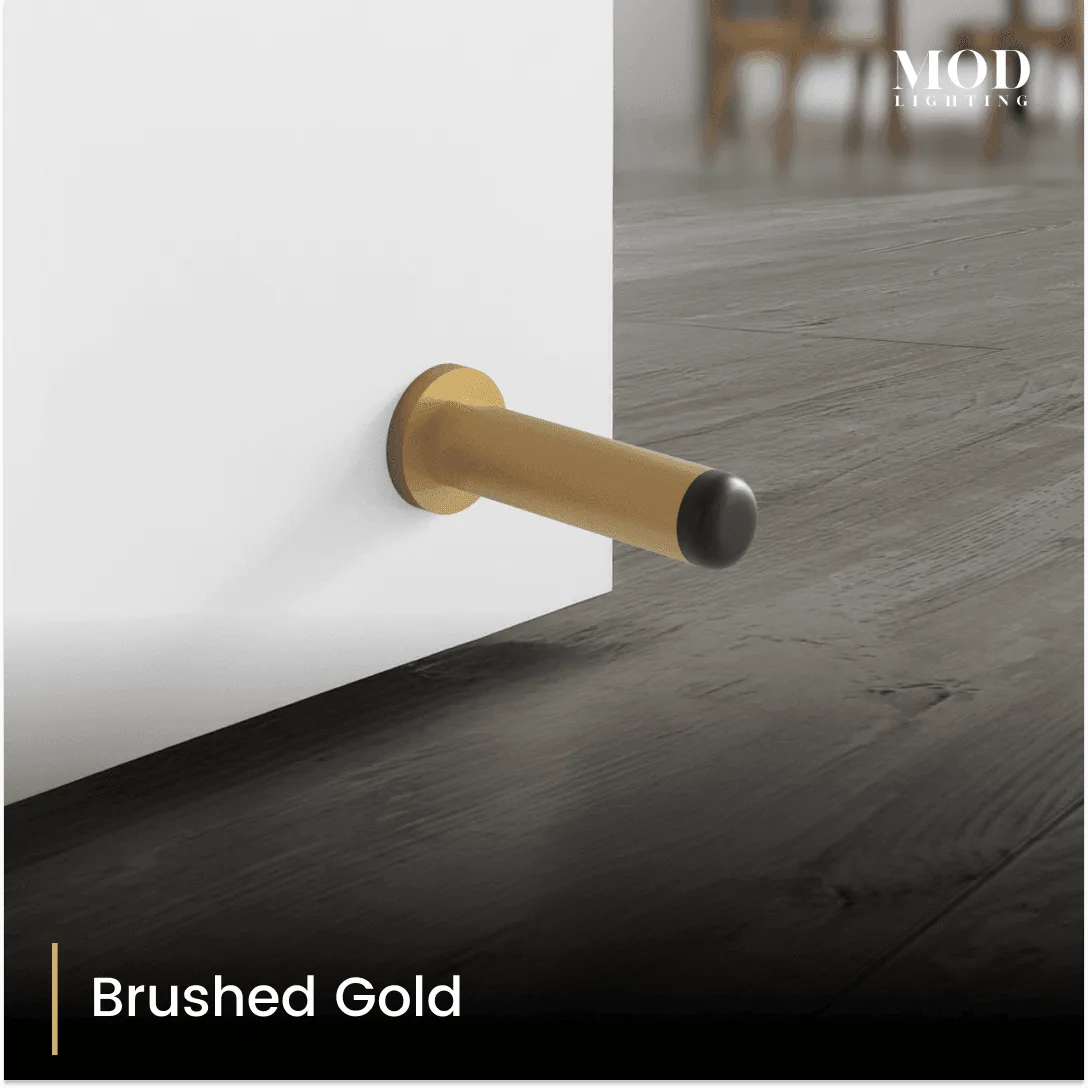
Aro Door Stop
-
Aro Door Stop: Suitable for various wall types and includes all mounting hardware for quick installation. You do not need to buy extra screws or anchors; the kit works with drywall, plaster, or wood studs, making installation straightforward.
How to Install a Wall-Mounted Door Stop (Aro Door Stop Example)
Installing a wall-mounted door stop like the Aro Door Stop is a simple DIY task. The supplied hardware makes it easy, but you should still check your wall type before drilling.
- 1. Choose the mounting location: Open the door fully and mark the spot on the wall where the door handle meets the wall. This is where the stop needs to be to catch the door before it hits the wall.
- 2. Prepare the wall: Hold the door stop base against the wall at your mark. Use a level to ensure it is straight. If mounting into drywall without a stud, use the included wall anchors for secure hold.
- 3. Drill pilot holes: Drill small pilot holes at the screw marks. This prevents the wall material from cracking, especially on plaster or tile.
- 4. Attach the door stop: Align the base and drive the screws into the anchors or studs. Tighten until snug, but avoid overtightening that could strip the screws or damage the wall.
- 5. Test the fit: Close the door gently to verify that the rubber tip contacts the door squarely. Adjust the position if needed before final tightening.
Honest Trade-Offs to Consider
While the Aro Door Stop is a well-made option, wall-mounted stops require drilling into your wall. If you are renting or prefer a non-permanent solution, consider a hinge-pin stop instead. Also, copper is a softer metal than steel; although it resists corrosion, it may show dents if struck repeatedly by a heavy door. The rubber tip helps, but it is worth checking the door's weight against the stop's capacity if you have a solid-core door.
The supplied information does not specify a maximum door weight or thickness for the Aro Door Stop. For heavy or oversized doors, you may want to confirm compatibility with the manufacturer before installing.