Quick answer
For warm months, choose lightweight, moisture-wicking bamboo pajamas that help regulate temperature. For cooler months, opt for soft knit long-sleeve sets that layer easily under a sleep sack. Avoid heavy or non-breathable fabrics year-round to reduce overheating risk.
Summer and warm-weather sleep
When temperatures rise, babies need pajamas that breathe and pull moisture away from the skin. Bamboo viscose fabric is naturally breathable, moisture-wicking, and gentle on sensitive or eczema-prone skin. A short-sleeve bamboo set like the Bamboo Women's Short Sleeve Pajamas - Priscilla (available in adult sizes for nursing moms) offers the same cooling properties for parents who want matching comfort.
For toddlers and big kids, a 2pc Short Sleeve Pajama Set in a soft knit is another good option. It keeps little ones cool without sacrificing coziness. Look for tag-free designs to prevent irritation during restless summer nights.
Winter and cool-weather sleep
In cooler months, long-sleeve pajamas made from premium knit fabric provide warmth without bulk. The 2pc Long Sleeve Pajama Set - Bloom uses the same ultra-soft, stretchy material as Copper Pearl's swaddles, making it easy to layer under a sleep sack. Bamboo long-sleeve sets, like the Bamboo 2pc Long Sleeve Pajama Set - Police Officer, add breathable warmth and are ideal for children with sensitive skin.
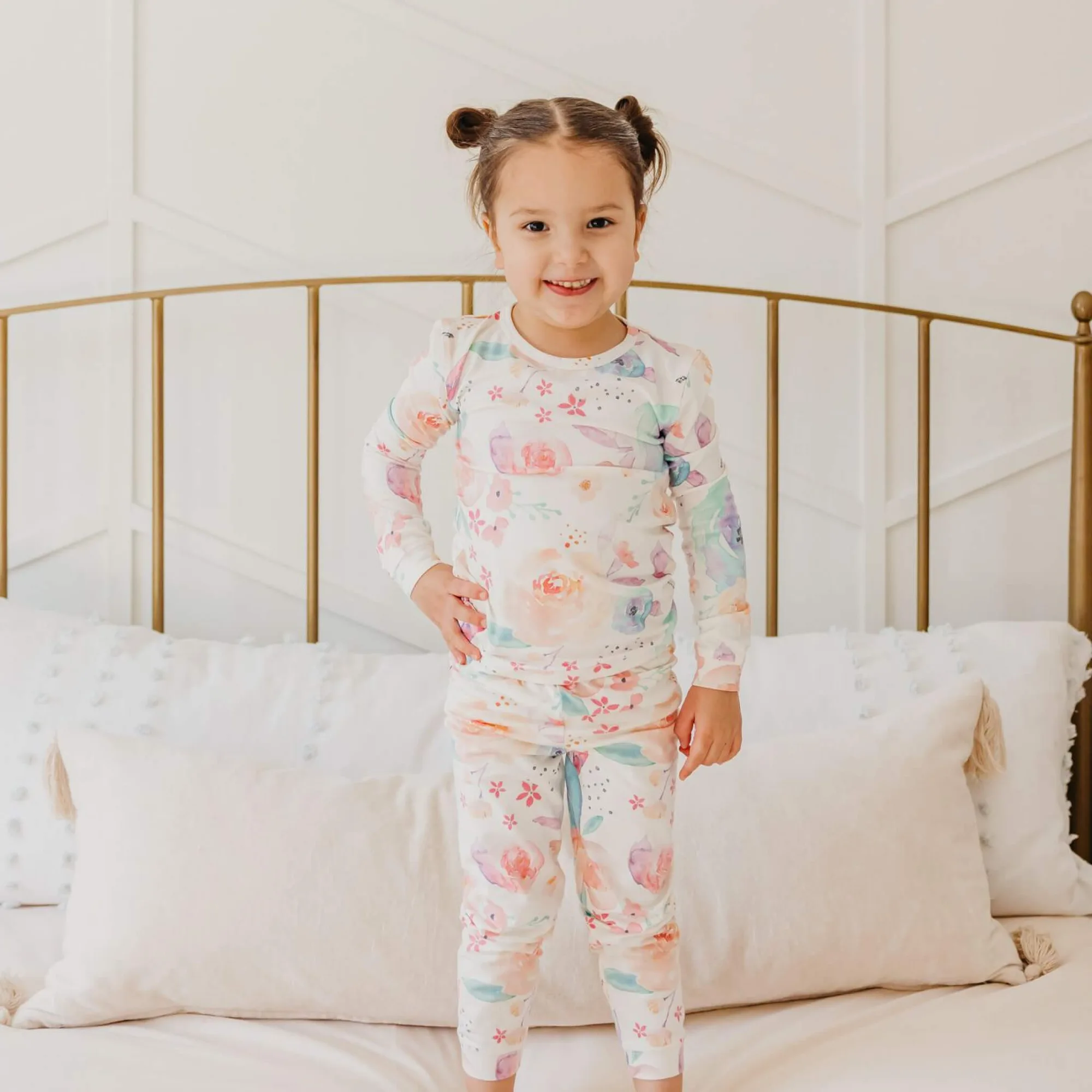
2pc Long Sleeve Pajama Set - Bloom
A good rule of thumb: if the room is 68-72°F (20-22°C), one layer of long-sleeve pajamas plus a sleep sack is sufficient. Avoid adding blankets or extra layers that could cause overheating.
Transitional seasons (spring and fall)
Spring and fall often bring fluctuating temperatures. A bamboo long-sleeve set works well because it adapts to changing conditions—breathable enough for warmer afternoons yet cozy for cooler evenings. For extra warmth on chilly nights, layer with a lightweight sleep sack. The key is to choose fabrics that don't trap heat but still provide coverage.
Decision rules for choosing baby pajama fabric by season
- Check the room temperature first: Use a room thermometer. For 68-72°F (20-22°C), one layer of footed pajamas or a two-piece set is enough. For warmer rooms, choose short sleeves or bamboo. For cooler rooms, add a sleep sack over long sleeves. Always layer based on the actual room temp, not the season name.
- Match fabric weight to season: Bamboo viscose is lightweight and moisture-wicking—ideal for summer and transitional weather. Premium knit fabrics offer more warmth and are better for winter. Avoid fleece or heavy polyester that can trap heat. Bamboo for warm months, knit for cool months.
- Prioritize safety and comfort features: Tag-free labels prevent skin irritation. Snug-fit (not loose) pajamas reduce fire risk and keep fabric close to the body for better temperature regulation. Always follow CPSC guidelines for sleepwear. Snug fit + tag-free = safer, more comfortable sleep.
Product facts at a glance
- Bamboo 2pc Long Sleeve Pajama Set - Police Officer: Made from silky smooth bamboo, this two-piece set is breathable, gentle on skin, and tag-free for ultimate comfort. Available in unique, trend-setting patterns. Bamboo's natural breathability helps regulate body temperature, making this set a great year-round choice, especially for children with eczema or sensitive skin.
- Bamboo Women's Short Sleeve Pajamas - Priscilla: This silky soft bamboo PJ set is breathable, moisture-wicking, and gentle on sensitive skin. Designed with a relaxed, flattering fit and stretch for lounging, sleeping, nursing, or postpartum life. Moisture-wicking bamboo keeps parents cool and dry during warm nights, and the stretch accommodates body changes, making it a practical investment for new moms.
Which fabric is best for your baby?
Best for
- Parents who want a breathable, hypoallergenic option for warm weather or year-round use
- Children with eczema, sensitive skin, or who tend to overheat at night
Not ideal for
- Very cold climates where a thicker knit or fleece layer is needed (bamboo alone may not provide enough warmth)