Quick Answer
Start by measuring the space and counting how many cans or bottles you want to store. Then match the temperature range and door style to your drinking habits.
Why Size Matters More Than You Think
A beverage refrigerator is a dedicated cooler, not a general-purpose fridge. If you buy too small, you'll be restocking constantly. Too large, and you'll waste energy and floor space. Measure the width, depth, and height of your intended spot before you shop, and always leave a few inches for airflow around the unit.
Capacity is often described in cubic feet or bottle count. A 1.7 cubic foot model typically holds around 16 bottles, which suits a couple or a small home office. If you entertain often or have a large family, consider a larger unit, but remember that bigger units need more space and use more electricity.
Temperature Control: Precision Matters
Different drinks taste best at different temperatures. White wine and beer are best around 40-50°F, while red wine prefers 55-65°F. If you drink a variety, look for a model with a wide temperature range and easy controls. A digital display or touch controls make it simple to adjust.
Some beverage refrigerators have a manual defrost system, which means you'll occasionally need to unplug and defrost to keep it efficient. This is common in compact models and is not a drawback if you don't mind a little maintenance.
Glass Door vs. Solid Door: Trade-Offs
A glass door lets you see your drinks at a glance, which is great for entertaining or for a home bar. The downside is that glass doors can lose more cold air when opened, and they may show fingerprints and condensation. Solid doors are more energy-efficient and hide clutter, but you have to open the door to see what's inside.
If you go with a glass door, look for a model with a good seal and consider a location away from direct sunlight to reduce condensation and heat gain.
Decision Rules for Choosing a Beverage Refrigerator
- Measure your space first: Write down the width, depth, and height of the spot where you plan to put the fridge. Add at least 2 inches on each side for ventilation. Always measure twice before ordering.
- Count your daily drinks: Estimate how many cans or bottles you want to keep cold at once. For a small household, a 16-bottle model may be enough; for larger needs, go bigger. If you host parties, choose a larger capacity than your daily use.
- Match temperature range to your drinks: Check the minimum and maximum temperature settings. If you drink both white and red wine, look for a range that can go from about 40°F to 61°F.
- Decide on door style: Choose a glass door if you want to show off your drinks or find them quickly. Choose a solid door if you prefer energy efficiency and a cleaner look. Glass doors can be prone to condensation in humid areas.
- Check the defrost system: If the model has manual defrost, be prepared to unplug and defrost periodically. This is common in compact units and is easy to manage.
Product Facts
-
Antarctic Star 1.7 Cu. Ft Mini Beverage Refrigerator, 16 Bottles Compact Drink Cooler with Glass Door & Touch Controls: This 1.7 cu. ft. mini beverage refrigerator holds up to 16 bottles and has a glass door with touch controls. It's a compact, freestanding option that's easy to install and lets you adjust the temperature between 40°F and 61°F, covering most drink preferences.
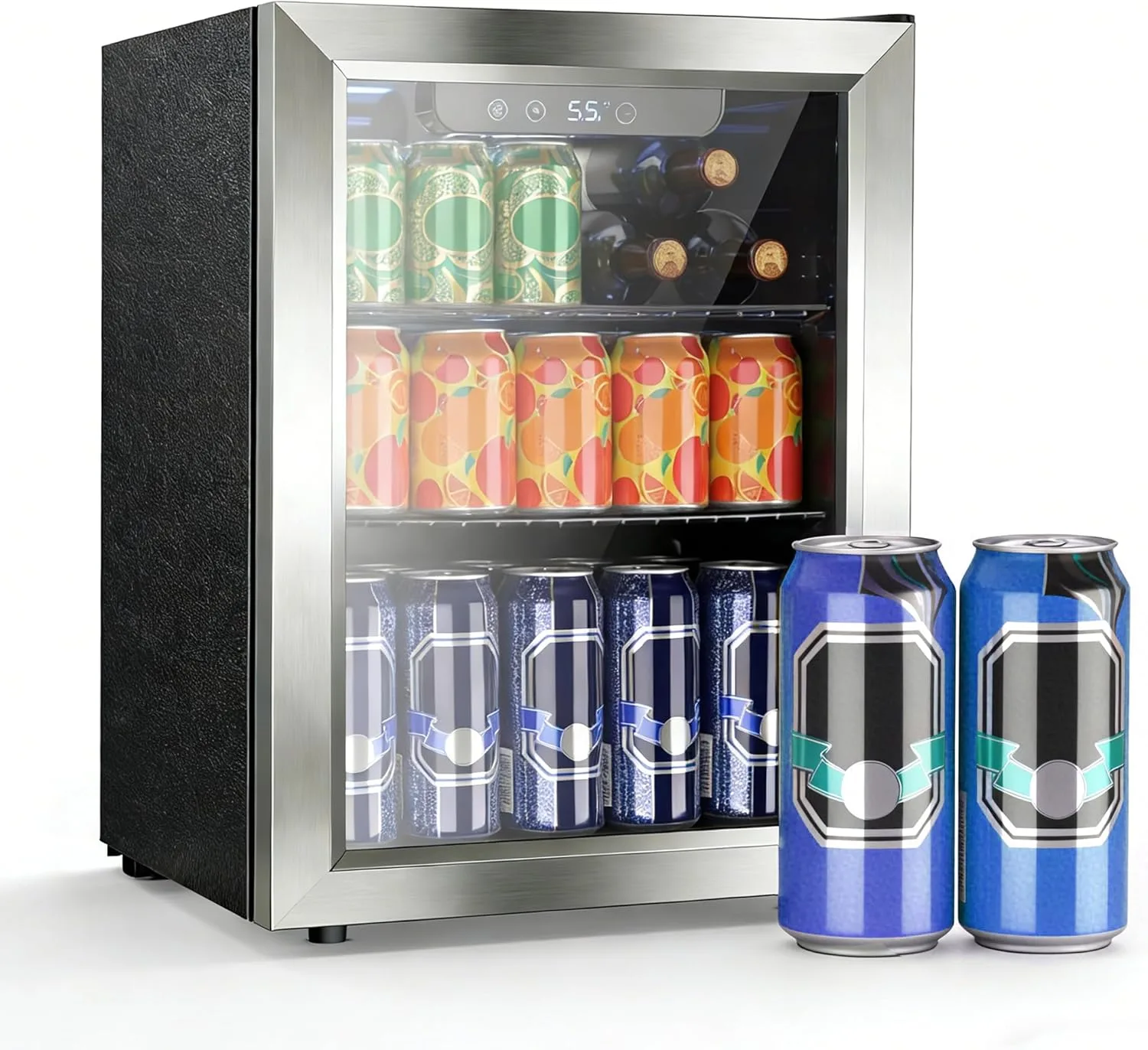
Antarctic Star 1.7 Cu. Ft Mini Beverage Refrigerator, 16 Bottles Compact Drink Cooler with Glass Door & Touch Controls
Who Should Buy What
Best for
- Small households or offices that want a compact, freestanding cooler for everyday drinks.
- People who want a glass door to display their beverage collection and easy temperature control.
Not for
- Large families or frequent entertainers who need to store more than 20 bottles at a time.
- Users who prefer a low-maintenance, automatic defrost unit.