Quick answer
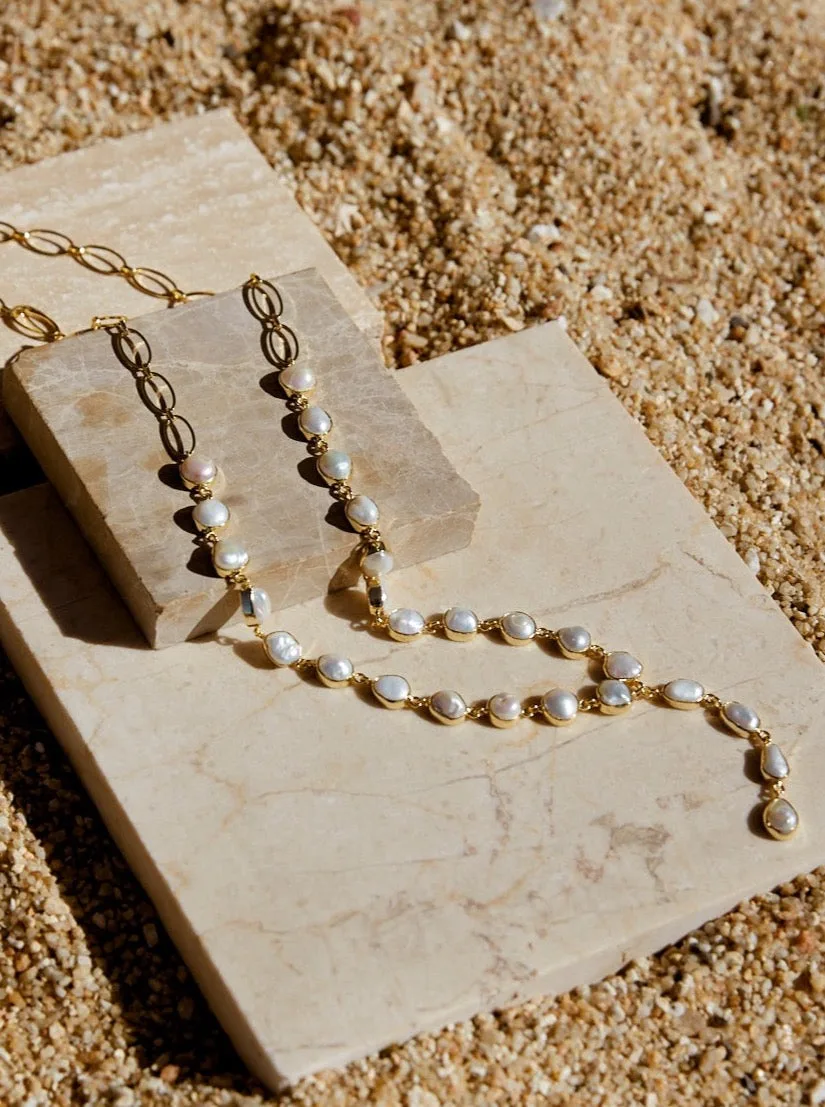
Choose jewellery that follows the shape of your neckline rather than competing with it. For a V-neck, pick a pendant or drop that echoes the V; for a high neck, skip the necklace and let earrings or a back detail lead. If you want one piece that adapts to several gowns, an adjustable necklace like the Helena Necklace gives you that flexibility.
Start with the neckline, not the jewellery
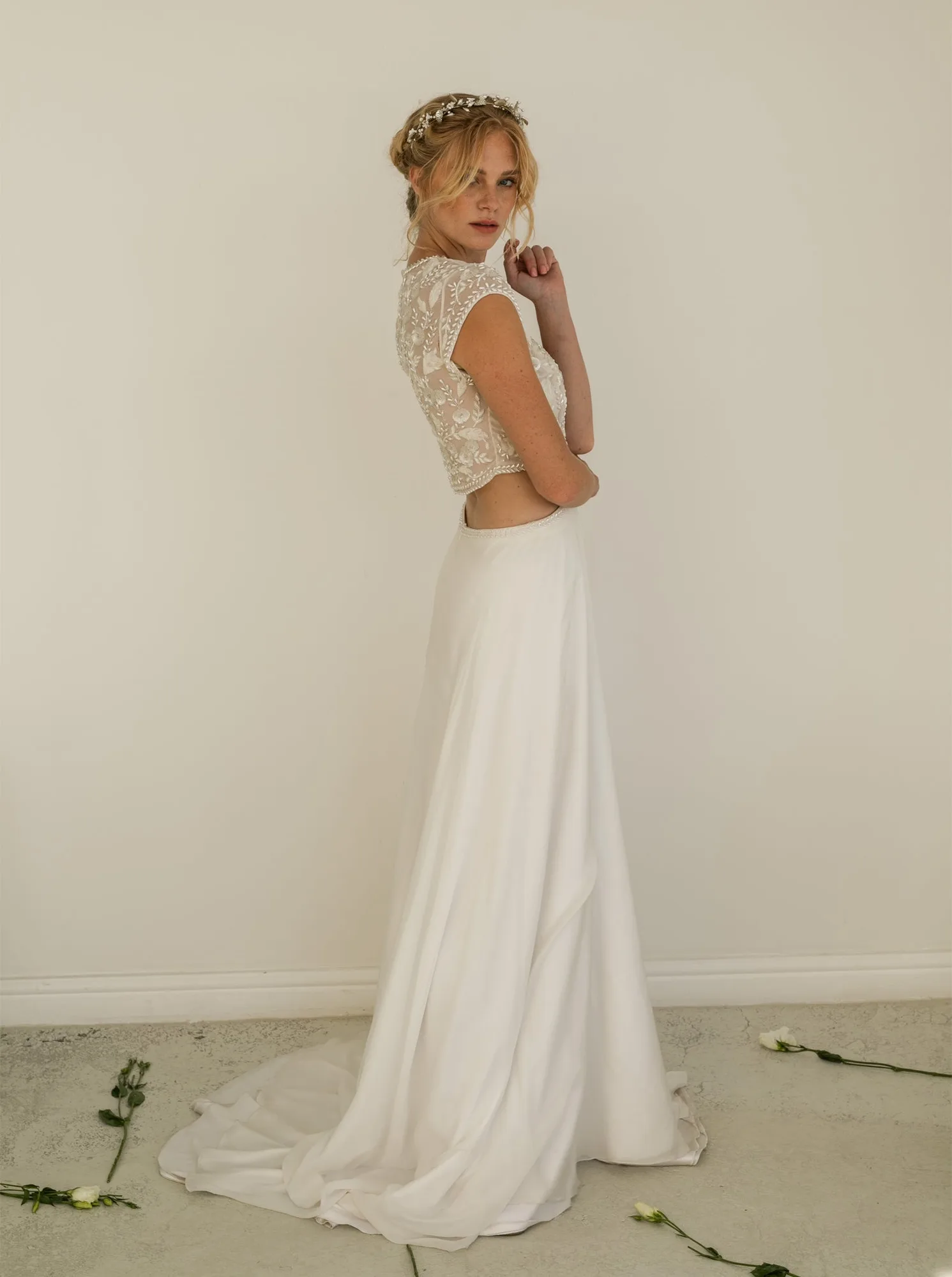
Before you shop, trace the line of your gown's neckline with your finger. That line is your guide. A plunging V or sweetheart opens the chest, so jewellery should sit inside or just above that space without covering it. A high or illusion neckline already fills the area, so your focal point moves upward to the ears or backward to the back of the dress. If your gown has a lot of hand-beading or draped pleats at the bodice, as with the India Gown, keep the necklace minimal or skip it so the craftsmanship stays visible. The goal is balance: one area of shine, not three.
Match metal and tone to your gown's details
Your gown's hardware, beading and undertone should inform your jewellery metal. Ivory and blush gowns often suit warm gold or rose gold; bright white or silver-toned gowns can take silver or platinum. If your gown has mixed tones, pick the metal that appears most near your face. For a gown with pale gold and ivory beading, like the India Gown, a warm-toned necklace or earring will feel intentional rather than accidental. This is also where an adjustable piece helps: the Helena Necklace uses 18k rolled gold casings and freshwater pearls, so it bridges warm and neutral palettes without clashing.
Decide on one focal point
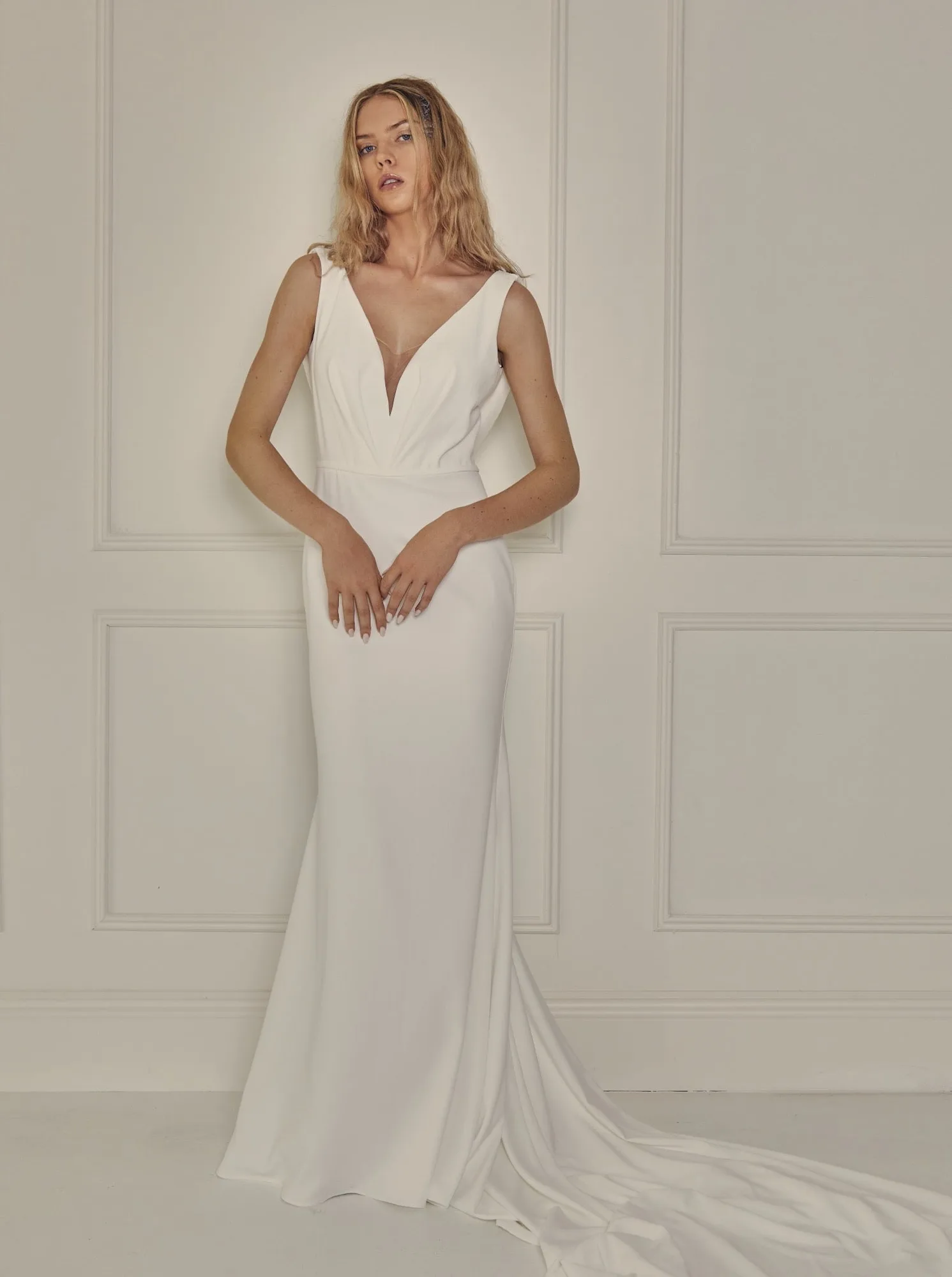
A common mistake is wearing a statement necklace, statement earrings and a hairpiece all at once. Pick one hero. If your neckline is simple, a necklace can be the hero. If your neckline is detailed, make earrings or a back necklace the hero. For a clean, minimalist gown such as the Ava Gown, with its plunging neckline and inverted draped pleats, a delicate necklace can sit beautifully in the open space. For a fully beaded bodice, let the dress be the statement and choose small earrings or a bracelet instead.
Plan for comfort and movement
You will wear your jewellery for hours, so weight and security matter as much as looks. A heavy statement necklace can pull at your neckline and cause you to adjust it all day. Check that clasps sit flat against your skin and that earrings do not tug. If you plan to dance, avoid long drops that catch on hair or fabric. A piece that can be worn to the front or back, like the Helena Necklace, gives you a second look for the reception without adding another purchase. Always try your jewellery with your gown on, not just against a mirror in street clothes.
Your step-by-step neckline matching method
- Trace your neckline and note its shape: Stand in your gown and trace the neckline with your finger. Write down whether it is a V, sweetheart, high, illusion or off-shoulder. This tells you where jewellery should sit and how much space you have. If you cannot decide, take a photo of your neckline and look at it later; the shape will be clearer than in the mirror.
- Choose your focal point: Decide whether the necklace, earrings or a back detail will be the star. If your gown has a plunging neckline, a necklace often works. If it has a high or beaded neckline, choose earrings or a back necklace instead. One focal point keeps the look intentional; two or three compete.
- Match metal to your gown's undertone and hardware: Look at the beading, zipper and any metallic threads. Warm gold and rose gold flatter ivory and blush; silver and platinum suit cool white. If your gown mixes tones, pick the metal closest to your face. Bring a fabric swatch or photo of your gown when shopping so you can compare in daylight.
- Test adjustable pieces for versatility: An adjustable chain, like the one on the Helena Necklace, lets you change the drop to suit a V-neck, a crew neck or a backless gown. Try it at two or three lengths with your dress on. If a necklace only works at one length, it may not be worth the purchase unless that is your only neckline.
- Check comfort and movement: Wear your chosen jewellery for at least 20 minutes at home. Raise your arms, hug someone and sit down. If it pulls, twists or catches, adjust the length or choose a lighter piece. Comfort is non-negotiable; you should forget you are wearing it.
- Layer only if the neckline allows it: Layering works best on a simple, open neckline. If you want to layer, use one delicate chain and one slightly longer pendant, keeping both fine. Avoid layering over beaded or draped bodices. When in doubt, remove one piece. Your gown is the main event.
Pieces that work with these necklines
- Ava Gown: The Ava Gown is a form-fitting mermaid gown in soft crêpe with an illusion tulle corset, a plunging neckline, inverted draped pleats at the bodice and a low cowl back. The open neckline and smooth crêpe give you room for a delicate necklace or a back detail, but the draped pleats mean you should avoid a heavy pendant that competes with the bodice.
- India Gown: The India Gown is a two-piece with a fully hand-beaded bodice, delicate sequin and georgette flowers, glass beads in pale gold and ivory, and branching leaves in bugle beads and faux pearls. Because the bodice is already highly detailed, your jewellery should be minimal or focused on the ears or back; a large necklace would hide the handwork.
- Helena Necklace: The Helena Necklace has freshwater pearls handset in 18k rolled gold casings, an adjustable geometric chain, a lobster clasp and can be worn to the front or back. The adjustable length lets you match it to different necklines, and wearing it to the back solves the problem of a high-neck or heavily beaded gown that leaves no room for a front necklace.