Quick answer
Choose a family card game by matching the deck to your group's willingness to talk, not by age rating alone. If your family already enjoys conversation, pick a discussion deck such as Meeting Friends. If they prefer solving problems together, a dilemma-based game like The Dilemmas Game works better. Buy one deck, play it twice, then decide whether to add a second.
Start with the format question, not the theme
Most family card games fall into two formats: prompt decks that ask players to answer or discuss, and exercise decks that give the group a task or puzzle to work through together. The format determines how the evening actually feels. Prompt decks produce talking; exercise decks produce doing. Neither is better, but mixing them up is the most common reason a game sits unplayed.
Ask one question before buying: does your family want to talk, or do they want something to do while they talk? If talking is the point, a prompt deck carries the evening. If talking feels awkward without a task, an exercise deck gives everyone a shared job and the conversation follows naturally.
Match the deck to who is actually at the table
The people in the room matter more than the box. A deck that works beautifully with two thoughtful adults can stall with a mixed group of teenagers and grandparents. Before you buy, picture the specific group you play with most often: their ages, how well they know each other, and how comfortable they are being put on the spot.
If your group is mixed in age or familiarity, choose a deck with a low entry cost. Questions that can be answered briefly let quieter players participate without pressure, and players who want to go deeper can simply say more. If your group is close and used to real conversation, a deck that asks harder questions will feel like a reward rather than a risk.
Judge the deck by its worst question, not its best
When you look at a card game, you usually see the most appealing example question on the box. That is not the question that decides whether the game works. The question that decides is the one your least talkative family member draws. If you can imagine them answering it without discomfort, the deck fits. If not, keep looking.
This is also why it helps to buy one deck rather than a bundle. A single deck tells you whether your family actually plays card games together, and it tells you which direction to go next: more structured, more open, or more playful.
Set up the evening so the game can work
A good deck cannot fix a bad setting. Put phones in another room, sit in a circle rather than around a television, and give the game a clear start and end. Twenty to forty minutes is usually enough for a first attempt; longer sessions tire out mixed groups and make the last few rounds feel like a chore.
Let one person hold the deck and read questions aloud. This small structure removes the awkwardness of passing cards around and keeps the pace steady. If a question lands badly, skip it without comment and move on. The deck is a tool, not a test.
Decision rules for choosing your family card game
- If your family talks easily but rarely goes deep: Choose a conversation deck with a mix of questions and light exercises, like Meeting Friends. The variety keeps the pace up and gives quieter players a way in. Best first deck for most families.
- If your family argues about ideas for fun: Choose a dilemma-based deck like The Dilemmas Game. Moral problems give the group something concrete to disagree about without anyone having to reveal personal history. Good for debaters and mixed-age groups.
- If your family is uncomfortable with personal questions: Skip prompt decks entirely for now. A structured exercise or a written format lets people participate without speaking about themselves directly. Revisit conversation decks later.
- If you are unsure whether anyone will actually play: Buy one deck, not a set. Play it twice within a month. If it works, add a second deck in a different format so you can switch depending on the mood. Test before you expand.
Two decks that solve different problems
- The Dilemmas Game: The Dilemmas Game presents complex moral problems with no obvious answers, such as whether to keep a friend's secret or tell a colleague about their bad breath. This format gives a family a shared problem to reason through together, which suits groups who find open personal questions too exposing but enjoy debating what is right.
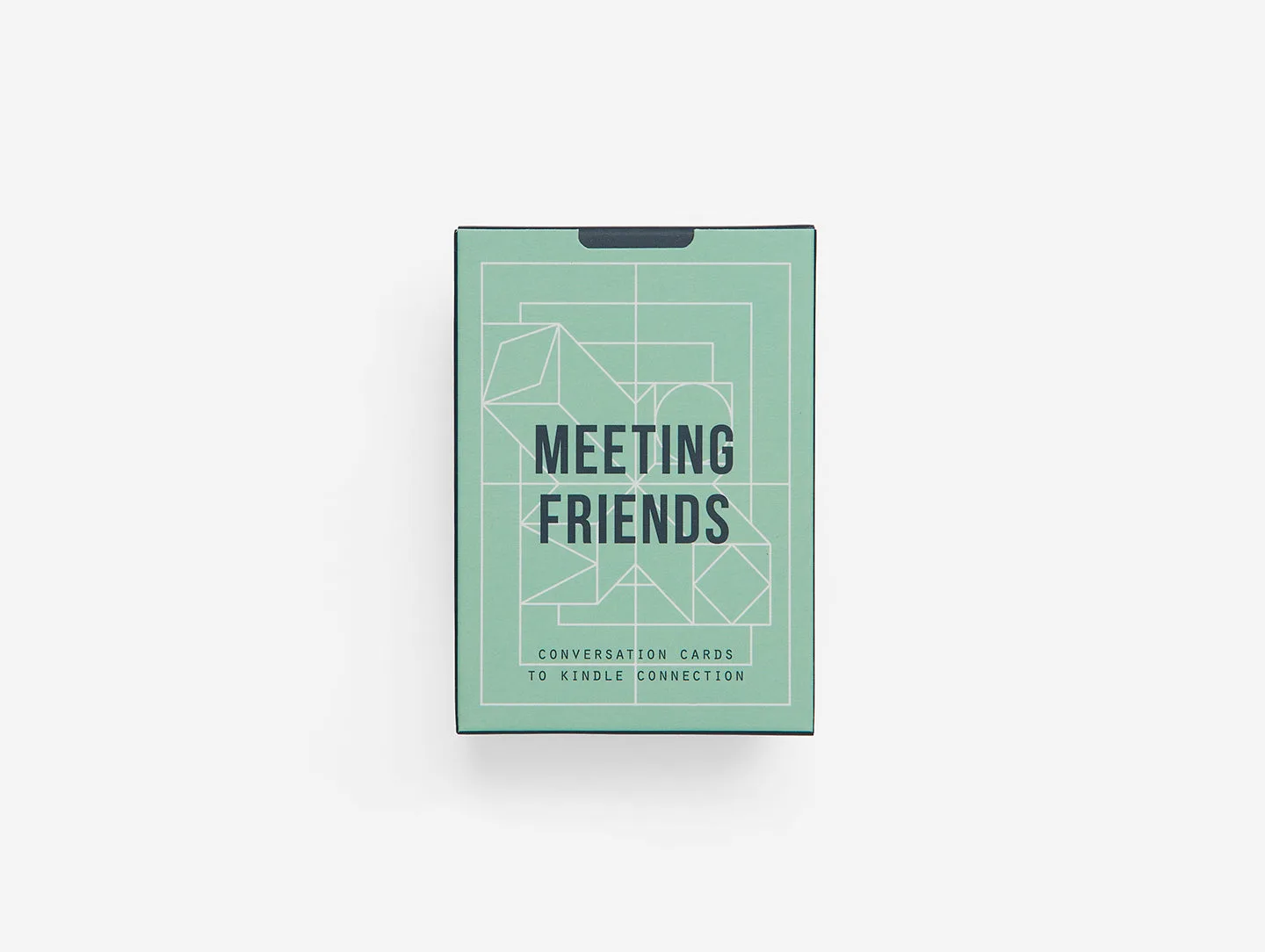
- Meeting Friends: Meeting Friends contains 52 cards with questions and exercises designed for deeper and more meaningful conversations with friends. The card count makes it easy to play a short session or a long one, and the mix of questions and exercises lets you shift the energy if the table goes quiet.
Is a family card game right for you?
Best for
- Families who want a shared activity that produces real conversation rather than passive entertainment
- Groups of three to six people who already know each other reasonably well
- Parents looking for a low-cost way to make a weekly dinner or evening feel different
Not for
- Families looking for a competitive game with winners and scores
- Groups larger than eight, where turn-taking becomes slow and attention drifts
- Anyone hoping a deck will replace the work of making time and putting phones away