Quick answer
Choose a 1/2-inch shank classical round bottom router bit for the smoothest cuts in table-mounted or CNC work, and a 1/4-inch shank only when your router or collet requires it. Then pick the radius: 3/16 inch for standard cabinet-door veining, 1/8 inch for finer detail lines.
Why shank size matters more than you think
Shank diameter affects rigidity, runout and the maximum cut you can take safely. A 1/2-inch shank puts more steel in the collet, so it resists deflection in deep or long cuts and usually leaves a cleaner surface in hardwoods. A 1/4-inch shank is lighter and fits trim routers and smaller CNC spindles, but it flexes more under load.
The trade-off is not just performance: your router, router table or CNC spindle determines which shank you can actually use. Buying a 1/2-inch bit for a 1/4-inch-only trim router is a non-starter, and reducing a 1/2-inch shank with a sleeve adds runout you do not want on a decorative profile.
Radius and cut length: matching the profile to the design
The radius controls how pronounced the round-bottom groove looks. A 3/16-inch radius gives a visible, classical vein that reads well on cabinet doors and furniture details. A 1/8-inch radius cuts a finer line, better suited to delicate inlays or small-scale trim where a heavier groove would overwhelm the surface.
Cut length matters when you are profiling thicker stock or making multiple passes. Longer cut lengths let you shape deeper profiles but increase the demand on the bit and the router. If your design only needs a shallow vein, a shorter cut length is easier to control and less likely to chatter.
When the catalog leaves you guessing
Some listings do not state every specification, such as the available option types or the exact collet compatibility beyond the listed shank. Treat missing data as a decision limit: confirm the shank diameter and recommended RPM before you buy, and do not assume a bit will fit a collet size that is not listed. The recommended RPM figures supplied for these bits are a starting point, not a guarantee for every router.
Decision rules for choosing your classical bit
- Match the shank to your tool first: If your router or spindle accepts 1/2-inch collets, choose a 1/2-inch shank bit for rigidity and cleaner cuts. If it only accepts 1/4-inch, choose the 1/4-inch shank version and take lighter passes. Never force a shank size with an adapter sleeve on a decorative profile.
- Choose 3/16-inch radius for standard veining: Use a 3/16 classical bit when you want a clearly visible round-bottom groove on cabinet doors or furniture details. The Whiteside 3735 and 3730 both use this radius.
- Choose 1/8-inch radius for fine detail: Use a 1/8 classical round bottom bit when the design calls for a subtle line that will not dominate the surface, such as small trim or delicate inlay work.
- Match cut length to stock thickness: For shallow veins in standard stock, a 1/2-inch cut length is enough. For thicker stock or deeper profiles, step up to a longer cut length such as the 1-1/8-inch version and respect its lower recommended RPM. Longer cut length means more passes, not a single heavy cut.
- Set RPM from the catalog, then adjust for your setup: Start at the recommended RPM for the bit you choose, such as 14,000 RPM for the 3735 or 13,000 RPM for the 3740, and reduce speed if you experience chatter or burning.
Product facts to compare
-
3/16″ Classical Round Bottom Router Bit x 1/2″ Shank – AstraHP Coated – Whiteside (3735): 3/16-inch radius, 1/2-inch shank, 1/2-inch cut length, 7/8-inch large diameter, 2-1/8-inch overall length, recommended 14,000 RPM. The 1/2-inch shank and moderate cut length make this a stable choice for standard cabinet-door veining on a router table or CNC.
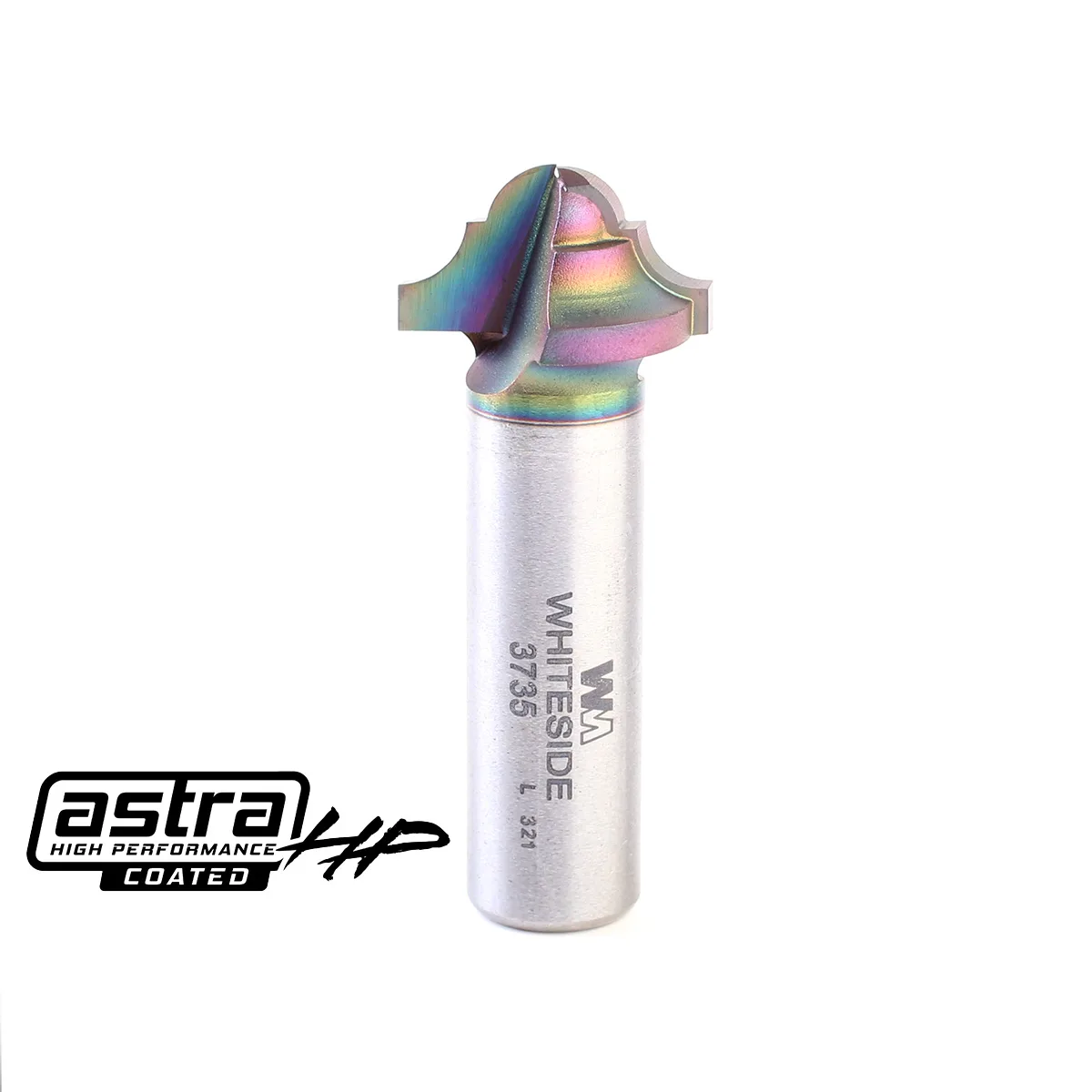
3/16″ Classical Round Bottom Router Bit x 1/2″ Shank – AstraHP Coated – Whiteside (3735)
-
3/16″ Classical Round Bottom Router Bit x 1/4″ Shank – AstraHP Coated – Whiteside (3730): 3/16-inch radius, 1/4-inch shank, 1/2-inch cut length, 7/8-inch large diameter, 2-inch overall length, recommended 14,000 RPM. The 1/4-inch shank fits trim routers and smaller spindles, but expect less rigidity in deep cuts than the 1/2-inch version.
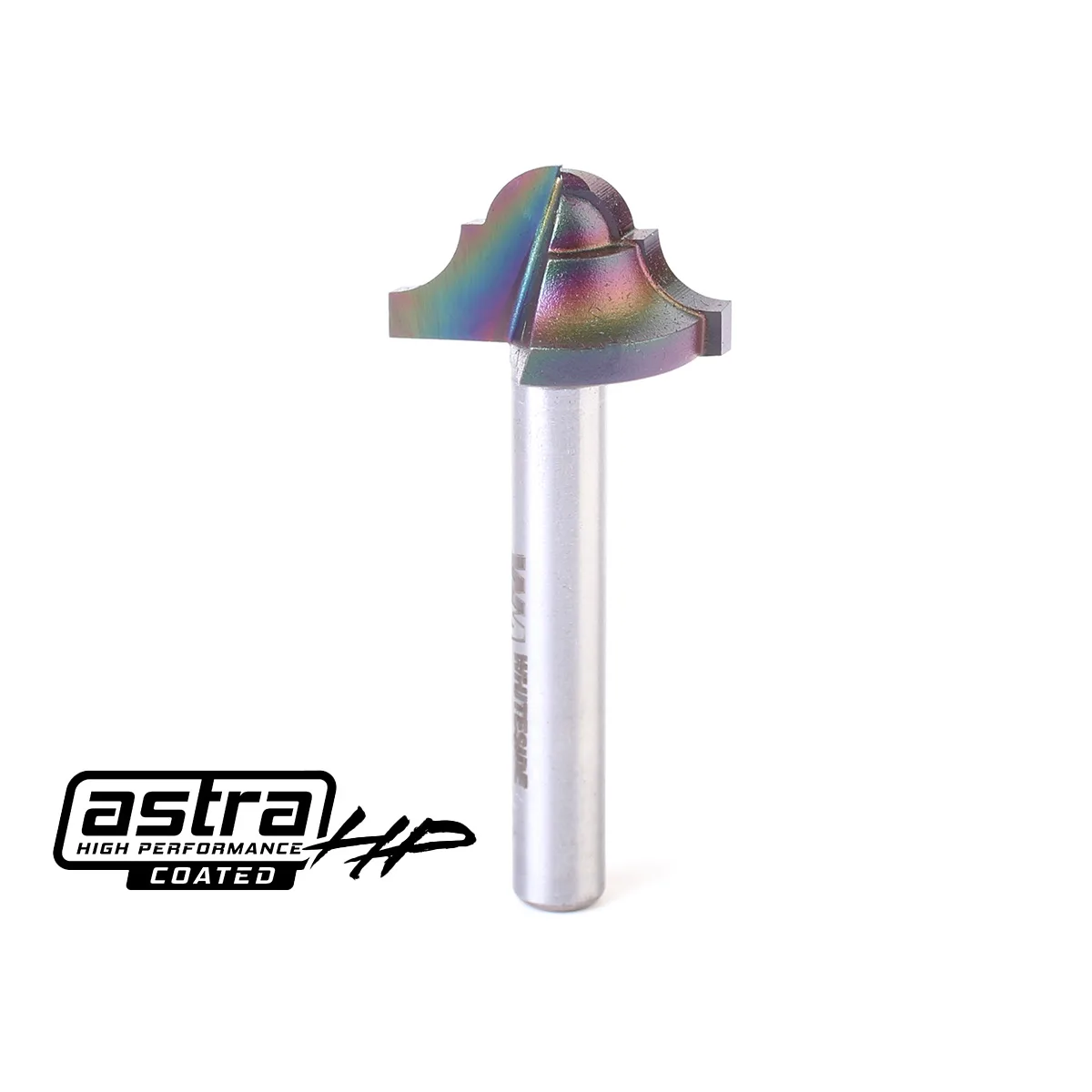
3/16″ Classical Round Bottom Router Bit x 1/4″ Shank – AstraHP Coated – Whiteside (3730)
-
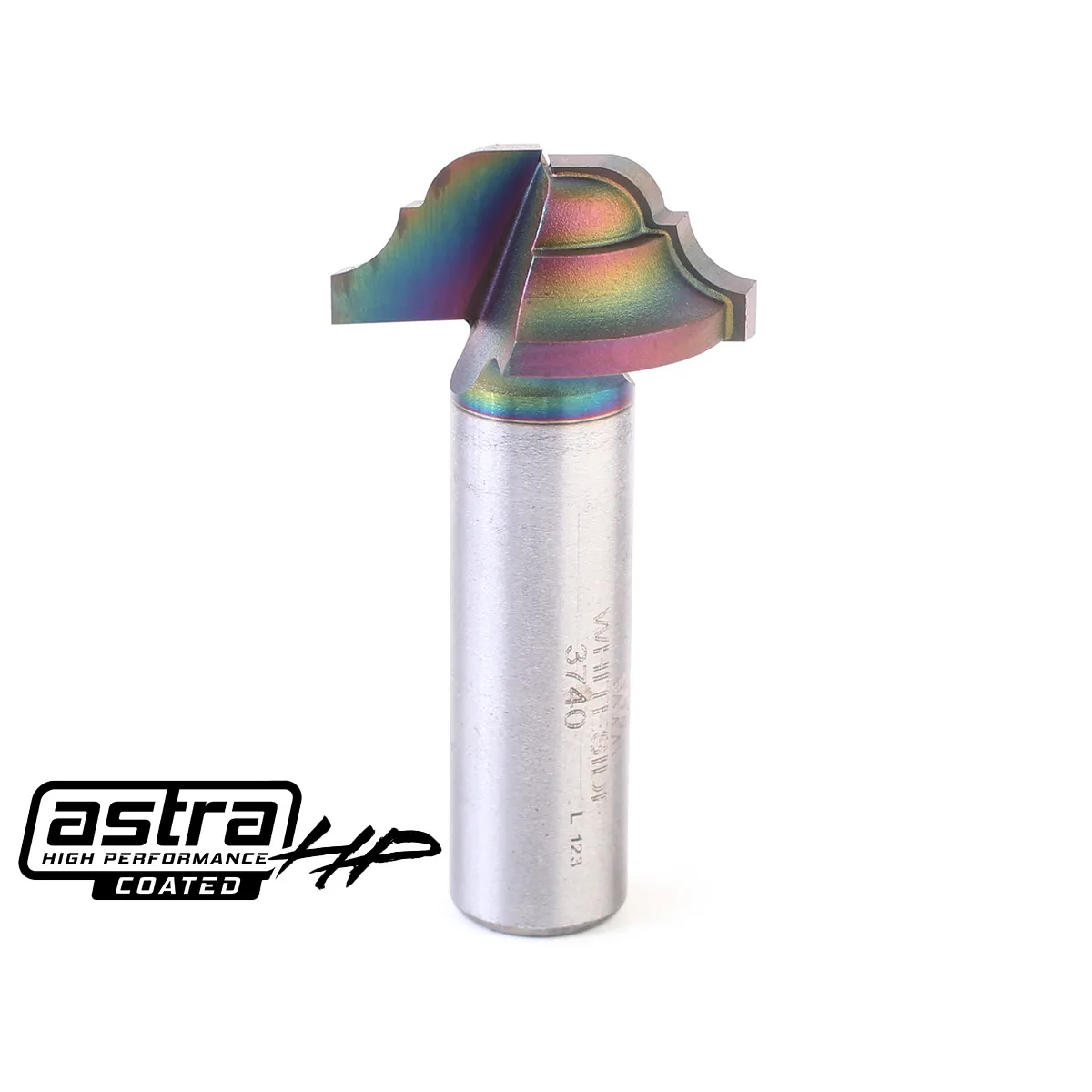
3/16″ Classical Round Bottom Router Bit x 1/2″ Shank – AstraHP Coated – Whiteside (3740): 3/16-inch radius, 1/2-inch shank, 1-1/8-inch cut length, 2-1/8-inch overall length, recommended 13,000 RPM. The longer cut length suits thicker stock or deeper profiles, and the lower recommended RPM reflects the heavier cut.
-
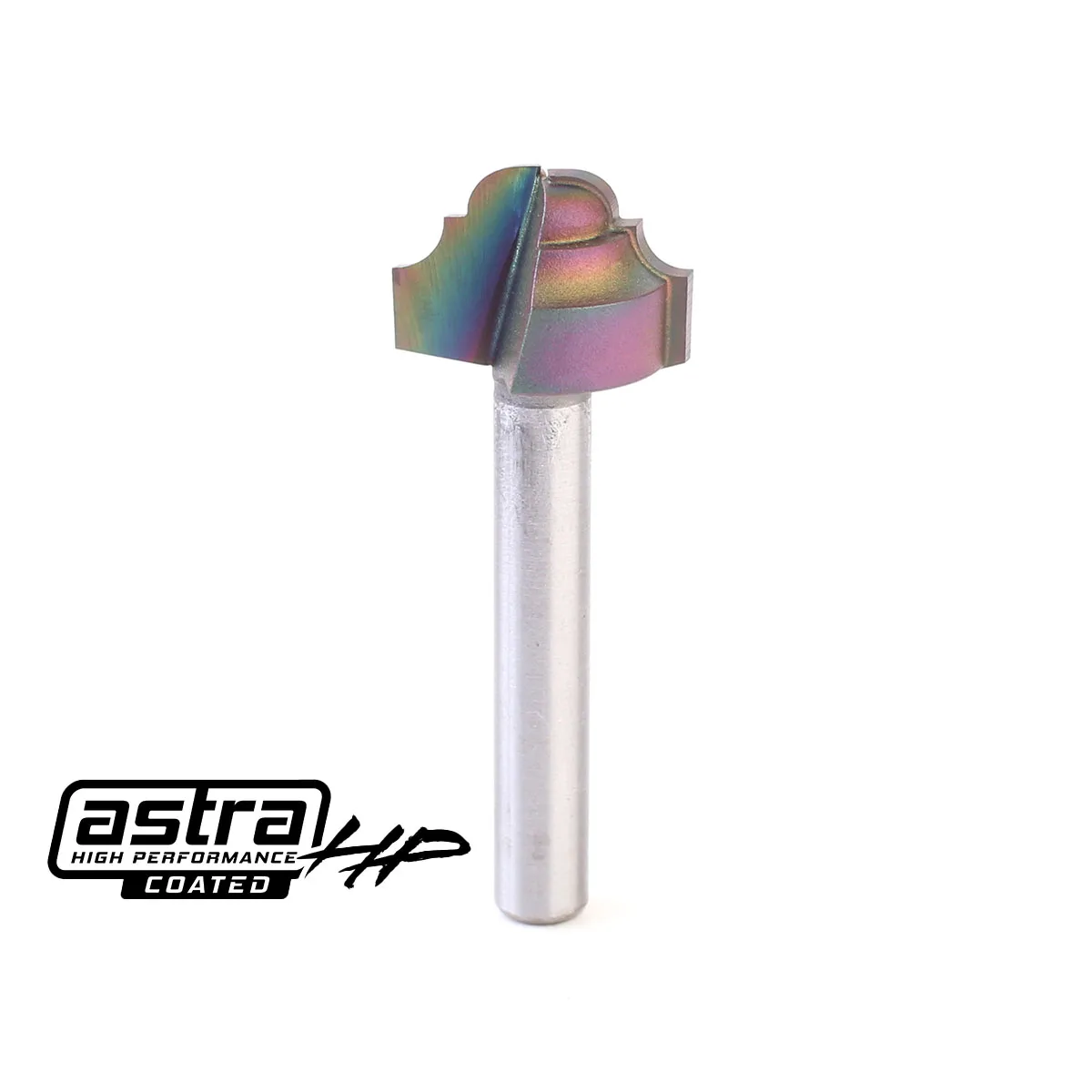
1/8″ Classical Round Bottom Router Bit x 1/4″ Shank – AstraHP Coated – Whiteside (3725): 1/8-inch radius, 1/4-inch shank, 1/2-inch cut length, 3/4-inch large diameter, 2-inch overall length, recommended 14,000 RPM. The smaller radius cuts a finer decorative line, and the 1/4-inch shank keeps it compatible with lighter routers.
Who should choose which
Best for
- Woodworkers with a 1/2-inch collet router table who want stable, clean cabinet-door veining (Whiteside 3735 or 3740)
- Trim-router and small CNC users who need a 1/4-inch shank for standard decorative lines (Whiteside 3730 or 3725)
- Furniture makers adding fine detail lines with a 1/8-inch radius (Whiteside 3725)
Not for
- Routers that only accept a shank size not offered by the bit you are considering
- Production runs that need a profile or radius not listed in the catalog without confirming specifications first
- Users who cannot adjust RPM to the recommended range for the bit