Quick answer
Start with the room, not the stone. Pick one dominant color that matches the light and mood of the space, choose a size that fits the surface without crowding it, then buy one or two pieces rather than a set. Warm rooms usually hold amber, red, and gold tones well; cooler or darker rooms read better with clear, white, green, or blue stones. If you are unsure, a single clear or neutral-toned piece is the safest first buy.
Most crystal displays fail for a simple reason: the stones were chosen for their meaning and then placed wherever there was an empty shelf. The result is a crowded corner that fights the room instead of finishing it. A better approach is to work backward — decide what the space needs visually, then find a stone that fits that job.
This guide gives you decision rules you can apply in a shop or online listing in under a minute. It covers color and light, scale, placement by room, and the trade-offs that matter when you are buying your first pieces or adding to a collection.
Match color to the light before anything else
Light decides how a crystal actually looks once it is home. A deep purple amethyst on a bright south-facing windowsill can look washed out by midday, while the same stone in a dim hallway reads almost black. Before you choose a color, note two things about the spot: how much natural light it gets, and whether the walls and furniture around it are warm or cool.
As a working rule, warm-toned rooms — wood floors, cream walls, brass fixtures — carry amber, red, gold, and honey stones without clashing. Cooler rooms with grey, white, or blue palettes suit clear quartz, white stones, pale green, and blue tones. In low-light spots, choose lighter or more translucent stones so they still register; in very bright spots, saturated or darker stones hold their color instead of disappearing.
This is a decor decision, not a claim about what any stone does. Treat color as the first filter because it is the thing you will see every day.
- Photograph the empty spot in daylight and again at night before you shop.
- If a listing shows only a studio-white background, ask how the stone looks in warm indoor light.
Choose scale for the surface, not the collection
A common mistake is buying a large statement piece for a small side table, or a palm-sized cluster for a wide console where it vanishes. Measure the surface first. On a narrow windowsill or a bedside table, keep the piece under roughly the height of a mug so it does not block light or feel unstable. On a console, mantel, or open shelf, a larger piece gives the eye a resting point.
Group in odd numbers when you cluster — three stones of different heights usually look more intentional than two of the same size. Leave more empty space than you think you need; a shelf that is one-third crystal and two-thirds open reads calmer than a packed one.
If you are buying online and no dimensions are listed, that absence is a real limitation. Ask for measurements or a photo next to a common object before you commit, especially for anything you plan to place on a high shelf.
- Tape a paper cutout of the listed size onto the surface to test the footprint.
- Heavier pieces belong on low, stable surfaces — not high shelves near doors.
Place by room and by job
For a living room, the goal is usually a piece that holds its own on a coffee table or console without dominating conversation. One medium stone plus one small companion is enough; clusters of five or more tend to look like a shop display. Keep anything fragile away from the walkway between seating and the door.
In a bedroom, smaller and softer-toned pieces work better on a nightstand, where a large cluster can feel heavy in a small room. Entryways and hallways handle a single vertical piece well because the eye passes it quickly. Bathrooms and kitchens are the worst rooms for porous or soft stones — steam, splashes, and cleaning sprays are hard on them, so keep crystals out of those rooms unless the piece is genuinely water-safe.
If you want a seasonal refresh, rotate one piece rather than rebuilding the whole display. It costs nothing and keeps the arrangement from going stale.
- Keep crystals off surfaces you clean with sprays; move them before wiping down.
- Direct sun through glass can fade some colored stones over time — rotate them out of the hottest spot.
Beginner buying rules and where to stop
For a first purchase, buy one piece you can hold and see in person if possible. Clear quartz, white stones, and neutral-toned pieces are the most forgiving because they work with almost any palette and do not demand a specific room. Buy the second piece only after the first has lived in the space for a week — that is when you learn whether the spot needs more height, more color, or nothing at all.
Set a budget per piece rather than per collection, and be skeptical of any listing that leads with claims instead of material, size, and finish. A crystal buying guide should tell you what you are getting; if the listing does not state the material, size, or origin, treat that as missing information rather than a reason to assume quality.
Finally, accept the trade-off: a stone chosen purely for color may not be the one you were originally drawn to, and a stone chosen purely for meaning may not suit the room. Pick the one you will still like seeing in six months.
- Buy one piece, live with it a week, then add.
- Skip sets unless every piece has a place already.
Decision rules for choosing a home crystal
- Rule 1: Room first, stone second: Name the room and the exact surface before you browse. If you cannot picture where it goes, you are not ready to buy it. One spot, one piece.
- Rule 2: Light beats color preference: In low light, choose lighter or more translucent stones. In bright direct light, choose saturated or darker stones so the color holds. Check the spot at two times of day.
- Rule 3: Scale to the surface: Keep small surfaces to mug-height pieces and save larger statement stones for consoles, mantels, and open shelves. Measure before you buy; ask for dimensions if none are listed.
- Rule 4: Stop at two or three: A cluster of three varied heights reads as intentional. Five or more usually reads as clutter, especially in a small room. Leave more empty space than you think you need.
- Rule 5: Treat missing details as a warning: If material, size, finish, or origin are not stated, that is missing information — not a reason to assume quality. Ask the seller before you commit.
Catalog examples that show the color-and-space rule
- Mothman Pride Flag: From Flags For Good, a 3' x 5' Mothman Rainbow Pride Flag designed by a Flags For Good employee. A useful reminder that bold color belongs where it has room to breathe — a large wall or open wall space — rather than on a crowded shelf next to small decor.
- Hand Felted Chunky Mushroom Earrings: Hand-felted from 100% Merino wool with gold-toned hypoallergenic surgical steel hoops, handmade in Portland, Oregon, and approximately 3 inches long. Shows how a warm, saturated color reads as a deliberate accent. The same logic applies to choosing an amber or honey-toned stone for a warm-palette room.
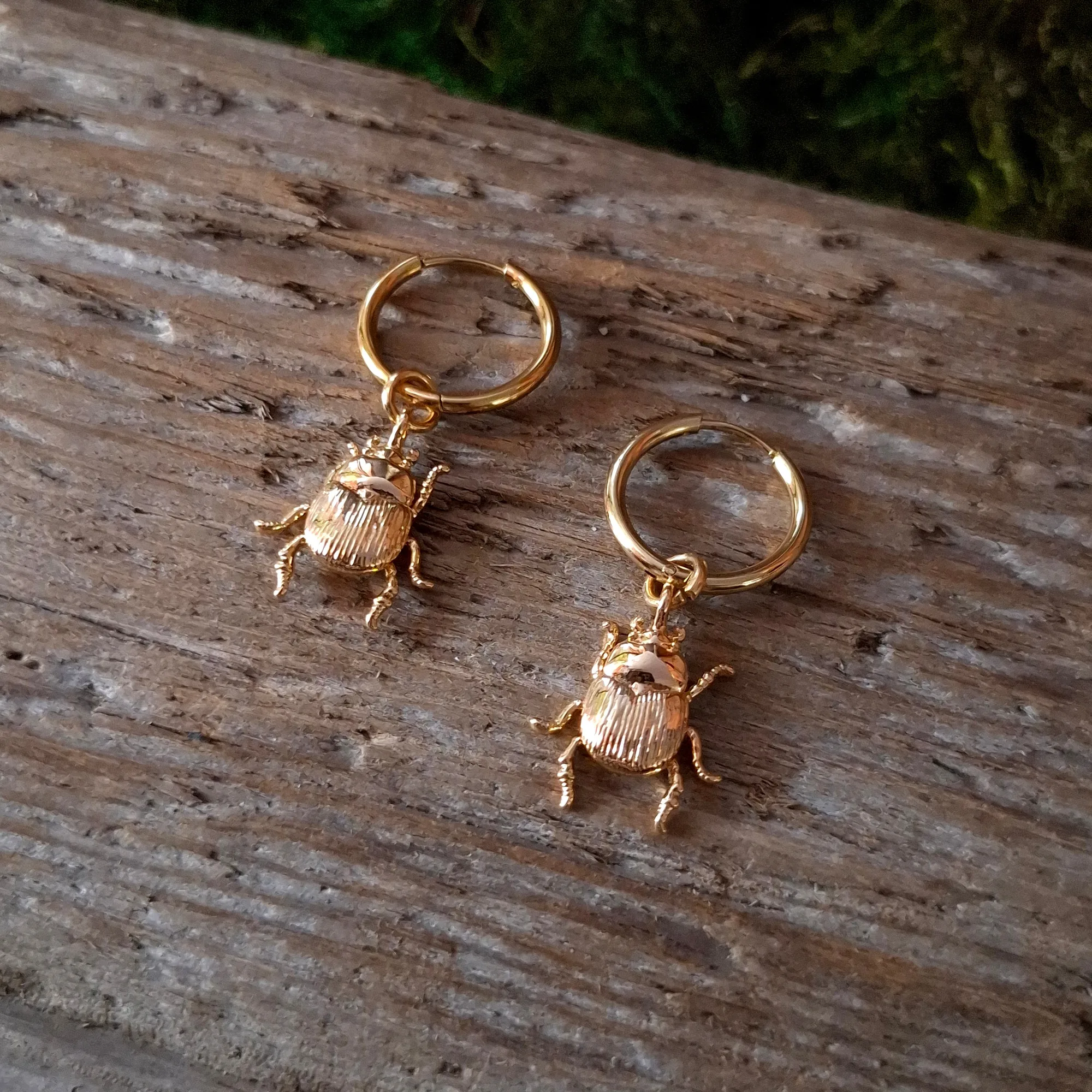
- Small Gold Beetle Hoop Earrings: 18k gold plated stainless steel hoops and charms, nickel free, made in Seattle, WA; the listing notes the gold plating may rub off over time and should be kept away from moisture. A concrete example of a finish with a known lifespan. Apply the same honesty to crystals: ask how a surface finish or polish will wear before placing it in a damp or high-touch spot.
Is this approach right for you?
Best for
- First-time buyers who want one piece that suits a specific room
- Anyone refreshing a shelf, console, or nightstand without rebuilding the whole space
- Shoppers who care more about how a stone looks in their home than about collecting
Not for
- Collectors who buy for rarity or provenance rather than placement
- Anyone expecting a stone to change a room's function or solve a damp, dark, or cramped space
- Shoppers who want a matched set out of the box rather than building one piece at a time
Choose the spot, then the light, then the color, then the size — and buy one piece at a time. That order keeps you from bringing home a stone that never finds a place, and it makes every later addition easier to judge.