Quick Answer
Start by defining your venue, season, and the one silhouette detail you refuse to compromise on, then book a bespoke bridal gown consultation before you buy anything else. Treat couture gown measurements as a working document rather than a single appointment, and confirm the number of fittings, the alteration policy, and the delivery window in writing before you pay a deposit.
Set Your Non-Negotiables Before You Look at Fabric
Custom gowns go wrong when the brief is vague. Before any studio visit, write down four constraints: your ceremony location and floor surface, the month and likely temperature, how much you need to move or dance, and the single design element you would regret losing. A strapless bustier behaves differently in a windy outdoor ceremony than a racer-neck bodice with a backless design, and knowing which one you actually want prevents a costly pivot mid-process.
Bring photos of dresses you dislike as well as ones you love. Dislikes are faster to articulate and give your designer clearer boundaries than a mood board of similar gowns.
What Happens in a Bespoke Bridal Gown Consultation
A good consultation is a working session, not a sales pitch. Expect to try on sample shapes, discuss fabrication weight and opacity, and talk through construction details such as whether a bodice is lined, how an overskirt attaches, and where a train falls. Ask directly whether the studio drafts a pattern from your measurements or adapts an existing block, because that answer determines how much design freedom you have.
If you are choosing between a made-to-measure wedding dress and a fully bespoke commission, ask what changes are included at each tier. Made-to-measure usually adjusts an existing silhouette to your measurements; bespoke allows structural changes to the pattern itself.
Couture Gown Measurements: What to Wear and What to Expect
Wear the undergarments and shoes you plan to use on the day, since heel height changes hem length and posture. Measurements are typically taken over light clothing at the bust, underbust, natural waist, fullest hip, and hollow-to-hem, plus shoulder and back length where the design requires it. If your weight or training routine may shift, say so early so the pattern includes sensible seam allowance.
One measurement appointment is rarely enough. Ask when measurements will be rechecked and whether that recheck is included in the quoted price.
Plan the Fitting Schedule Around Your Real Timeline
Work backwards from your wedding date and leave a buffer for the final press and collection. Most commissions need a first fitting on the toile or base structure, a second on the near-finished gown, and a final check after any hem or strap adjustments. Ask what happens if your date moves or if a fitting is missed, and get the answer in writing.
Book hair and makeup trials close to a fitting so you can judge the neckline and back design with your actual styling, not a loose ponytail.
Budget for Alterations, Not Just the Gown
Quoted prices usually cover the gown as designed, not every later change. Structural requests after cutting, such as adding snaps at the waist, changing a hem split, or rebuilding a bodice, sit in a different cost bracket from minor length adjustments. Ask for an alteration rate card before you commit so a small change does not become a surprise.
If your budget is fixed, decide early which details are worth paying for and which you can release. Fabric and construction are harder to change later than surface embellishment.
Your Step-by-Step Custom Gown Process
- 1. Write the brief before you shop: Note venue, season, movement needs, and one non-negotiable design element, then add three reference images you dislike. Checkpoint: if you cannot name the non-negotiable, you are not ready to book.
- 2. Book the consultation and ask about pattern drafting: Find out whether the studio drafts from your measurements or adapts an existing block, and what is included at made-to-measure versus bespoke. Common mistake: assuming every custom gown allows structural design changes.
- 3. Take measurements in your real undergarments and shoes: Cover bust, underbust, natural waist, fullest hip, and hollow-to-hem, and flag any planned weight or training changes. Checkpoint: confirm when measurements will be rechecked and whether that is included.
- 4. Approve the toile or base structure first: Judge fit and proportion on the toile before embellishment or final fabric is cut, and raise neckline or back concerns at this stage. Common mistake: waiting until the finished gown to question the silhouette.
- 5. Schedule fittings backwards from the wedding date: Plan a first, second, and final fitting with a buffer for pressing and collection, and book a hair and makeup trial near a fitting. Checkpoint: get the missed-fitting and date-change policy in writing.
- 6. Confirm the alteration terms before the deposit: Ask for an alteration rate card and clarify which structural changes, such as adding waist snaps, count as new work. Next step: sign off only when price, timeline, and alteration terms are all documented.
Real Gowns That Show How These Choices Play Out
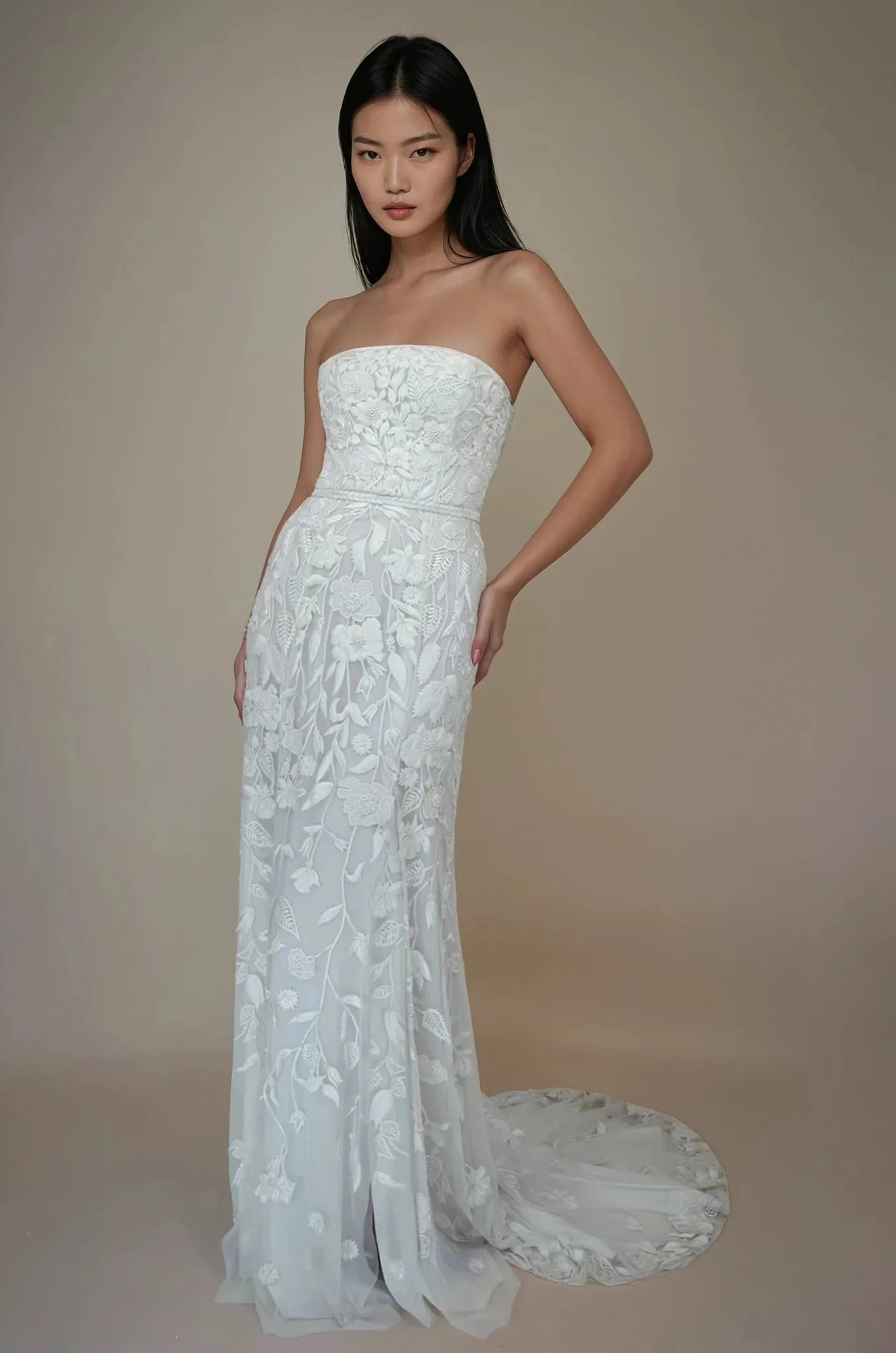
- Wild Rose Tulle Bustier Gown | Floral White: The Wild Rose Tulle Bustier Gown in Floral White pairs classical embroidery with a contemporary straight-neck bustier and a leg split. A straight-neck bustier is a good reference point in consultation if you want structure at the front and freedom of movement through the leg.
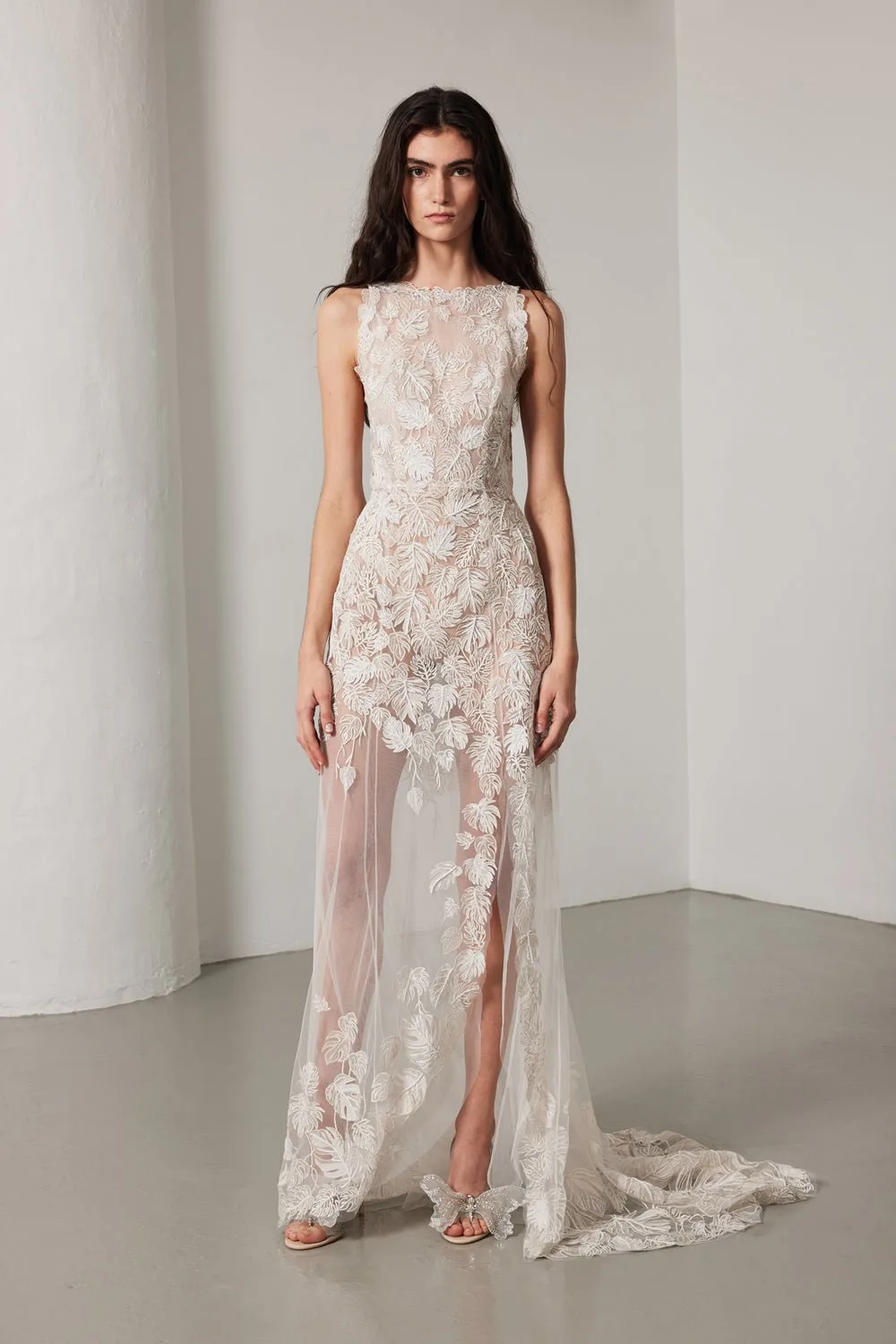
- Monstera Racer Neck Gown With Train | Floral White: The Monstera Racer Neck Gown With Train uses a racer-neck bodice, a curve split hem, and a backless design, and snaps at the waist can be added in alterations. This is a concrete example of an alteration that changes how a gown wears, so ask about it during consultation rather than after cutting.
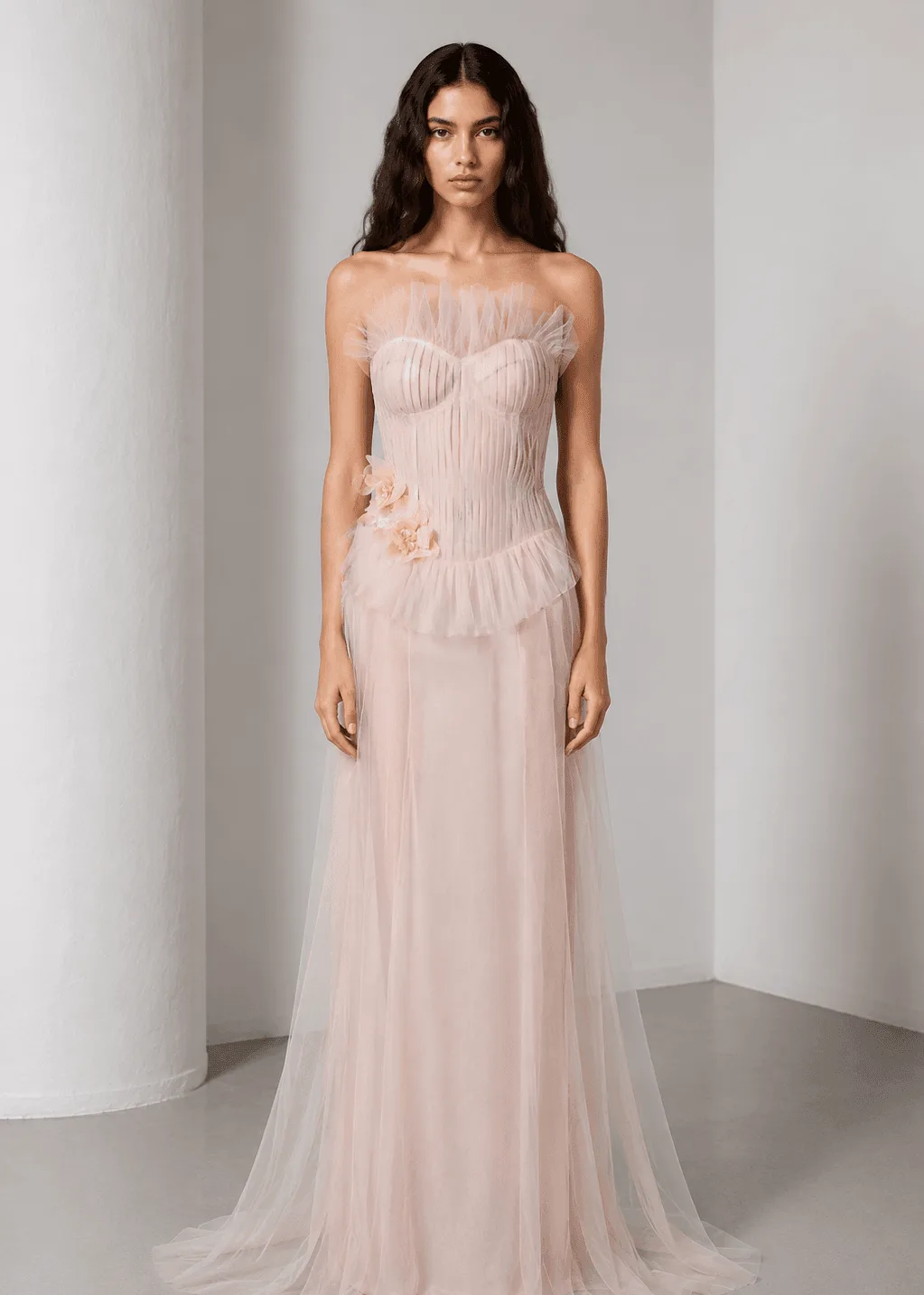
- Archive 'Dreamscape' in 'Cupid’s Pink Cloud' - 3 Piece Set: The Archive 'Dreamscape' in 'Cupid’s Pink Cloud' is a three-piece set with a pink tulle pleated bodice and a sheer pink tulle overskirt over a lined A-line skirt. A layered set lets you change your silhouette between ceremony and reception, but the overskirt attachment point must be planned in your measurements and fittings.