Start with Your Skin's Needs, Not the Label
A daily moisturizer should match your skin type and your lifestyle. The right one hydrates without feeling heavy or greasy, absorbs quickly, and supports a smooth complexion. Before you look at ingredients or brand claims, consider your own skin's behavior: Does it feel tight after washing? Does it get shiny by midday? Do you react to fragrances or oils?
For most people, a lightweight, gentle formula works well for everyday use. Phil's Daily Moisturizer, for example, is designed to hydrate and support healthy skin without a greasy feel. It absorbs quickly and is suitable for a wide range of skin types. That kind of versatility makes it a good starting point, but you may still want to fine-tune based on your specific concerns.
Texture and Absorption Matter More Than You Think
Moisturizers come in lotions, creams, gels, and balms. For daily use, a lightweight lotion or gel is often best for normal to oily skin, while a richer cream may suit dry or mature skin. The key is how the product feels after application. If it leaves a sticky or shiny layer, it may be too heavy for your skin. If it disappears without any hydration, it may be too light.
Phil's Daily Moisturizer is described as lightweight and nourishing, absorbing quickly to leave skin soft, balanced, and refreshed. That quick-absorbing quality is especially useful if you apply makeup over it or if you live in a humid climate. If your skin is very dry, you might layer it over a hydrating serum or use a slightly richer formula at night.
Ingredients to Look For (and What to Avoid)
A good daily moisturizer should contain humectants (like glycerin or hyaluronic acid) to draw moisture into the skin, emollients (like squalane or shea butter) to soften the surface, and sometimes occlusives (like dimethicone or jojoba oil) to lock in hydration. For sensitive skin, avoid fragrances, essential oils, and alcohol. For oily or acne-prone skin, look for non-comedogenic formulas.
Phil's Daily Moisturizer uses a gentle formulation, making it suitable for a wide range of skin types. While the supplied information does not specify every ingredient, its emphasis on a simple, effective approach suggests it avoids harsh additives. If you have known sensitivities, check the full ingredient list before purchasing.
Product Facts at a Glance
-
Daily Moisturizer: Phil's Daily Moisturizer is a lightweight, nourishing formula designed to hydrate and support healthy skin without feeling heavy or greasy. Lightweight hydration is ideal for daily use, especially if you have combination or oily skin and want a moisturizer that won't clog pores or cause shine.
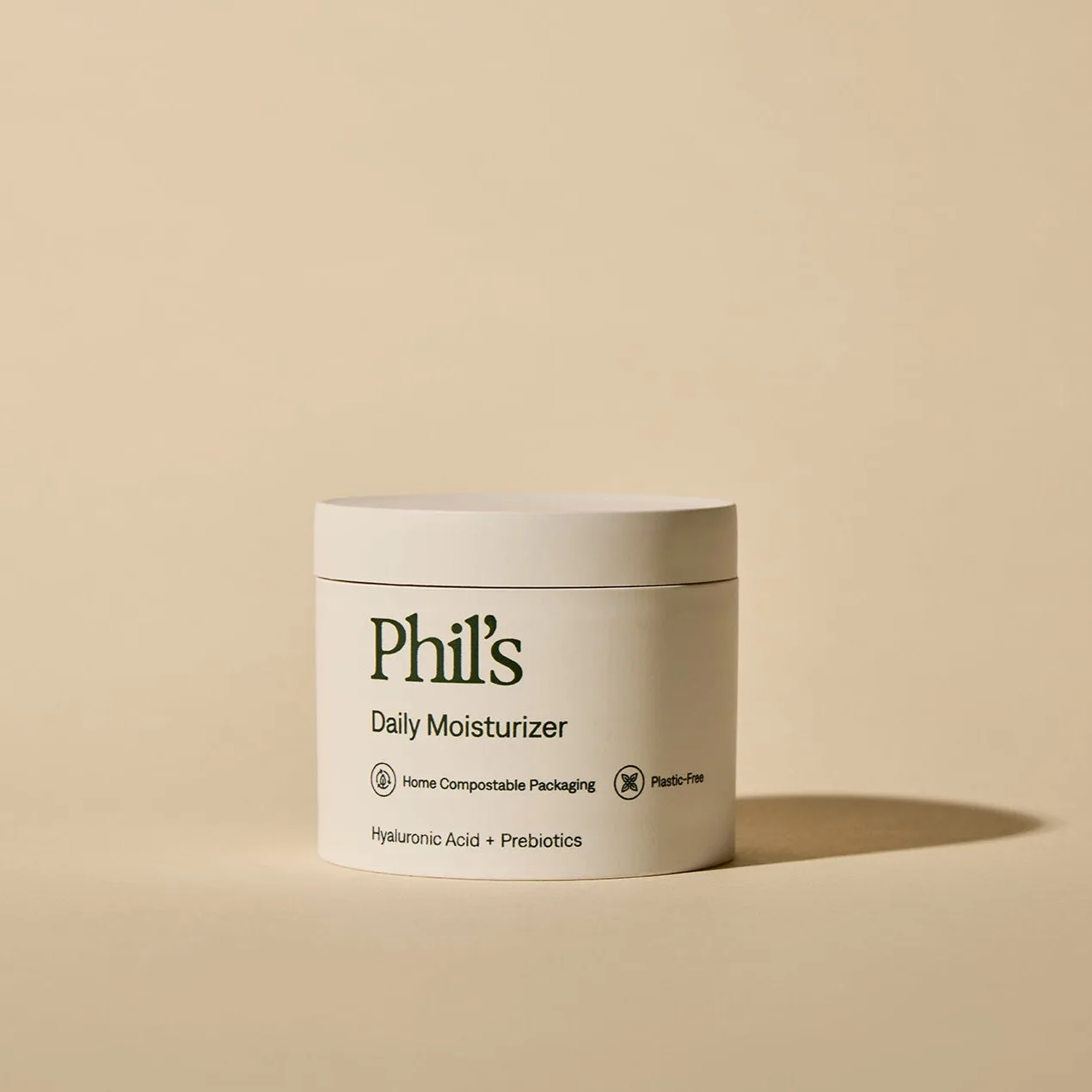
Daily Moisturizer
-
Daily Moisturizer: It absorbs quickly to leave skin feeling soft, balanced, and refreshed. Quick absorption saves time in your morning routine and allows you to apply sunscreen or makeup immediately after.
-
Daily Moisturizer: Its gentle formulation makes it suitable for a wide range of skin types. If you are unsure about your skin type or share the product with family, a gentle formula reduces the risk of irritation.
When to Apply and How to Layer
Most daily moisturizers work best when applied to slightly damp skin after cleansing. This helps lock in moisture. Use a pea-sized amount for the face and neck, and gently press it in rather than rubbing. If you use a serum, apply it first and wait a minute before moisturizer. Sunscreen goes on top of moisturizer in the morning.
Phil's Daily Moisturizer can be used as part of a morning routine or after cleansing. Its lightweight texture layers well under sunscreen and makeup. For evening use, you can follow it with a facial oil if your skin needs extra nourishment.
What the Record Does Not Confirm
The supplied information does not list a full ingredient breakdown, SPF rating, or specific skin type recommendations beyond "suitable for a wide range." If you have very dry skin, you may want to combine it with a hydrating serum. If you need sun protection, apply a separate sunscreen after moisturizer. For acne-prone skin, look for non-comedogenic claims or test on a small area first.