Quick answer
For a lactation room, choose powder-free, latex-free disposable gloves that fit well and provide reliable barrier protection. Vinyl gloves offer a cost-effective, tactile option for most tasks, while nitrile is better for those with stronger chemical or allergy concerns.
Material matters: Vinyl vs. nitrile vs. latex
Vinyl gloves are made from PVC and are a popular choice for low-risk, non-sterile tasks like handling pump parts or milk storage bags. They offer good tactile sensitivity and are typically less expensive than nitrile. However, they are less durable and provide less puncture resistance, so they are not ideal for tasks involving sharp objects or prolonged contact with oils or chemicals.
Nitrile gloves are synthetic rubber gloves that are more resistant to punctures and chemicals. They are a strong alternative for anyone with latex allergies or who needs extra durability. Nitrile tends to be slightly thicker and more expensive per glove.
Latex gloves offer excellent elasticity and comfort, but they can cause allergic reactions. Since lactation rooms serve many users, a latex-free policy is safer to avoid triggering allergies. Both vinyl and nitrile are naturally latex-free.
Fit and comfort for pumping sessions
Gloves that are too tight can restrict hand movement and cause fatigue during repeated use, while loose gloves reduce dexterity and increase the risk of tearing. Sizing is typically based on hand circumference and length, with options from extra small to extra large. Always check the manufacturer's sizing chart.
For a lactation room, ambidextrous gloves (which fit either hand) simplify stocking and reduce waste. Beaded cuffs help prevent the glove from rolling down and make donning easier. Powder-free gloves are preferred to avoid powder residue contaminating pump parts or milk.
Practical considerations for nursing stations
Lactation rooms are often shared spaces. Single-use gloves should be disposed of after each use to prevent cross-contamination. Boxes of 150 gloves are convenient for small teams or home use, while cases of 10 boxes suit larger facilities. Store gloves in a clean, dry area away from direct sunlight or heat.
Check that the gloves are labeled as non-sterile and do not have a stated expiration date unless you plan to keep them for extended periods. Most disposable gloves have a shelf life of 3-5 years if stored properly.
Decision rules for choosing disposable gloves
- Check for latex-free: Always choose gloves labeled as not made with natural rubber latex to accommodate users with latex allergies. If the box does not say latex-free, assume it contains latex.
- Select the right material for the task: Vinyl is suitable for low-risk handling of pump parts and milk bags. Nitrile is better if you need extra puncture resistance or will handle cleaning agents. For a general lactation room, vinyl is cost-effective and sufficient.
- Verify sizing and fit: Measure hand circumference and length, then compare to the manufacturer's sizing chart. Ambidextrous gloves simplify inventory. Test a small batch of each size before ordering in bulk.
- Consider packaging and storage: Boxes of 150 gloves work for individual or small-group use. For larger facilities, cases of 10 boxes reduce reordering frequency. Store gloves in a cool, dry place away from chemicals.
Product spotlight
-
Gloves, McKesson Medium Nonsterile Vinyl Standard Cuff 150/Box: McKesson Powder-Free Vinyl Exam Gloves are non-sterile, ambidextrous, and feature a beaded cuff with high tactile sensitivity. These gloves offer a comfortable, latex-free option for handling pump parts and milk containers, with a smooth surface that reduces contamination risk.
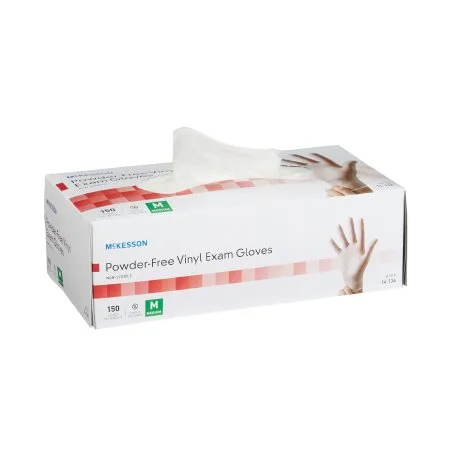
Gloves, McKesson Medium Nonsterile Vinyl Standard Cuff 150/Box
Who should use what
Best for
- Lactation rooms with multiple users where latex allergies are a concern
- Handling pump parts, milk storage bags, and cleaning tasks
- Budget-conscious facilities that need reliable, single-use barrier protection
Not ideal for
- Tasks involving sharp instruments or strong chemical solvents (choose nitrile instead)
- Users who require sterile gloves for medical procedures (choose sterile exam gloves)