Quick Answer
Choose embroidery scissors with a short, sharp blade (3–4 inches) for detailed cutting, and make sure the handles fit your grip comfortably. For a reliable pick, consider Bohin animal print embroidery scissors, which are compact and designed for trimming threads and fabric details.
Blade Length and Shape Matter
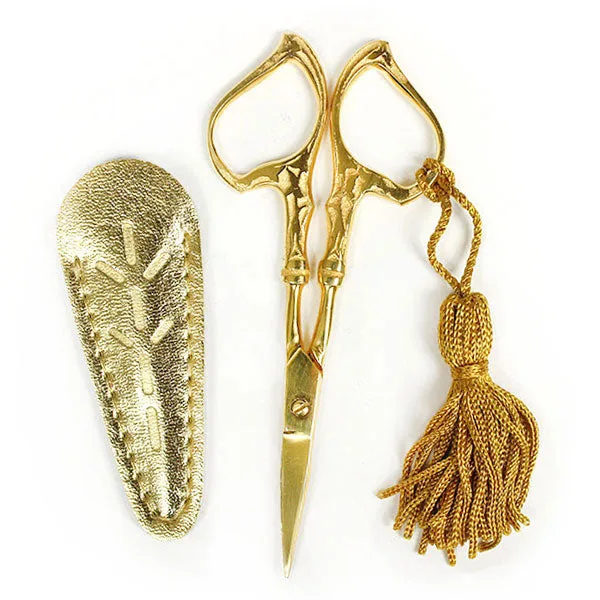
Embroidery scissors typically have blades between 3 and 4 inches. Shorter blades give you more control for snipping threads close to the fabric without accidentally cutting your work. Curved blades are ideal for trimming along curves or clipping seam allowances, while straight blades are better for general thread cutting.
If you often cut appliqué or need to reach tight corners, look for a sharp, pointed tip. A blunt tip is safer for children or for cutting threads close to the fabric without piercing it.
Handle Comfort and Grip
Embroidery involves repeated cutting, so handles that fit your hand reduce fatigue. Look for scissors with a comfortable finger loop and a thumb loop that doesn't pinch. Some models have ergonomic or spring-loaded handles that open automatically, which can ease strain.
If you have larger hands or arthritis, try scissors with a wider grip or those designed for left-handed use. Always test the scissors in your hand if possible; a good fit is more important than brand or price.
Quality and Maintenance
High-quality steel blades stay sharp longer and cut more cleanly. Stainless steel resists rust, while carbon steel can hold a sharper edge but requires more care. Avoid using your embroidery scissors on paper or heavy fabric, as this dulls the blade quickly.
Keep your scissors clean and dry, and store them in a protective case or sheath. Regularly wipe the blades with a soft cloth and occasionally oil the pivot to maintain smooth action.
Decision Rules for Choosing Embroidery Scissors
- Blade length: Choose blades between 3 and 4 inches for most embroidery work. Shorter blades give more control for snipping threads and cutting small shapes. If you do mostly thread trimming, 3-inch blades are sufficient; choose 4-inch blades for slightly larger fabric cuts.
- Blade shape: Select curved blades for trimming along curves or clipping seams, and straight blades for general cutting. Pointed tips reach tight corners; blunt tips are safer for beginners. For appliqué work, curved blades are a must.
- Handle comfort: Test the scissors in your hand. The finger and thumb loops should fit comfortably without pinching. Consider ergonomic or spring-loaded handles if you have hand fatigue. If you have arthritis, look for scissors with a wider grip or spring action.
- Quality and care: Choose stainless steel for rust resistance or carbon steel for edge retention, and always cut only fabric and thread. Store them in a case and oil the pivot regularly. Never cut paper with your embroidery scissors; it will dull them quickly.
Product Spotlight
-
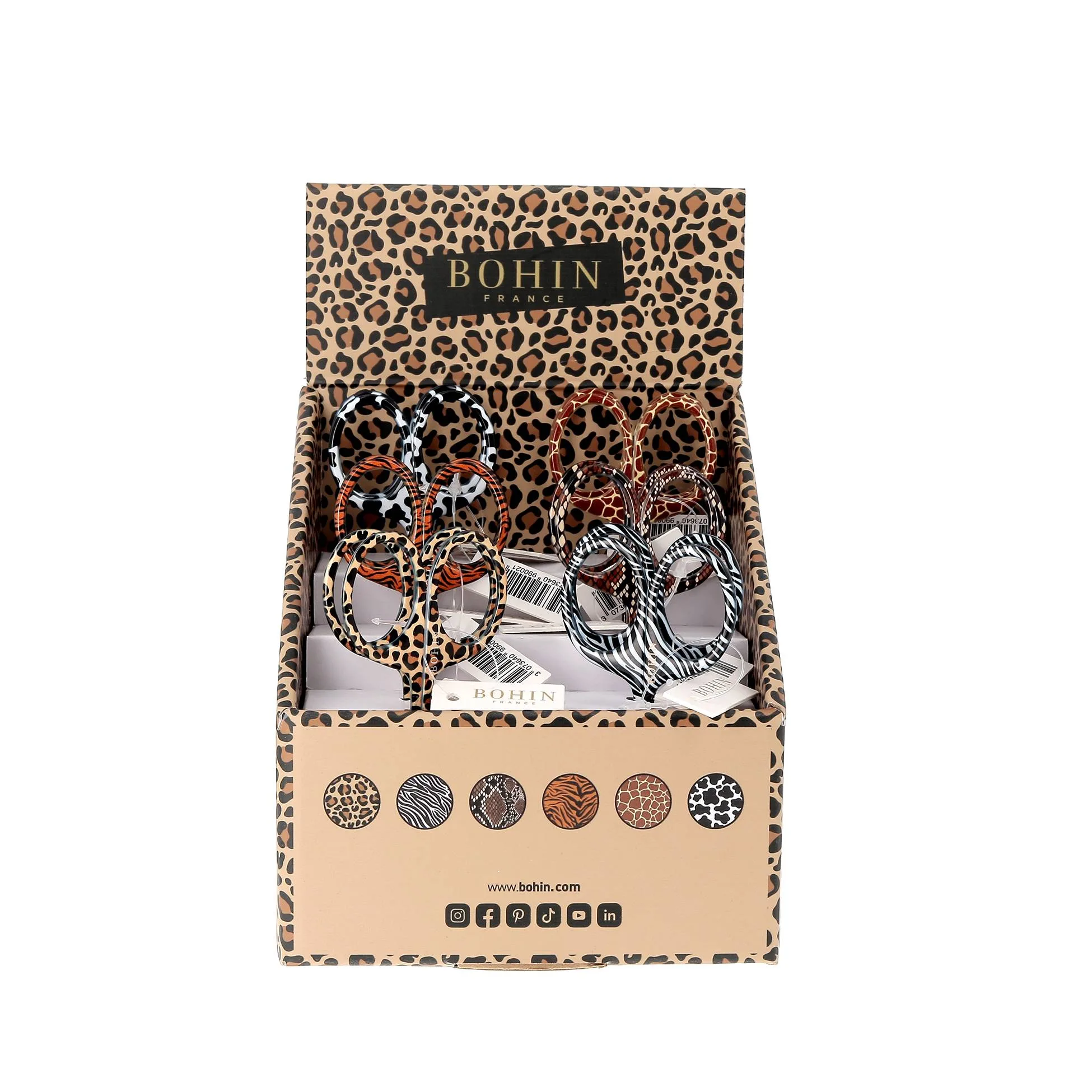
BOHIN Embroidery Scissors | Animal Print | 3 1/2": Bohin embroidery scissors are approximately 3 1/2 inches long and come in animal print patterns like cow, giraffe, snake, tiger, cheetah, or zebra. The compact size is ideal for detailed cutting tasks such as trimming embroidery threads, and the fun patterns add personality to your sewing kit.
BOHIN Embroidery Scissors | Animal Print | 3 1/2"
Who Should Choose What
Best for
- Embroiderers who need precise thread trimming and detail cutting
- Crafters who want a compact, portable pair of scissors with a fun design
Not for
- Heavy fabric cutting or tailoring tasks that require larger shears
- Left-handed users if the scissors are not ambidextrous or left-handed specific