Quick answer
Measure your table's usable surface first, then choose a play mat that leaves at least 2–3 inches of border on every side for dice, tokens, and rulebooks. Match the mat's orientation and game mode to how you actually play, and pick a theme that keeps the pitch readable during long games. If you're unsure, start with a mid-size mat and upgrade only when your table or player count demands it.
Measure your table before you shop
Pull out a tape measure and record the length and width of your table's usable surface, not the table's advertised size. Most dining tables lose 2–4 inches to a lip, leaf seam, or rounded edge. Write down both numbers in inches and keep them handy. If you play on multiple tables, measure the smallest one; a mat that fits the smallest table will fit all of them.
Next, subtract a border. You want 2–3 inches of bare table on every side for dice trays, casualty tokens, and a rulebook. A 48-inch table, for example, comfortably fits a mat up to about 42 inches long. If your mat covers the whole table edge to edge, dice will roll off and miniatures near the sideline will feel cramped.
Match the mat to your game mode and orientation
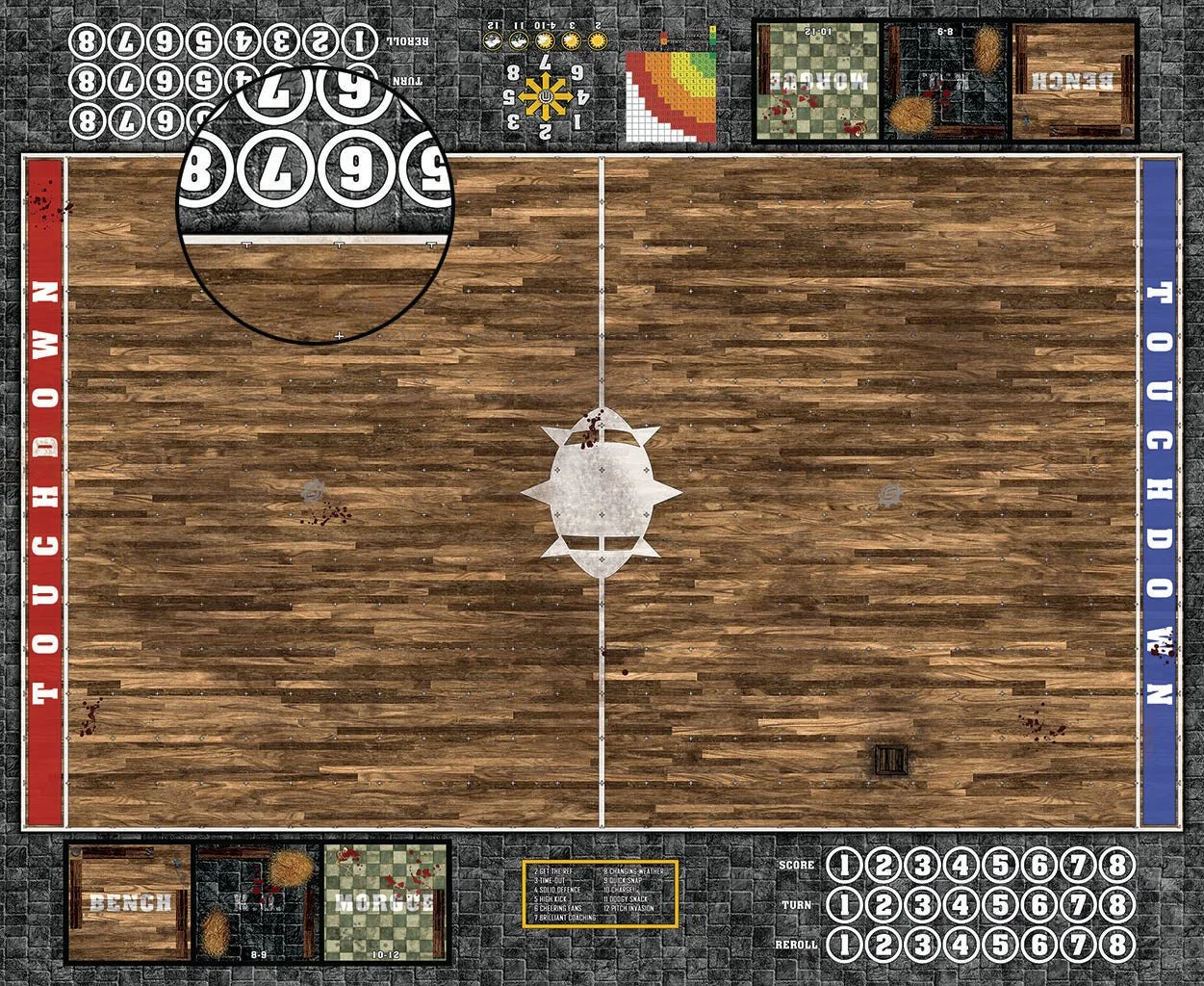
Fantasy football mats are not one-size-fits-all. The same pitch can be printed in different orientations, and the orientation changes how the field reads from your seat. A landscape mat works well when players sit along the long sides; a portrait mat suits head-to-head setups where each coach sits at an end. Check the available orientation options on the product page before you commit, because a mat that reads sideways will slow down every drive.
Game mode matters too. Some mats are designed for standard pitch play, while others support variant rules or casual pick-up games. If your group plays a specific format, confirm the mat supports it. If you are buying for a club that rotates formats, a flexible mat with multiple mode options will get more table time than a themed one-trick pony.
Pick a theme that stays readable
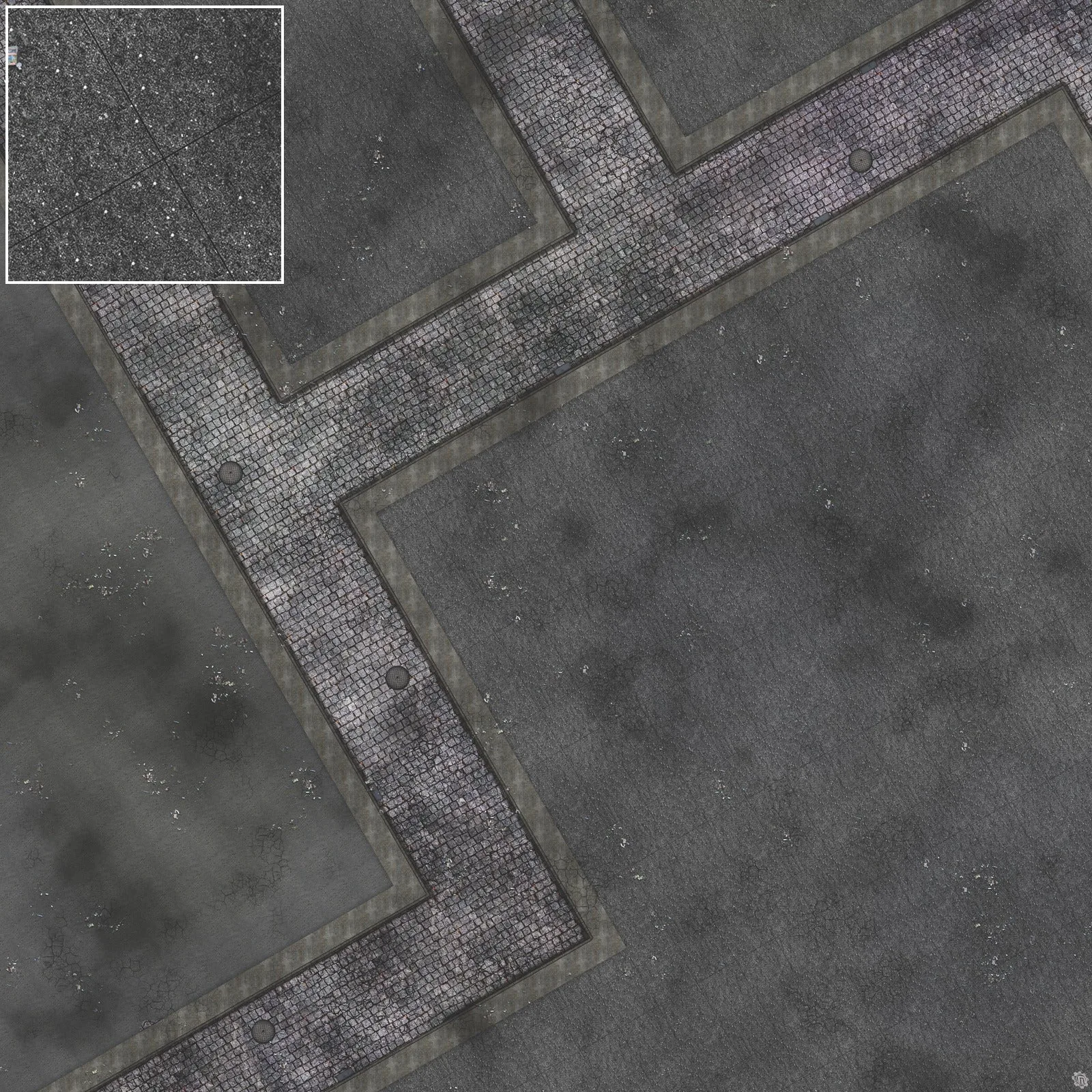
Theme is not just decoration. High-contrast pitches with clear yard lines and end zones are easier to read across a table than busy, low-contrast artwork. A Bustling City street scene, a Hellenic Plateau, or a lunar surface each sets a different mood, but the practical test is whether you can track ball position and player spacing at a glance from three feet away.
If your group plays under bright overhead lights, glossy or very light mats can wash out. If you play in a dim room, dark mats with subtle markings can swallow detail. Ask yourself where the mat will live and how the lighting hits it before you choose a theme.
Check storage and portability
A play mat that is too big to roll up and carry will stay home. Measure your bag, shelf, or carrying case before you buy. Mats that roll tightly and store in a tube travel better than mats that must lie flat. If you host at your place, storage matters less; if you haul your kit to a friend's house or a store, it matters a lot.
Also consider setup time. A mat that lies flat immediately after unrolling is easier to use than one that needs books on the corners for an hour. If you play short sessions, a mat that cooperates on unroll will see more use.
Step-by-step: choosing your pitch size
- Measure the usable table surface: Record length and width in inches from edge to edge, ignoring the table's advertised size. Common mistake: measuring the tabletop including a raised lip or leaf seam, which makes the mat overhang and buckle. Checkpoint: your two measurements should be at least 4 inches larger than the mat you are considering.
- Decide your border allowance: Reserve 2–3 inches on every side for dice, tokens, and rules. Common mistake: buying a mat that covers the entire table, leaving nowhere for dice to land. Checkpoint: if your mat leaves less than 2 inches on any side, size down.
- Choose orientation and game mode: Pick landscape if players sit along the long sides, portrait if they sit at the ends. Confirm the mat supports the game mode your group plays. Common mistake: assuming orientation is fixed and buying a mat that reads sideways from your seat. Checkpoint: sit at your table and imagine the mat's field lines pointing toward each player before you buy.
- Test theme readability from playing distance: Look at product images from about three feet away, which is roughly how far the far side of the mat will be. Common mistake: choosing a busy theme that looks great in a close-up photo but hides yard lines during play. Checkpoint: if you cannot quickly point to the end zones in a photo, the theme may be too busy.
- Confirm storage and unroll behavior: Measure your bag or shelf and check whether the mat rolls tightly. Common mistake: buying a mat that only lies flat after hours of weighting, which kills short sessions. Checkpoint: if you travel with your kit, prioritize a mat that stores in a tube.
Product facts to compare
- Mats by Mars: Bustling City v1.0 Fantasy Football Play Mat / Pitch: Mats by Mars: Bustling City v1.0 Fantasy Football Play Mat / Pitch is listed with Orientation and Game Mode options. Orientation and game mode options let you match the mat to how your group actually sets up, rather than forcing a single layout.
- Mats by Mars: Hellenic Plateau Fantasy Football Play Mat / Pitch: Mats by Mars: Hellenic Plateau Fantasy Football Play Mat / Pitch is listed with Orientation and Game Mode options. A second theme with the same option structure gives you a direct comparison point when you are choosing between visual styles.
- Mats by Mars: Moon Surface Fantasy Football Play Mat / Pitch: Mats by Mars: Moon Surface Fantasy Football Play Mat / Pitch is listed with Orientation and Game Mode options. If you want a high-contrast, low-distraction surface, a lunar theme may read more clearly than a dense city scene.