What Makes a Puzzle a Good First Jigsaw?
A first jigsaw puzzle should match your child's fine-motor skills and attention span. For most toddlers, that means large pieces that are easy to grip and a clear, engaging picture. The puzzle should also offer a learning benefit that fits your child's current interests, such as numbers, letters, or animals.
The Mideer Puzzle - My Time Travel is a good example. It uses large wooden pieces and moveable clock hands to teach time and counting. It is designed for children aged 3–5, which is a common age range for starting simple jigsaw puzzles.
Start with Piece Size and Material
Toddlers need pieces they can pick up and turn easily. Large pieces are safer and less frustrating for small hands. The Mideer puzzle features large pieces, which is a key feature for a first jigsaw.
Material also matters. Wooden puzzles are durable and less likely to bend or tear than cardboard. The Mideer puzzle is made of wood, which means it can survive repeated play and still fit together well.
What the Mideer My Time Travel Puzzle Offers
-
Clearance Children Jigsaw Puzzle - My Time Travel , Early Learning Education: The puzzle boasts moveable clock hands designed to help young ones better understand the concept of time while also enhancing their ability to count. Moveable clock hands turn a standard jigsaw into an interactive learning tool, making it more engaging for a first-time puzzler.
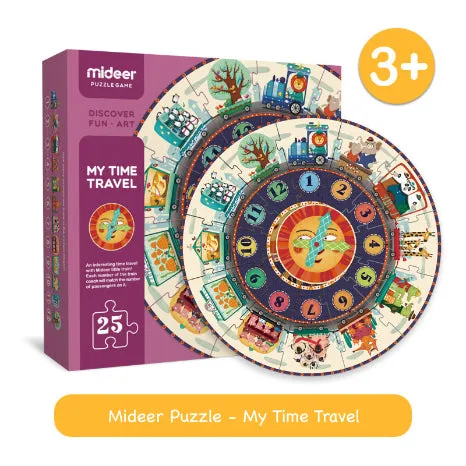
Clearance Children Jigsaw Puzzle - My Time Travel , Early Learning Education
-
Clearance Children Jigsaw Puzzle - My Time Travel , Early Learning Education: Featuring large pieces perfect for little hands, your child will have no trouble piecing together this colourful jigsaw puzzle teeming with vibrant animals. Large pieces reduce frustration and are easier for toddlers to handle, which is critical for a positive first puzzle experience.
-
Clearance Children Jigsaw Puzzle - My Time Travel , Early Learning Education: Material: Wood Wooden puzzles are more durable than cardboard and can withstand drops and rough handling, making them a better long-term investment.
Match the Puzzle to Your Child's Age and Skills
The recommended age for the Mideer puzzle is 3–5 years. This is a good starting point, but every child develops differently. If your child is 2 and still puts things in their mouth, wait until they are older. If they are 3 and already enjoys simple shape sorters, this puzzle could be a good next step.
Look for puzzles that teach something your child is currently curious about. The Mideer puzzle focuses on numbers and telling time, which can be great for a preschooler who is starting to count or ask about clocks.
Consider the Learning Goals Beyond the Puzzle
A first jigsaw puzzle can do more than just teach patience. The Mideer puzzle promotes cognitive development, number recognition, and hand-eye coordination. These are all valuable skills for a 3–5-year-old.
However, if your child is not yet interested in numbers or clocks, a puzzle with animals or familiar objects might be a better first choice. The most important factor is that the puzzle captures your child's attention.
What to Check Before You Buy
Before purchasing, check the box size and weight. The Mideer puzzle box is 25 x 25 x 5 cm and weighs 0.8 kg. This is a manageable size for a small table or play mat.
Also, verify that the puzzle includes all pieces. The Mideer product information does not confirm the exact number of pieces, so you may want to check the product images or description for that detail. If piece count is important to you, look for a puzzle that lists it clearly.