The two things daily practice actually tests
A mat you unroll every day gets judged on two things: whether it stays put under your hands and feet, and whether it stays pleasant to use without a lot of fuss. The Flow Yoga Mat is positioned for beginners, with a grippy, non-slip surface and supportive cushioning, plus eco-friendly materials and an easy-to-clean surface. That combination is the core of this buying guide.
The catalog lists four Mandala colorways at 6mm thickness: Mandala Rose, Mandala Aqua, Mandala Charcoal and Mandala Lavender. The choice you actually make is design and how that 6mm feel matches your practice, not a long list of technical specs.
Grip: what the Flow mat promises and what it doesn't
Grip is the first thing to check against your own practice, because the catalog describes the surface as grippy and non-slip but does not publish a grip rating or test data.
- What is confirmed: The Flow Yoga Mat has a grippy, non-slip surface intended to give a stable foundation. That is the relevant claim for daily standing and balance work.
- What is not confirmed: The supplied information does not specify how grip performs in hot, sweaty sessions or on every floor type. If you practice hot yoga or sweat heavily, treat grip as something to test in your first sessions rather than a guaranteed outcome.
- A practical check: Before committing to a daily routine, try a short standing sequence and a few balance poses. If your hands or feet slide, adjust your setup or consider whether a different mat style suits your sweat level.
Thickness: why 6mm is the only Flow option
Every listed Flow Yoga Mat variant is 6mm thick. That is the entire thickness decision: there is no thinner or thicker Flow variant in the supplied catalog. The 6mm figure is a useful middle ground for beginners who want supportive cushioning without an excessively soft feel, though the catalog does not publish a firmness rating or a recommended body-weight range.
If you already know you prefer a very thin, ground-feel mat or a much thicker cushion for sensitive joints, the Flow mat's single 6mm option may not match that preference. If you are starting out and want one mat that covers most daily sessions, 6mm is a reasonable default to compare against other mats.
Flow Yoga Mat facts behind these choices
-
Flow Yoga Mat: The YDL Flow Yoga Mat is described as a beginner-friendly mat with a grippy, non-slip surface and supportive cushioning. This is the baseline for deciding whether the mat suits daily foundational practice.
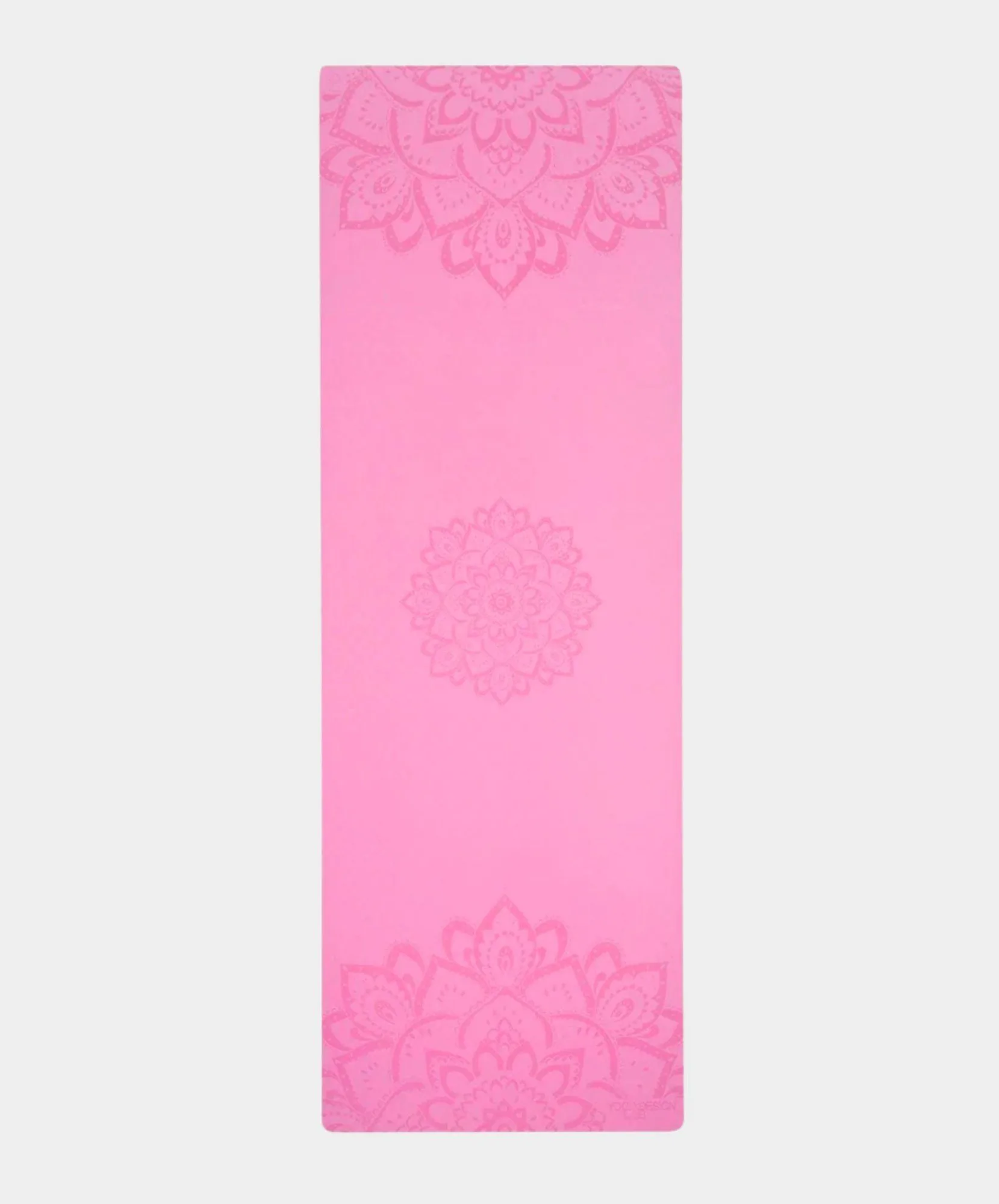
Flow Yoga Mat
-
Flow Yoga Mat: It is listed with eco-friendly materials and an easy-to-clean surface. Daily use means frequent cleaning; an easy-clean surface reduces maintenance friction.
-
Flow Yoga Mat: Available variants are Mandala Rose, Mandala Aqua, Mandala Charcoal and Mandala Lavender, all at 6mm thickness. Design is the main variable between variants; thickness does not change across the line.
The four Mandala designs: pick by preference, not performance
Because all four variants share the same 6mm thickness and the same listed surface and material description, the design choice is aesthetic and practical rather than functional. Choose the colorway you will actually enjoy unrolling every day.
- Mandala Rose: A warm-toned option for anyone who wants a softer-looking mat in a shared or visible practice space.
- Mandala Aqua: A cooler colorway if you prefer a calmer visual tone for daily practice.
- Mandala Charcoal: A darker option that may suit people who prefer a low-contrast look; note that a separate recent article covers grip and slip specifically for this colorway.
- Mandala Lavender: A lighter purple option for those who want a distinct design without changing the mat's listed specs.
Materials and care: what daily use demands
The Flow mat is listed with eco-friendly materials and an easy-to-clean surface. That is the full extent of the supplied material and care information. The catalog does not name the specific material composition, list cleaning products, or give drying times, so avoid assuming a particular rubber, PVC or TPE construction.
For daily practice, the practical takeaway is to wipe the mat after sessions and follow whatever care guidance comes with the product. If you need a specific cleaning agent or a machine-washable mat, confirm that detail before buying rather than inferring it from the eco-friendly description.
Size and fit: what the catalog does and doesn't tell you
The supplied record does not list mat length or width, so this guide cannot give a size recommendation. Treat size as a check-at-purchase item.
- What to confirm before buying: Ask for the mat's length and width if your height or practice style makes coverage important, such as long-limbed practitioners or wide standing poses.
- Why 6mm matters for fit: Thickness affects how the mat rolls and how much space it takes up, but the catalog does not provide rolled dimensions or weight.
- Storage check: If you store your mat rolled in a bag or corner, confirm the rolled size rather than assuming it fits your usual spot.
A five-step decision sequence for daily practice
- 1. Confirm your practice style: If your daily routine is beginner-level standing and balance work, the Flow mat's listed grip and cushioning are aimed at you. If you practice hot yoga, test grip early.
- 2. Accept or reject 6mm: The Flow line is 6mm only. Decide whether that level of cushioning matches your joints and floor before choosing a design.
- 3. Check size: Request length and width if coverage matters for your height or pose width; the supplied record does not state them.
- 4. Choose a Mandala design: Pick Rose, Aqua, Charcoal or Lavender based on preference. Performance is listed identically across variants.
- 5. Plan your care routine: Use the easy-to-clean surface as intended and confirm any specific cleaning instructions at purchase, since the catalog does not list them.