Quick answer
Choose a headband width that balances your face shape: narrow bands (under 1 inch) add height and suit round or square faces, while wider padded bands (2–3 inches) soften angular features and anchor fine hair. For all-day comfort, prioritize a padded band with a flexible base and a weight under 2 ounces.
Why headband width matters more than color
Width changes how your face is framed. A band that is too wide for a short face can overwhelm it, while a very narrow band on a long face may look lost. Use the width guide below as a starting point, then adjust for hair volume: thick hair can carry more width, fine hair often looks better with less.
The trade-off between structure and comfort
Structured headbands with padding and embellishment hold their shape and stay put, but they add weight. Lightweight bands are comfortable for hours but may slide on slippery hair. If you need all-day wear, look for a padded band that still weighs under 2 ounces, and check the base material for flexibility.
Exceptions: when to ignore the width rules
If your outfit or event calls for a statement piece, a wider band can work on any face shape as long as it sits slightly back from the hairline and the rest of your styling stays simple. Similarly, a very narrow band can suit a round face if you add height at the crown with your hair styling.
Decision rules for choosing your headband
- Round face: Choose a band with height (2–3 inches) and some structure to add angles. Avoid very wide, flat bands that can make the face look wider. Check the band's height measurement, not just width.
- Square face: Opt for a band with soft curves or embellishment to soften a strong jawline. Narrow to medium widths (1–2 inches) work well. Look for rounded edges or fabric details.
- Oval face: Most widths work; choose based on hair volume and comfort. A 1-inch band is a safe everyday choice. Prioritize weight and grip for daily wear.
- Heart or long face: A wider band (2–3 inches) worn slightly back from the hairline can balance a longer face or a prominent forehead. Position the band 1–2 inches behind the hairline.
- Short hair: Choose a lightweight band (under 1 oz) with a non-slip base to avoid slipping. Narrow widths (1 inch or less) look proportionate. Check the weight and base material.
- Fine or slippery hair: Look for a padded band with a textured inner lining or silicone grip. Avoid smooth, rigid bands that slide easily. Test the grip by shaking your head gently.
- All-day comfort: Select a band that weighs less than 2 oz and has a flexible base. Padding should be soft but not bulky. Wear it for 10 minutes before committing.
Product facts to consider
-
FATIHA HEADBAND: Height: 3 in at the highest fabric piece; weight: 1.4 oz. The 3-inch height adds a bold frame that balances long or angular faces, while the 1.4 oz weight keeps it comfortable for extended wear.

FATIHA HEADBAND
-
INNOCENCE HEADBAND: Length: 12 1/4 in; width: 1 in; weight: 0.16 oz. The slim 1-inch width and featherlight weight make it a subtle choice for round or square faces and for fine or short hair that needs minimal bulk.
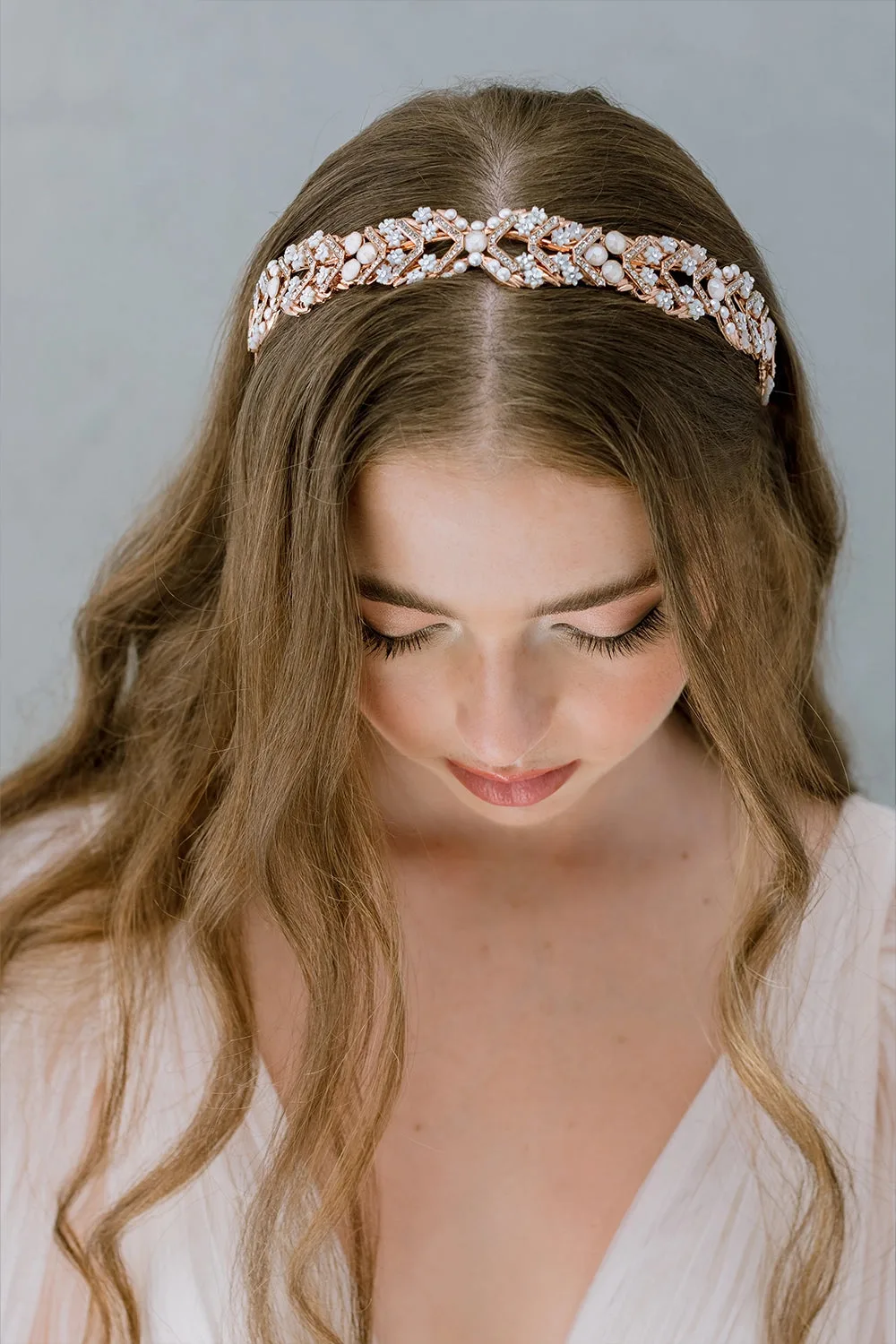
INNOCENCE HEADBAND
Who this guide is for
Best for
- Anyone unsure which headband width suits their face shape
- People with short or fine hair who need a secure, lightweight band
- Shoppers looking for a comfortable headband for all-day wear
Not for
- Those seeking a full crown or tiara (see our crown guide)
- Shoppers who prioritize embellishment over fit