Quick answer
Pick a hoodie by matching fabric to your main use, then choose a fit that leaves room for one or two layers underneath. For everyday comfort and light outdoor use, a merino-blend hoodie such as M's Alto Houdi gives warmth without bulk; for a relaxed, highly versatile layer, W's Power Up Houdi works well over a base layer and under a shell.
A hoodie is one of the few garments that has to work in three places: on the sofa, on the trail, and under a jacket when the weather turns. That range is exactly why choosing one gets confusing. The right pick depends less on style and more on fabric, fit, and how you plan to layer it.
This guide walks through the decisions that actually change how a hoodie feels and performs, with concrete examples from the Houdini range. You will finish with a clear idea of which hoodie suits your everyday routine, your outdoor days, or both.
Start With Fabric, Not Color
Fabric decides warmth, breathability, drying time, and odor resistance, so it should be your first filter. Natural fibers like merino wool regulate temperature, resist odor, and stay warm even when damp, which suits commuting, travel, and low-to-moderate output. Synthetic blends dry faster and handle repeated high-output use, but they hold odor more readily and need more frequent washing.
A useful rule: if you wear the hoodie several days in a row without washing, lean toward wool or a wool blend. If you sweat heavily and wash after every use, a synthetic or hybrid fabric is fine. Neither is better in the abstract; they simply fail in different situations.
- Wool or wool-blend hoodies: better for everyday, travel, and cool-weather layering.
- Synthetic hoodies: better for high-output activity and fast drying.
- Check the care label before buying, since wool and synthetics need different washing routines.
Match the Fit to How You Layer
Fit is not just about looks. A hoodie that is too tight limits what you can wear underneath, while one that is too loose lets cold air circulate and can bunch under a shell. For layering, aim for enough room to wear a base layer plus a light midlayer without the fabric pulling across the chest or shoulders.
Houdini offers both a precise, tailored silhouette and a more relaxed one. M's Alto Houdi is built around a precise fit, cut, and detailing, so it sits close to the body and layers neatly. W's Power Up Houdi uses a more relaxed silhouette, which gives more room for layer-on-layer and makes the garment extremely versatile.
- Raise both arms and check that the hem stays put and the shoulders do not pull.
- If you plan to wear it over a sweater, size for that sweater, not for a bare torso.
- A relaxed fit is easier to layer; a precise fit is easier to wear under a jacket.
Decide How Warm You Need It to Be
Warmth comes from fabric weight and air trapped in the material, not from thickness alone. A warm hoodie for outdoors should keep you comfortable while you are moving, not just while you are standing still. If you overheat quickly, a lighter hoodie plus a windproof shell usually beats one heavy layer.
Think about your coldest realistic use, then buy for that plus one layer of margin. For everyday comfort, a midweight hoodie covers most of the year. For winter sports or cold commutes, treat the hoodie as a midlayer and let your outer jacket handle wind and rain.
- Everyday and travel: midweight hoodie, worn alone or under a light jacket.
- Cold outdoor use: hoodie as a midlayer under a shell.
- High-output activity: lighter hoodie, with breathability prioritized over maximum warmth.
Features That Earn Their Place
Small details decide whether a hoodie becomes a favorite. A hood that holds its shape, a hem that stays down when you reach overhead, and cuffs that seal without pinching all matter more than decorative stitching. Pockets are useful for hands and small items, but bulky pockets can interfere with a hip belt or harness.
If the hoodie will be worn under a backpack, look for flat seams and a low-profile hood. If it is mainly for everyday wear, prioritize softness against the skin and a cut that works with the trousers you actually wear.
- Flat seams and a low-profile hood reduce chafing under a pack.
- Check that the hood adjusts or at least stays up in wind.
- Pockets should not sit where a hip belt or harness presses.
Care and Longevity
A hoodie that lasts years is cheaper and better for the environment than one replaced every season. Wool garments generally need less frequent washing because wool resists odor, while synthetics should be washed more often but gently. Always follow the care label rather than a general rule.
Houdini designs garments to last a long time and to resist short-lived trends, so treating the hoodie well is part of the purchase decision. If you are choosing between two similar options, pick the one whose care routine you will realistically follow.
- Air wool hoodies between wears instead of washing every time.
- Wash synthetics on a gentle cycle and avoid high heat.
- Store folded rather than hung if the fabric is heavy.
Hoodie decision rules
- If you wear it five days a week: Prioritize odor resistance and softness against the skin. A merino or merino-blend hoodie such as M's Alto Houdi reduces how often you need to wash it. Everyday hoodie: natural fibers first.
- If you layer it under a shell: Choose a precise, low-bulk fit and check that the hood and seams sit flat under a jacket. A relaxed hoodie can bunch at the shoulders. Layering hoodie: fit beats thickness.
- If you want one hoodie for everything: A relaxed silhouette like W's Power Up Houdi gives more room for layer-on-layer and covers casual wear, travel, and moderate outdoor use. One-hoodie pick: relaxed fit, midweight fabric.
- If you run hot or move fast: Choose a lighter hoodie and rely on your outer layer for wind and rain. Overheating is a bigger comfort problem than being slightly cool at the start. High output: lighter hoodie plus shell.
- If you are unsure between two sizes: Size for the layers you will actually wear underneath, not for the fit you prefer in a t-shirt. A hoodie that is too tight never gets worn as a midlayer. When in doubt, size for layering.
Houdini examples that show the differences
- M's Alto Houdi: A warm and cozy midlayer made only from natural materials, using Woolly Treemerino, a Swedish-made material. Houdini's design team spent 15 years refining the fit, details, and cut of their fleece jacket vision. If you want a hoodie that layers neatly, wears well against the skin, and favors natural fibers over synthetics, this is the precise-fit option to compare against.
- W's Power Up Houdi: Built on the classic Houdini Power Houdi launched in 2003 and largely unchanged since, with a more relaxed silhouette that gives greater possibilities for layer-on-layer and makes the garment extremely versatile. Choose this if you want a roomier hoodie that works over a base layer and under a shell, and you value a proven design over a close fit.
- W's Puremerino Crew: Part of the Puremerino series, made from 100% superfine merino wool with 18.4 micron fibers from Australia, chosen after years of development meetings, field tests, and prototypes. If odor resistance and multi-day wear matter more than a hood, a merino crew like this can replace a hoodie for everyday and travel use.
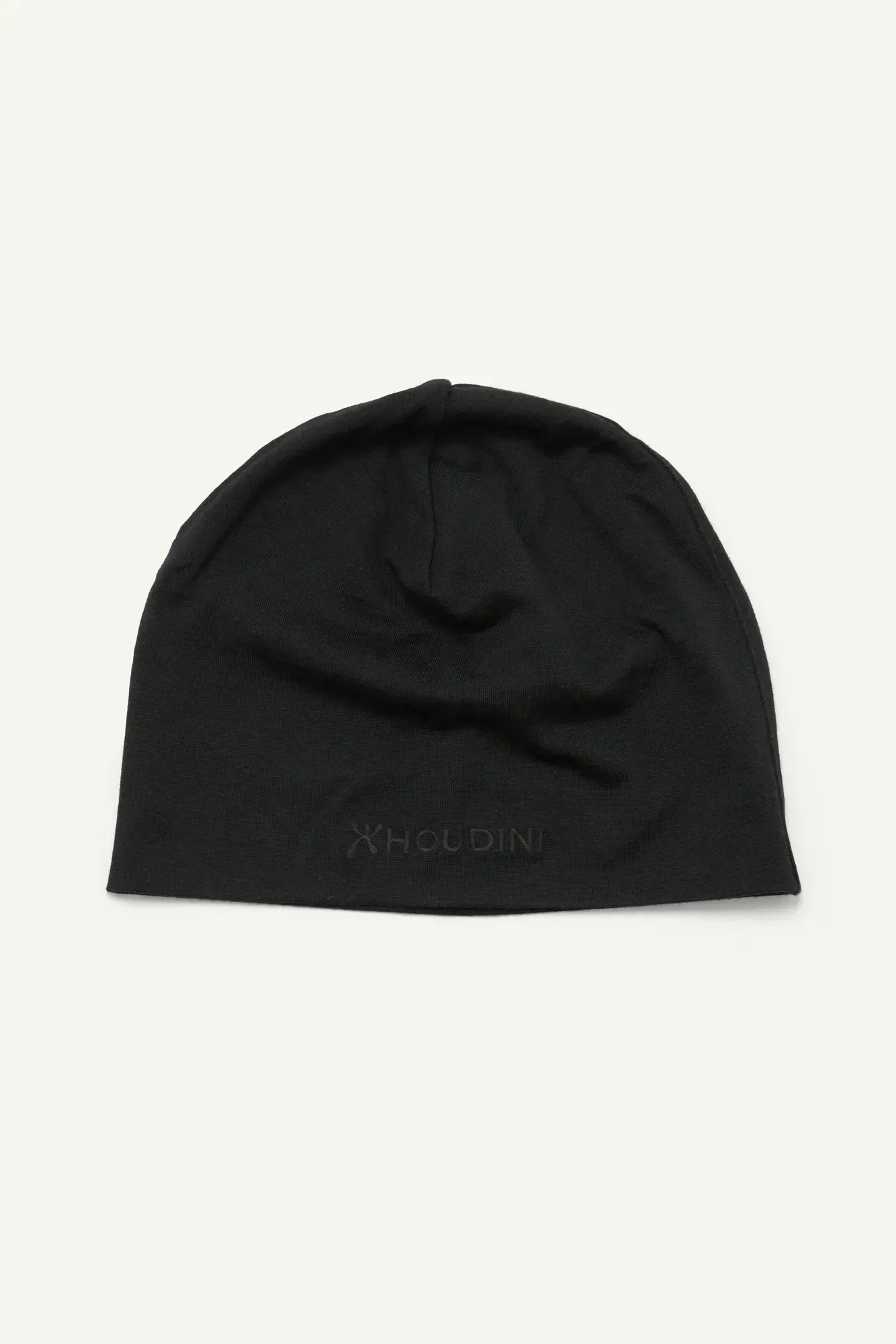
- Puremerino Hat: A lightweight hat in 100% superfine merino wool developed for high-intensity activities such as running, cross-country skiing, cycling, and ski touring. A reminder that the same merino logic used in a hoodie extends to accessories, so you can build a consistent layering system.
Who each hoodie is for
Best for
- Everyday wear, commuting, and travel where odor resistance and natural materials matter.
- Layering under a shell for cool-weather hiking and outdoor use.
- Anyone who wants a relaxed, versatile hoodie that works over a base layer and under a jacket.
Not for
- High-output activities where fast drying and maximum breathability matter more than warmth.
- Wearing as a standalone outer layer in heavy rain or strong wind.
- Anyone who wants a tight, minimal-bulk fit under a harness or hip belt.
Choose fabric for your main use, fit for how you layer, and warmth for your coldest realistic day. If you want a precise, natural-fiber midlayer, look at M's Alto Houdi; if you want a relaxed, versatile everyday hoodie, W's Power Up Houdi is the stronger match.