Quick answer
Choose a kids insulated lunch pot with a stainless steel interior, a leakproof lid, and a size that fits your child's appetite and lunch bag. For most school-age kids, a 300-400 ml capacity is a practical starting point.
Why insulation type matters
The core job of an insulated lunch pot is to keep food at a safe temperature until lunchtime. Double-wall vacuum insulation does this best, but not all pots are equal. Some use foam or air layers, which are cheaper but less effective. If you need food to stay warm for several hours, look for vacuum-insulated stainless steel.
Also consider how the pot is used. A pot that keeps food warm is great for soups, pasta, or rice dishes. But if your child mostly eats cold items like yogurt or fruit, a simple bento box may be lighter and easier to carry. Insulated pots add weight, so balance warmth with practicality.
Safety and materials: what to check
The inside of the pot touches food directly, so the material matters. Stainless steel is food-safe, durable, and doesn't leach chemicals. Avoid pots with plastic interiors, especially for hot foods, as they can absorb odors or stain over time.
Check the lid and seal. A leakproof design prevents messy spills in a backpack. Also, look for a pot that is easy for small hands to open. Some lids have a button or twist mechanism that can be tricky for younger kids. Test the lid yourself before buying, if possible.
Size and capacity: matching your child's needs
Capacity is about more than just appetite. A larger pot keeps food warm longer because there is more mass, but it's heavier and takes up more space in a lunch bag. A smaller pot is lighter but may not hold enough for a growing child.
Consider the age of your child. A preschooler might be fine with a 250-300 ml pot, while a school-age child may need 350-400 ml. Also, think about what you pack. A pot that fits a full meal is different from one that just holds a side dish. Measure your child's typical portion to guide your choice.
Decision rules for picking a lunch pot
- Check the insulation type: Choose vacuum-insulated stainless steel if you need food to stay warm for more than 3-4 hours. Foam or air insulation is lighter but cools faster. If your child eats within 2 hours, a simpler pot may be enough.
- Verify the seal and lid: Look for a leakproof lid that your child can open independently. Test the mechanism if possible, especially for kids under 5. A leakproof pot prevents ruined homework and sticky backpacks.
- Match capacity to appetite and age: For ages 3-5, choose 250-300 ml. For ages 6 and up, choose 350-400 ml or larger. Adjust based on what you pack. If you pack a main dish plus sides, consider a pot with compartments or a separate container.
- Consider weight and portability: Insulated pots are heavier than plastic containers. Make sure the pot fits in your child's lunch bag without making it too heavy to carry. If your child walks a long distance, a lighter option may be better.
- Think about cleaning and durability: Stainless steel interiors are easy to clean and resist stains and odors. Check if the pot is dishwasher-safe, but hand washing often extends the seal's life. A pot that's hard to clean will get less use.
Product spotlight
-
Trixie: Insulated Lunch Pot - Mrs. Cat: The Trixie Insulated Lunch Pot has a stainless steel interior that keeps food warm or cold, is leakproof, and is easy to open. Stainless steel is food-safe and won't release harmful substances, making it a reliable choice for school lunches.
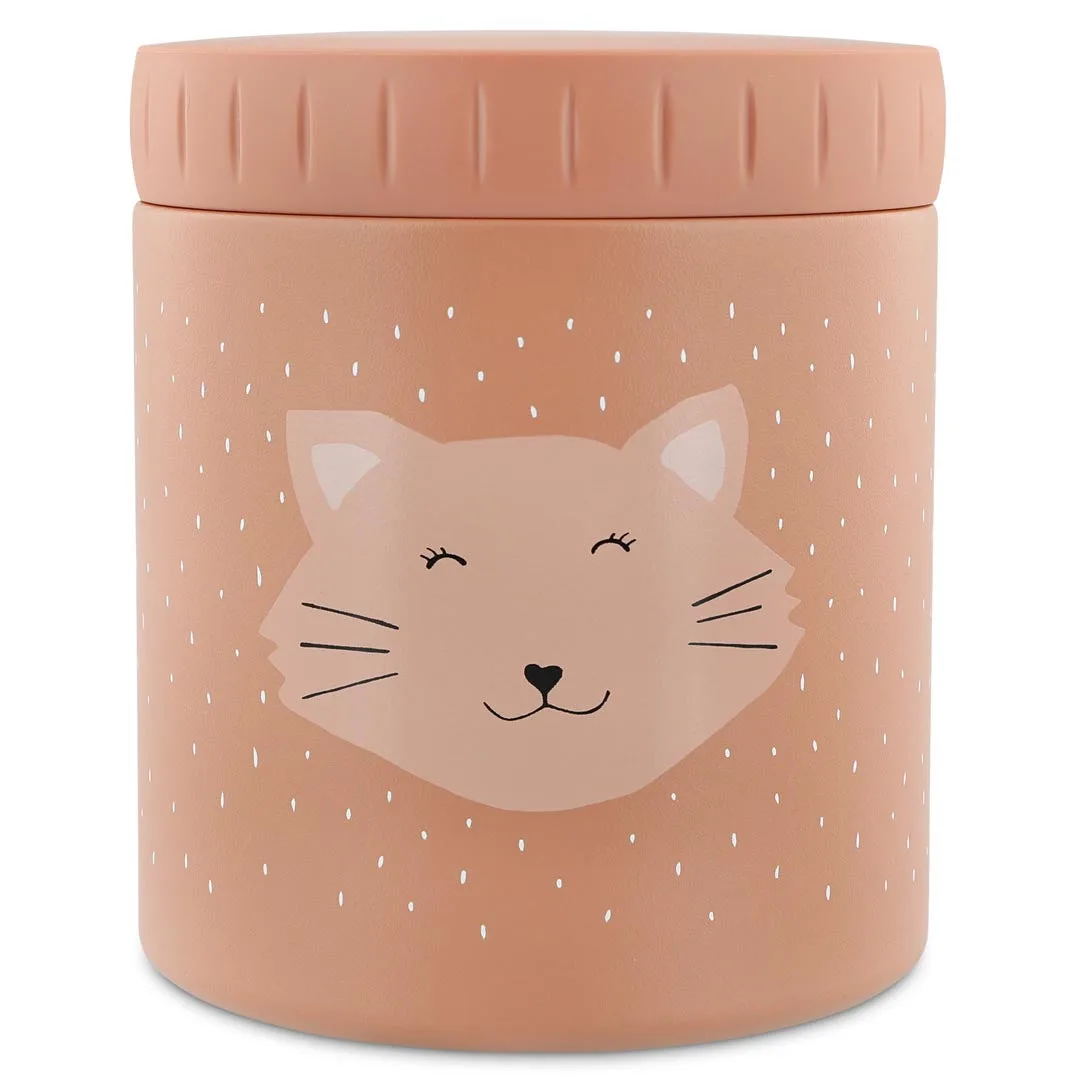
Trixie: Insulated Lunch Pot - Mrs. Cat
Who should buy an insulated lunch pot
Best for
- Parents who pack hot lunches like soup, pasta, or rice for school or daycare
- Kids who need a leakproof, durable container that keeps food warm until lunchtime
Not for
- Parents who only pack cold items like sandwiches, fruit, or yogurt—a simple bento box is lighter
- Toddlers under 3 who may struggle with the lid and need a spill-proof training cup instead