Quick answer
For all-around trail comfort, choose a breathable, stretchy pair with a regular fit, like the RIDGE HIKE PANTS M. Match your pants to the season and activity: lightweight tapered pants for warm hikes, and insulated or gaiter-equipped pants for winter.
Fit and fabric: the two decisions that matter most
Fit determines how freely you can move on uneven terrain. A regular fit with an elastic waistband balances comfort and mobility, while a tapered fit reduces fabric flapping and feels more streamlined on fast hikes. Articulated knees are a clear sign that the pants are built for stepping and climbing, not just standing.
Fabric technology does the heavy lifting for weather protection. Most trail pants use a stretch woven fabric that is wind-repellent, slightly water-repellent, and breathable. That combination handles light rain and gusty ridgelines without turning into a sweaty sauna. For heavy rain or deep snow, you will need a waterproof shell layer over your hiking pants.
Pockets and extras: what adds real value
Pockets are not all equal. A thigh pocket keeps a phone or map within reach without bending, while hip pockets are fine for small items like a key or lip balm. Look for zippered closures if you tend to lose things on rocky scrambles.
For winter hikes, internal gaiters are a small detail with a big payoff: they keep snow and debris out of your boots. Sun protection is the reverse-season feature, reducing the need for frequent sunscreen reapplications on exposed trails.
Decision rules for choosing men's hiking pants
- Define your primary season: For warm-weather hiking, prioritize lightweight, breathable, sun-protective pants like the HIKEOUT PANTS M. For winter, choose insulated or gaiter-equipped pants like the PARANA PANTS M.
- Match fit to your activity: Choose a regular fit with an elastic waistband for relaxed hikes and maximum comfort. Choose a tapered fit or articulated knees for more technical terrain where freedom of movement is key. If you hike both easy and technical trails, a regular fit with stretch fabric covers both cases.
- Check the weather protection level: All listed pants are wind-repellent and slightly water-repellent, which handles light rain and wind. For heavy rain or deep snow, add a waterproof shell over your hiking pants. Do not expect any of these pants to be fully waterproof; plan your layering accordingly.
- Count pockets and features: If you like to keep a phone or map accessible, look for a thigh pocket (HIKEOUT) or four pockets (HOLDSTEIG). For winter, internal gaiters (PARANA) are essential to keep snow out. List the items you carry on a typical hike and make sure the pocket layout fits them.
Compare these men's hiking pants
-
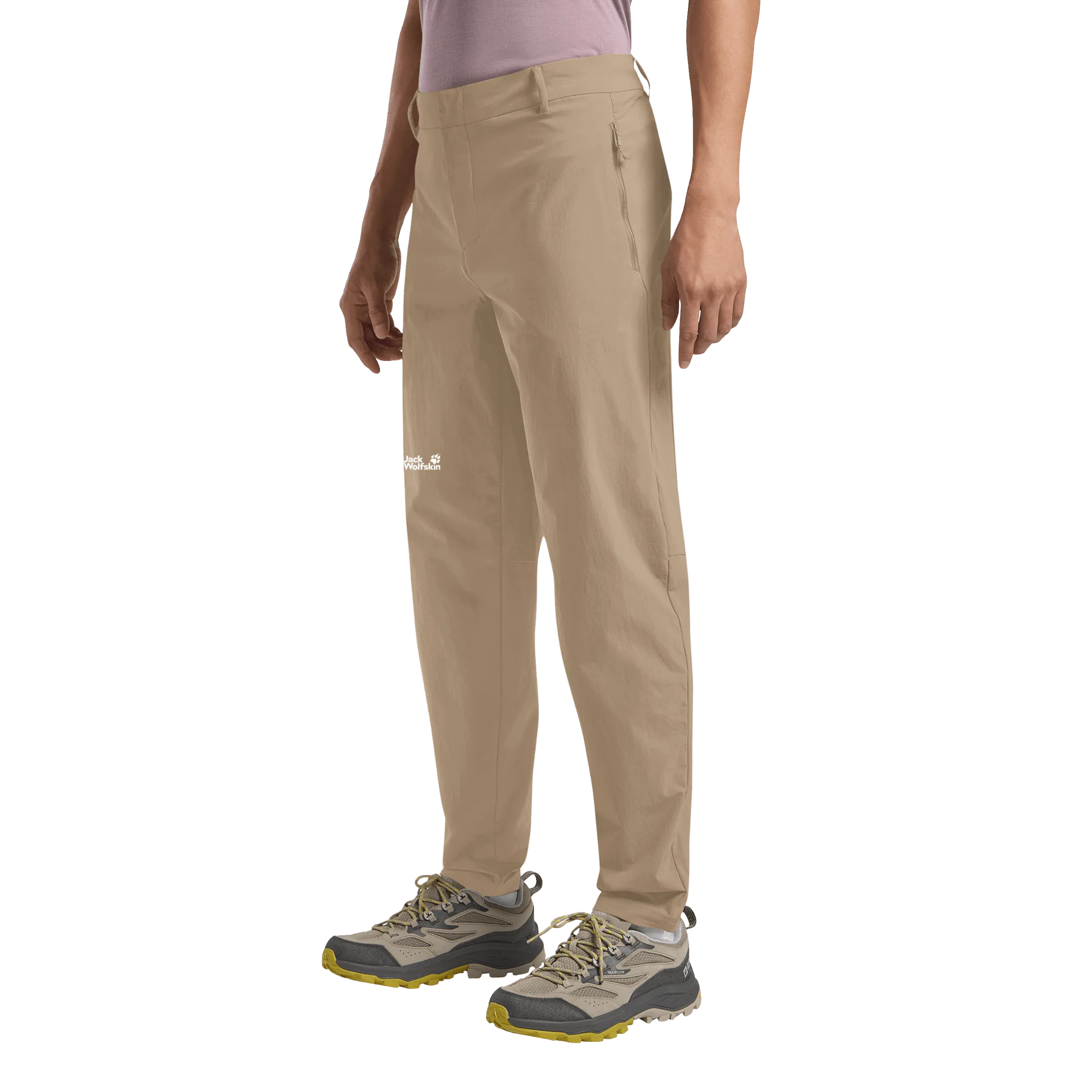
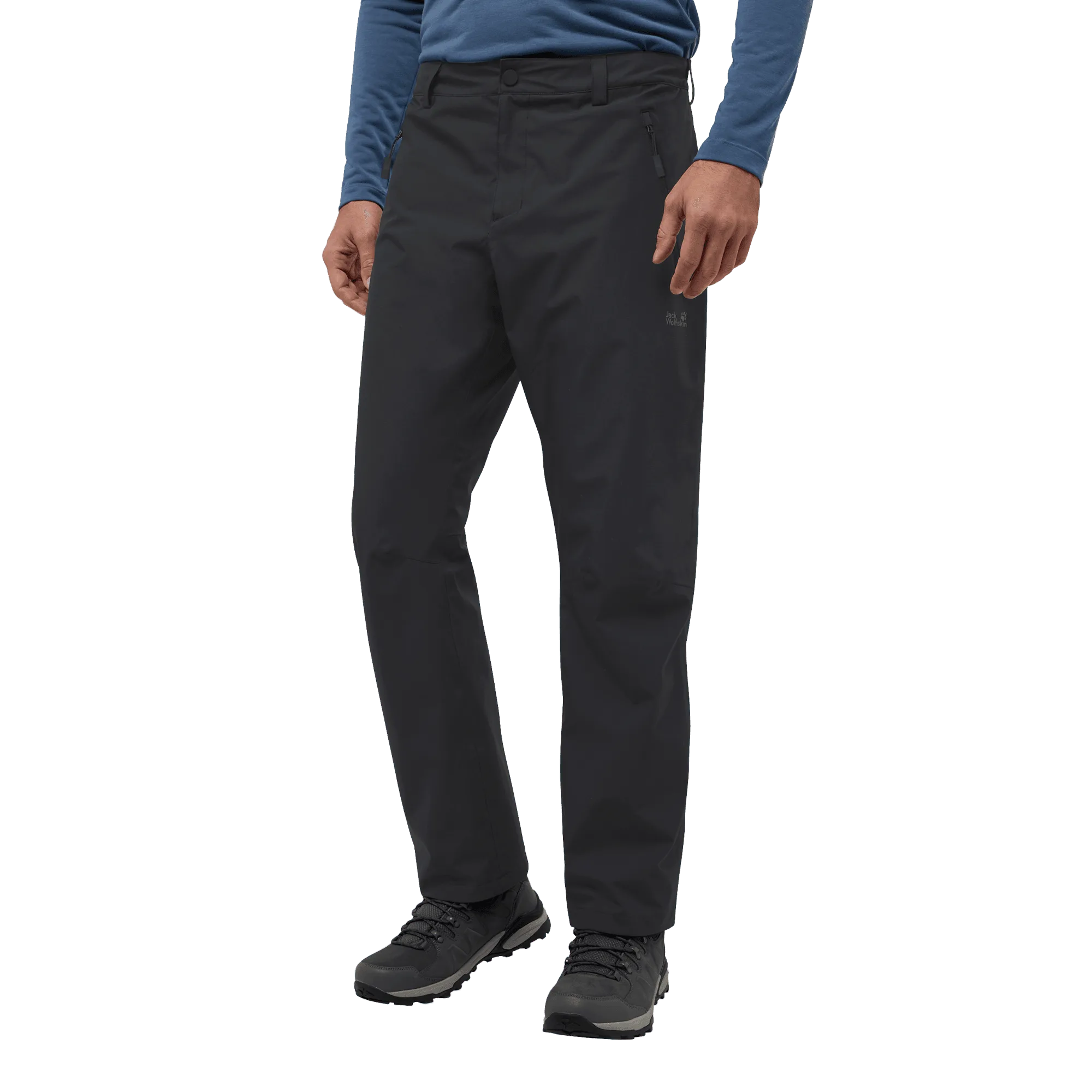
RIDGE HIKE PANTS M: The RIDGE HIKE PANTS M have a comfortable regular fit with an elastic waistband and use TEXASHIELD CORE fabric that is wind-repellent, slightly water-repellent, and extremely breathable. This is a versatile choice for most three-season hikes where you want unrestricted movement and protection from light weather.
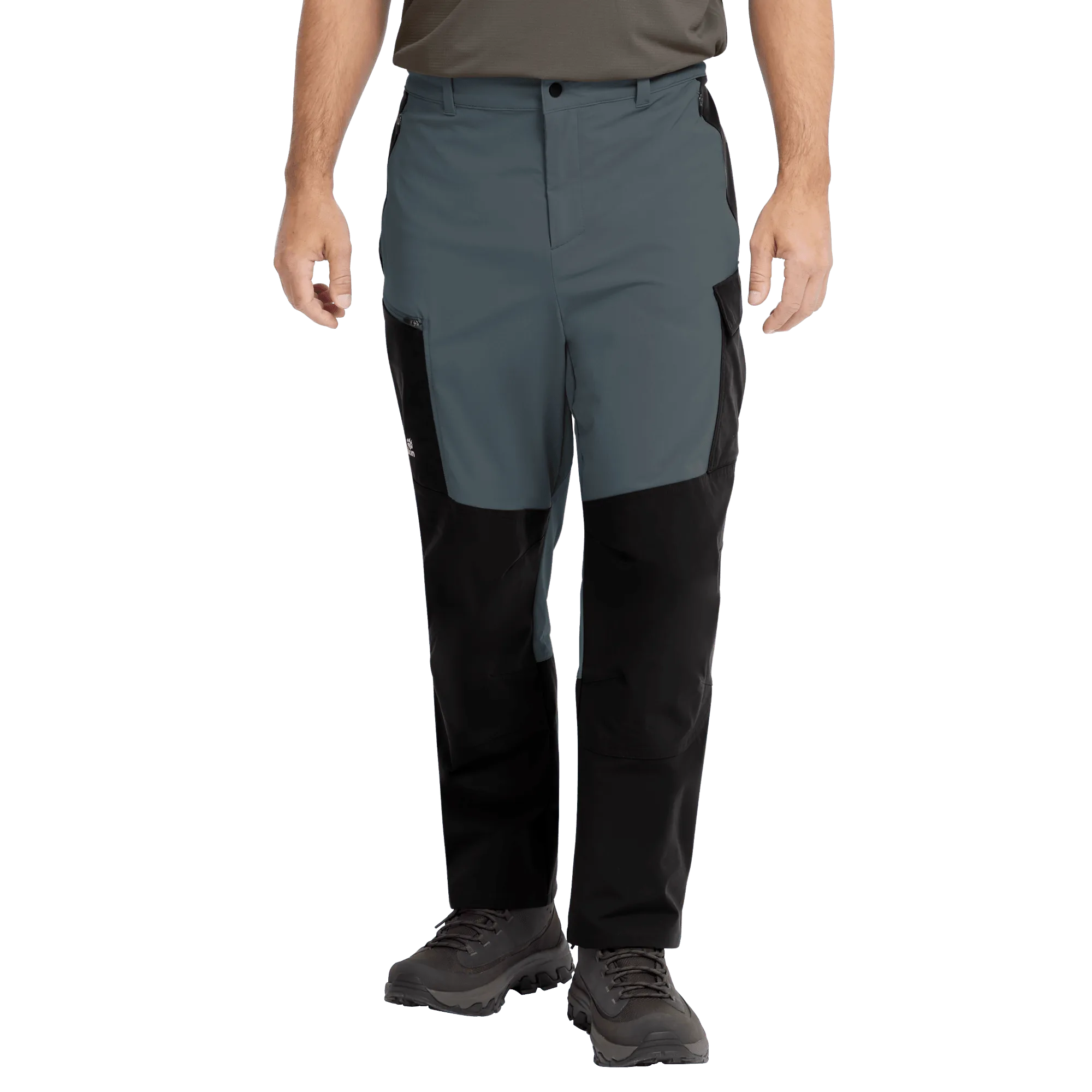
RIDGE HIKE PANTS M
-
HOLDSTEIG PANTS M: The HOLDSTEIG PANTS M use highly breathable TEXASHEILD CORE STRETCH PLAIN fabric, have four pockets, and feature articulated knees. Articulated knees and stretch fabric make these a strong option for technical trails that require frequent stepping and bending.
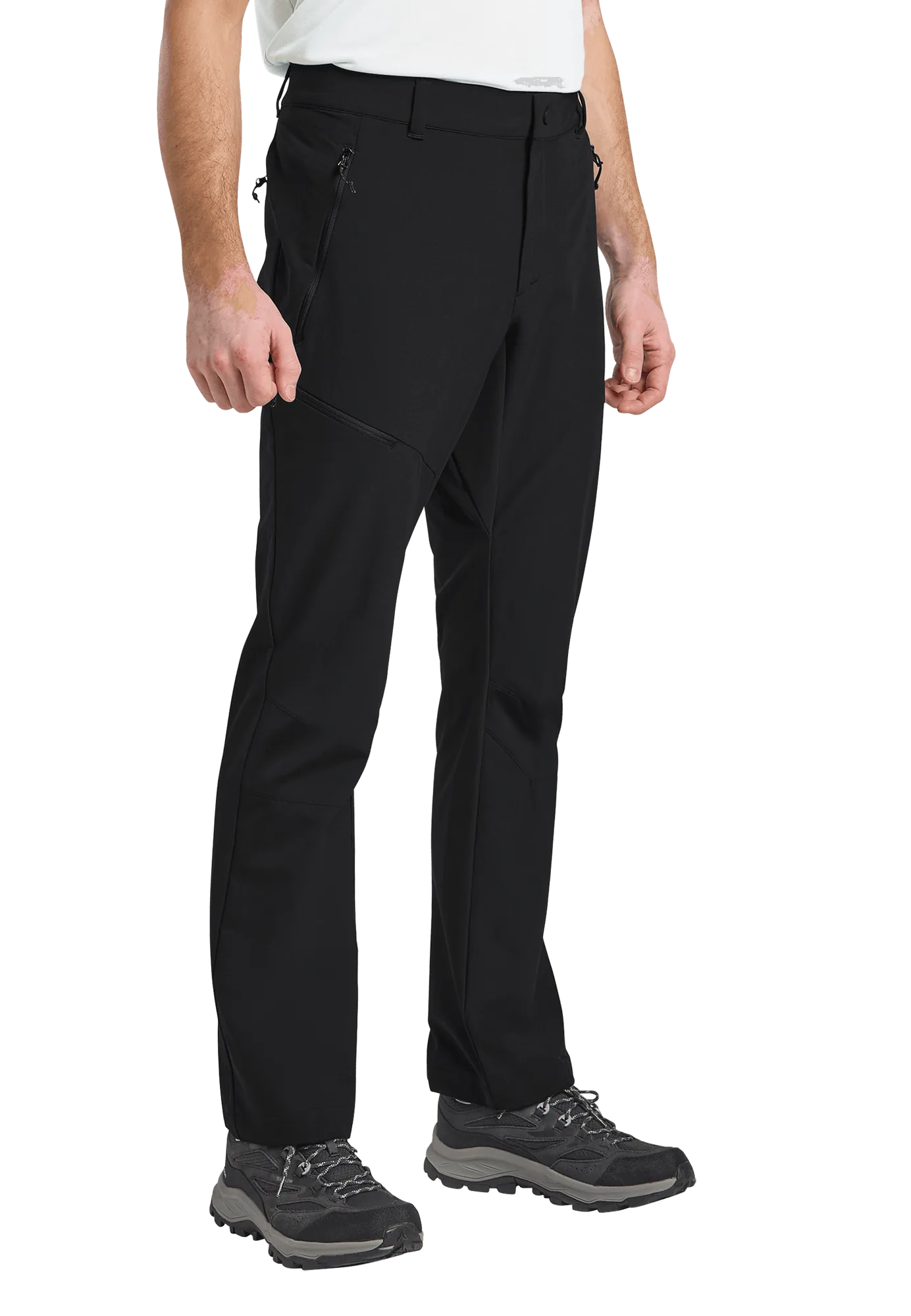
HOLDSTEIG PANTS M
-
HIKEOUT PANTS M: The HIKEOUT PANTS M are lightweight, stretchy, durable, wind-blocking, and offer sun protection, with a tapered fit and one thigh pocket plus two hip pockets. A good warm-weather pick where breathability, sun protection, and a closer fit are more important than heavy weather resistance.
-
PARANA PANTS M: The PARANA PANTS M are protective, soft, comfortable pants for all winter outdoor activities, with internal gaiters to keep weather out. Choose these for cold-weather hikes or snowshoeing where keeping snow out of your boots is a priority.
Fit guidance: who should choose which
Best for
- Day hikers who want a versatile, comfortable pant for three-season trails
- Technical hikers who need articulated knees and stretch fabric for steep or rocky terrain
- Warm-weather hikers who value breathability, sun protection, and a tapered fit
- Winter hikers or snowshoers who need internal gaiters to keep snow out
Not for
- Hikers who expect full waterproofing in heavy rain or deep snow
- Those who prefer a loose, baggy fit over a regular or tapered cut