Quick Answer
For most rooms, choose a pendant with a diameter that is about one-third to one-half the width of the surface or area you are lighting, and hang it so the bottom sits 28–36 inches above a table or counter.
Why Scale Matters More Than Wattage
The visual weight of a pendant affects how balanced the room feels. A fixture that is too small gets lost above a large table, while one that is too large can overwhelm a small nook. Scale, not brightness, is usually the first thing people notice.
A common mistake is focusing only on the shade diameter. The overall height of the pendant also matters—especially in rooms with low ceilings or open floor plans where the fixture is visible from multiple angles.
Hanging Height: The Trade-Off
Hanging a pendant lower creates a cozier, more intimate feel but can block sightlines or bump heads in walkways. Hanging it higher opens up the room but reduces the pool of light on the surface below.
For dining tables and kitchen islands, the 28–36 inch rule is a safe starting point. For entryways or open spaces, you can hang higher, but then the pendant becomes more of a statement piece than a task light.
Decision Rules for Pendant Size
- Dining Table: Add the table's length and width in feet, then convert the sum to inches. That number is the maximum pendant diameter you should consider. For a 6' x 3' table, the max is about 9 inches.
- Kitchen Island: For a single pendant, choose a diameter between one-third and one-half the island's width. For multiple pendants, divide the island length by the number of fixtures plus one, and use that as the diameter guide. Space multiple pendants evenly, leaving at least 12 inches from the edge of the island.
- Room Clearance: Hang the bottom of the pendant at least 7 feet above the floor in walkways or open areas. In rooms with 8-foot ceilings, this leaves little room for a tall fixture, so look for pendants with shorter overall heights. Measure from the floor to the ceiling hook before buying to ensure the pendant's height will fit.
- Low Ceilings: If your ceiling is under 9 feet, choose a pendant with an overall height of 12 inches or less, or consider a semi-flush mount instead. This avoids a cramped feel and keeps the fixture out of the way.
Sizing Examples from the Carolina Collection
-
Carolina Pendant 6": The Carolina Pendant 6" has a 6" depth and width, with a 29" overall height, and is shown in Bleached Ash, Matte Black, and Frosted Glass. This compact size suits small side tables, narrow hallways, or a cluster of two or three over a longer counter where you want multiple light sources.
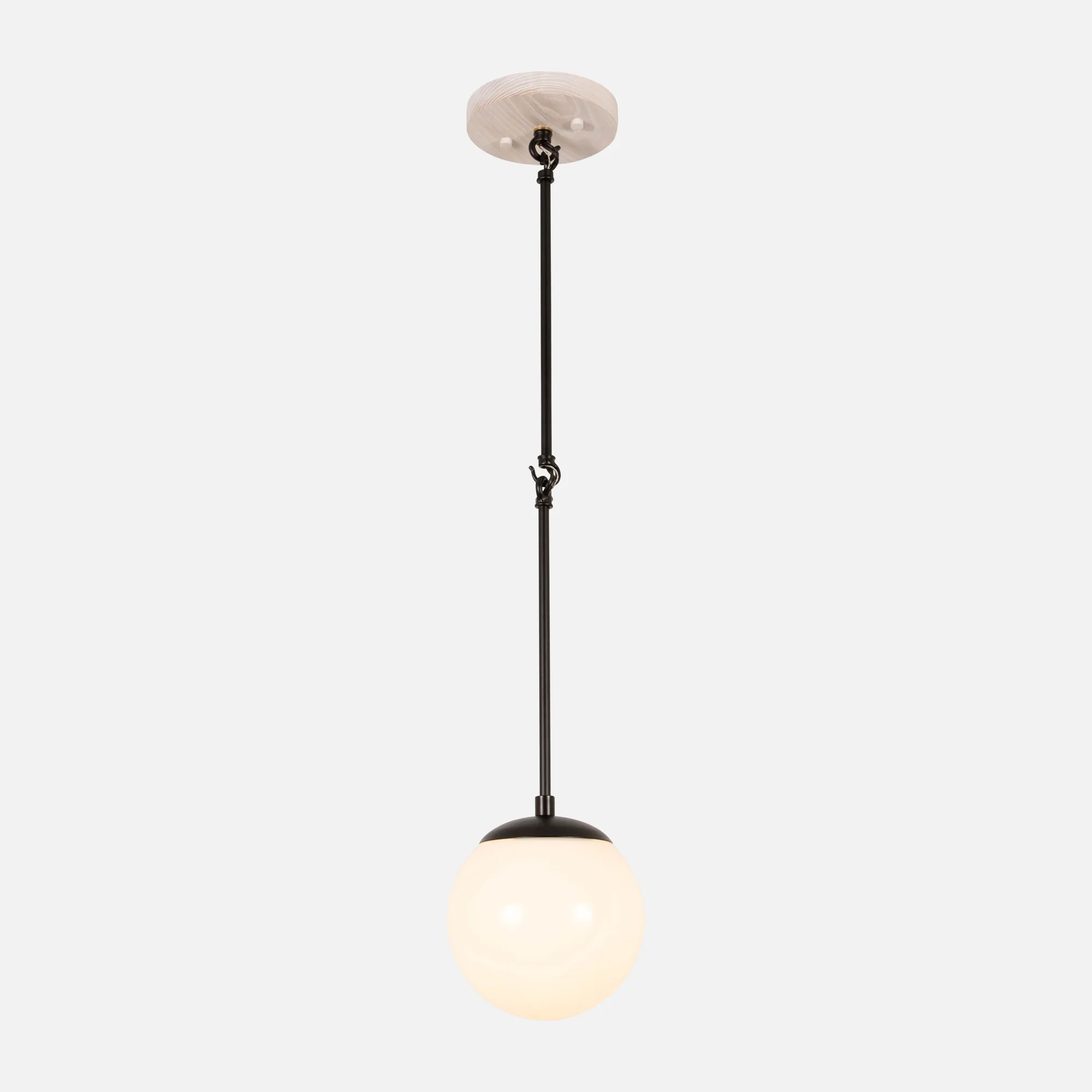
Carolina Pendant 6"
-
Carolina Pendant 10": The Carolina Pendant 10" has a 10" depth and width, with a 33" overall height, and is shown in Cornsilk Oak, Classic Brass, and Frosted Glass. The larger diameter makes it a better single statement above a 4–5 foot dining table or a kitchen island, providing more visual presence and a wider light spread.
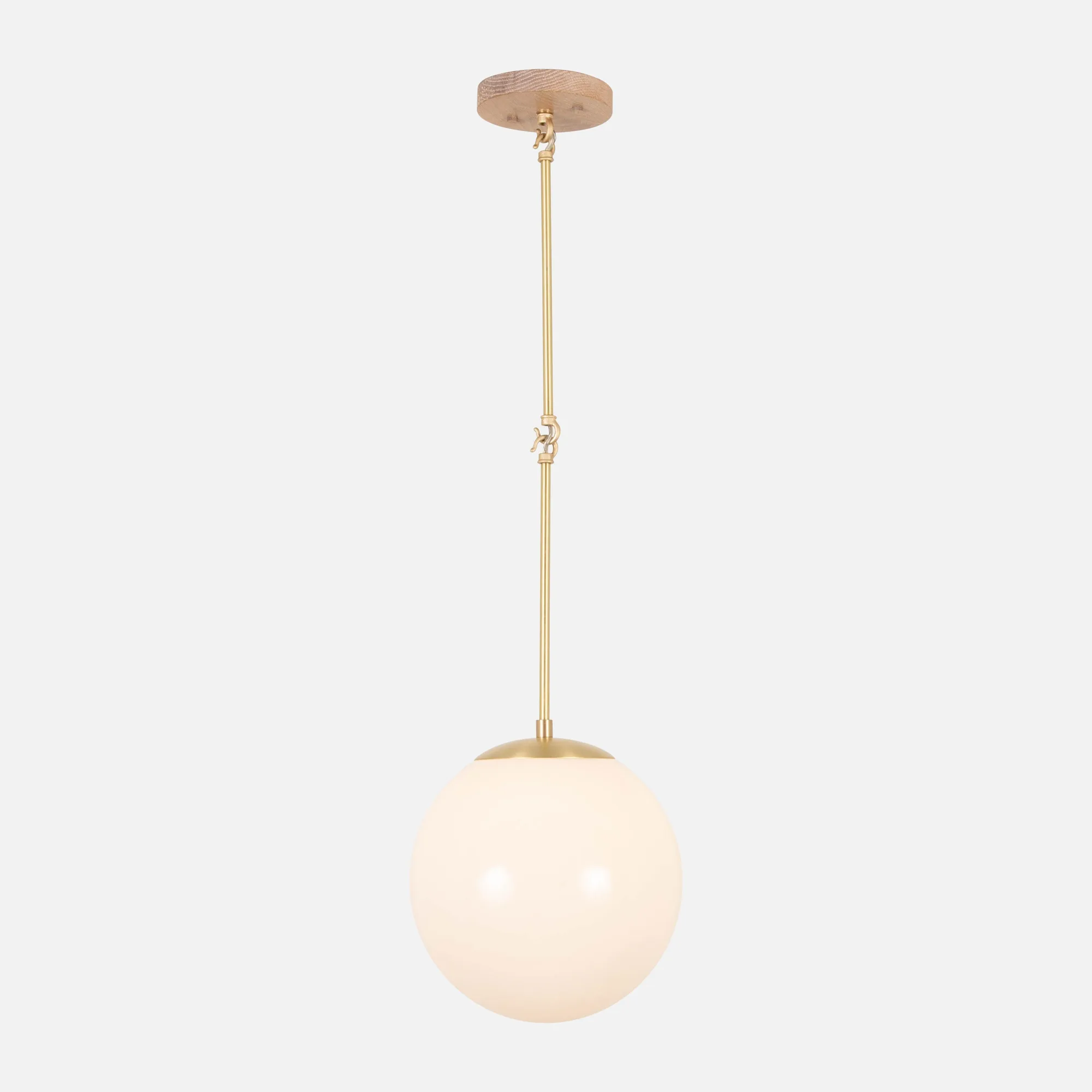
Carolina Pendant 10"
Who This Guide Is For
Best for
- Homeowners choosing a single pendant for a dining table or kitchen island
- Anyone replacing an existing fixture and unsure about scale
Not for
- Large open-concept spaces needing multiple pendants—see our guide on how to choose a pendant light for a kitchen island
- Rooms with ceilings under 8 feet where a flush mount might be more practical