Quick Answer
For a staircase, choose a pendant that hangs low enough to illuminate steps but high enough to avoid head bumps—typically 7 feet above the tread. In hallways, opt for fixtures that provide even, diffused light along the length, and consider the visual rhythm of multiple pendants. Prioritize safety and scale over pure style.
Staircases and hallways are transitional spaces that often get overlooked when planning lighting. Yet these are areas where good illumination matters for safety and where a well-chosen pendant can make a striking first impression. Whether you're lighting a two-story stairwell or a long corridor, the right fixture balances form and function.
This guide focuses on the practical decisions: what shape, size, and finish to choose, how high to hang, and how to avoid common mistakes. We'll also look at specific Roll & Hill fixtures that suit these spaces.
Assess Your Ceiling Height and Stairwell Shape
Before browsing fixtures, measure the ceiling height at the landing and the slope of the stairwell. A two-story open stairwell offers more vertical space for a dramatic drop, while a low hallway may only accommodate a flush or semi-flush mount. For pendant lighting in a stairwell, the fixture should hang so its bottom is at least 7 feet above the stair tread to avoid contact.
Consider the shape of the space. A long, straight hallway benefits from a series of pendants spaced evenly to create rhythm, whereas a curved or L-shaped stairwell might need a single central fixture that casts light in multiple directions.
- Measure ceiling height at the highest and lowest points of the stairwell.
- For hallways, note the length and width to determine how many pendants you need.
Match the Fixture Shape to the Space
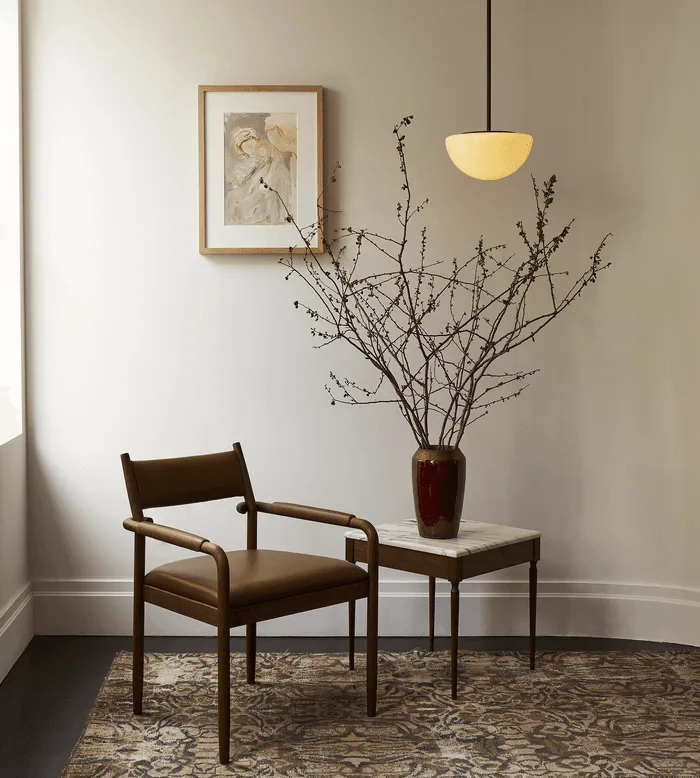
The silhouette of the pendant affects both light distribution and visual weight. In a narrow hallway, a slim, linear fixture can draw the eye along the corridor without overwhelming the space. In a stairwell with a grand ceiling, a sculptural piece like the cloud-278294">cloud-278293">cloud-278288">cloud-277700">Cloud pendant—with its rounded, ribbed Venetian glass—can serve as an artistic focal point while casting a warm, diffused glow.
Avoid fixtures that are too wide for the hallway, as they can make the space feel cramped. For a stairwell, ensure the fixture doesn't obstruct the path of travel or interfere with the railing.
- For hallways under 4 feet wide, choose a fixture no wider than 12 inches.
- In stairwells, allow at least 12 inches clearance from the wall and railing.
Consider Light Direction and Diffusion
Staircases need light that illuminates the treads to prevent missteps. A pendant with a diffused, downward glow works well. The Cloud's rounded glass diffuses light softly, reducing harsh shadows on stairs. For hallways, you might want light that spreads horizontally to avoid dark pockets between fixtures.
Open or transparent fixtures can create glare, so look for shades that soften the bulb. The Atlas pendant, with its illuminated glass globe, provides an even, ambient light that can work in both stairwells and hallways, depending on scale.
- Use dimmers to adjust light levels for safety and ambiance.
- Choose a fixture that hides the bulb from direct view to reduce glare.
Plan the Number and Spacing of Pendants
For a long hallway, multiple pendants spaced evenly create a cohesive look and ensure consistent illumination. A general rule is to space pendants 6 to 8 feet apart, but this depends on the light spread of each fixture. For a stairwell, one central pendant may be enough if it provides sufficient light; otherwise, consider adding wall sconces for task lighting.
When using multiple pendants, align them along the center of the hallway or above the center of the stair treads. Keep the bottom of each pendant at the same height for a clean line.
- For hallways longer than 12 feet, plan for at least two pendants.
- Test spacing with temporary hanging or using a laser level.
Decision Rules for Staircase and Hallway Pendants
- Ceiling height under 8 feet: Choose a flush or semi-flush mount instead of a hanging pendant to maintain clearance. Avoid pendants in low spaces to prevent head bumps.
- Stairwell with high ceiling (over 10 feet): Opt for a pendant with a long drop, like the Cloud, to fill the vertical space and create drama. Ensure the bottom hangs at least 7 feet above the tread.
- Long hallway (over 12 feet): Use multiple pendants spaced 6-8 feet apart for even illumination and visual rhythm. Consider a linear fixture if you prefer a single light source.
- Narrow hallway (under 4 feet wide): Select a compact pendant with a slim profile to avoid crowding the space. Wall sconces might be a better alternative.
Roll & Hill Fixtures That Work Well
- Cloud: Venetian glass and antique brass come together in rounded, ribbed forms that seem to float. Each silhouette casts a warm, diffused glow that brings a subtle elegance to any room. Available in seven different forms, Cloud is designed to live anywhere light does. The diffused glow is ideal for stairwells where you need soft, even light without harsh shadows. The multiple forms let you choose a size that fits your ceiling height and style.
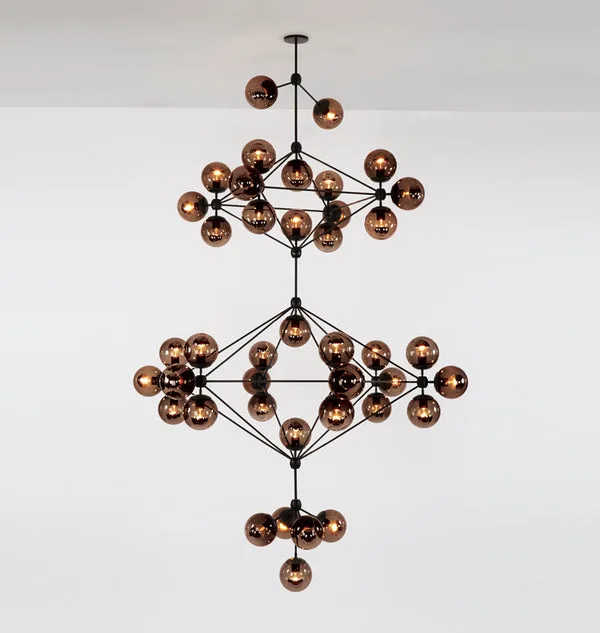
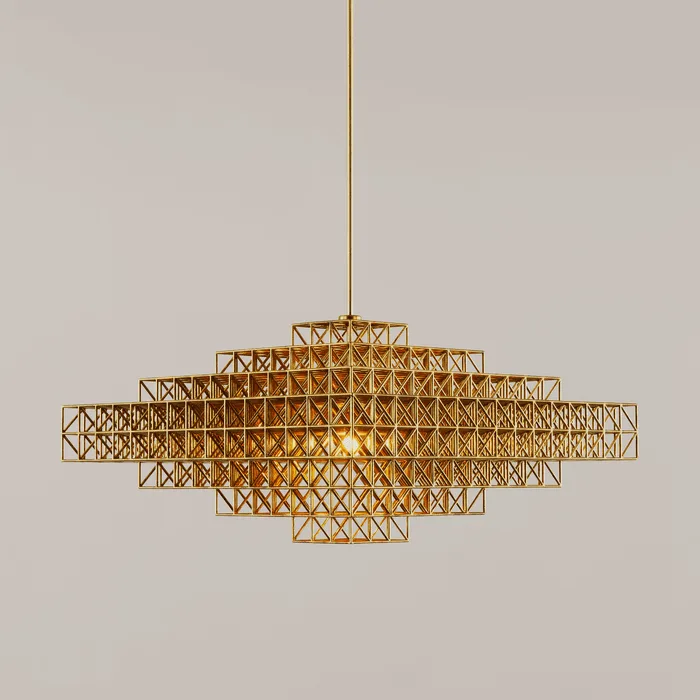
- Atlas: Named for the Titan doomed to shoulder the world, Atlas combines an illuminated glass globe with an intersecting Metal armature, drawing on Karl Zahn's elegant use of geometry and metaphor in design. The globe provides 360-degree light, which can brighten a hallway or stairwell from all angles. Its geometric design adds a sculptural element that works as a focal point.
Is a Pendant Right for Your Space?
Best for
- Open stairwells with high ceilings where a dramatic, sculptural fixture can be appreciated.
- Hallways with sufficient ceiling height (at least 8 feet) where a series of pendants can create a stylish, well-lit path.
Not for
- Low-ceilinged hallways or stairwells where clearance is a concern—consider flush mounts or sconces.
- Very narrow hallways where pendants might feel obstructive—opt for wall-mounted lighting instead.
Choosing the right pendant for a staircase or hallway comes down to measuring your space, understanding light spread, and selecting a fixture that fits both your ceiling height and aesthetic. Whether you prefer the soft glow of Cloud or the geometric presence of Atlas, always prioritize safety and proper placement. With these guidelines, you'll create a well-lit, inviting transition space.