Quick answer
For competition pole dance wear, prioritize secure coverage and reliable grip over trend-driven details. Choose a top that stays put through inversions and a bottom that doesn't shift, then verify the fit with a full run-through of your routine. If you're unsure, start with a high-coverage top and shorts that feel like a second skin, then adjust styling once the basics hold.
Competition day is not the moment to discover a strap slips or a hem rides up. The right competition pole outfit should disappear once you start moving, so all your focus stays on the routine. That means testing fit, coverage, and fabric behavior under the same conditions you'll face on stage.
This guide gives you concrete decision rules for choosing pole dance competition clothing. You'll learn how to evaluate tops and bottoms for grip and security, what to check in a fitting, and which trade-offs are worth making when style competes with function.
Start with coverage and security, not style
The first question is not what looks best, but what stays in place. For tops, look for cross-back or wrap constructions that hold without constant adjusting. For bottoms, a second-skin fit reduces shifting during inversions and floor work. If a piece needs tugging after one spin, it will fail under competition pressure.
Check the leg openings and waistband. A waistband that rolls or a leg line that cuts in will distract you mid-routine. High-coverage shorts or briefs are often the safer choice for competition because they reduce the risk of exposure during wide-leg moves and drops.
- Do a full routine run-through in your candidate outfit before deciding.
- Test the outfit under stage lighting if possible; dark fabrics hide sweat differently.
- Keep a backup top or bottom in your bag, even if you think you won't need it.
Match fabric to grip and movement
Fabric affects how you connect with the pole. Smooth, stretchy fabrics can feel slippery on certain moves, while textured or mesh-paneled pieces may offer more friction. There is no single best fabric for everyone, so test how your skin and the fabric interact with your pole surface.
Look for materials described as soft, stretchy, and quick-drying. Recycled fabrics are increasingly common and can perform well, but the key is how the garment feels when you're warm and moving. If a fabric feels heavy or restrictive during a warm-up, it will feel worse in a full routine.
- Bring your competition outfit to at least two practice sessions.
- If you use grip aids, test them with the fabric to avoid residue or slippage.
- Avoid brand-new fabrics on competition day; break them in first.
Fit checks that prevent mid-routine surprises
A proper fit check goes beyond standing in front of a mirror. Raise your arms overhead, bend forward, and do a controlled inversion. Check that the top doesn't ride up and the bottoms don't shift. If you need to adjust after each movement, the size or cut is wrong for competition.
Pay attention to straps and closures. Adjustable ties can be a risk if they loosen; fixed straps are more predictable. If a top has a tie-back, double-knot it and test again. For bottoms, ensure the waistband sits flat and doesn't dig in when you hinge at the hips.
- Test your outfit with the exact underwear you'll wear on competition day.
- Check for any tags or seams that could rub during floor work.
- Do a five-minute continuous movement test to see if anything migrates.
Trade-offs: when to prioritize style
Once security and grip are covered, you can add style. Mesh panels, cutouts, and bold colors can enhance your stage presence without compromising function, as long as they don't interfere with movement. The trade-off is that more decorative elements mean more potential failure points, so inspect them carefully.
If you compete regularly, consider building a small rotation of trusted competition pieces rather than buying new for every event. A reliable outfit you've tested multiple times is worth more than a trendy one you've worn once.
- Choose one statement piece and keep the rest simple and secure.
- Avoid long dangling ties or loose embellishments that can catch on the pole.
- If a piece has mesh, check that it stretches with you and doesn't restrict.
Competition outfit decision rules
- If your routine includes many inversions: Choose a top with a crossed or wrap design and a bottom with a wide, flat waistband. Avoid tie-side bottoms that can loosen. Security beats style here; test with a full inversion sequence.
- If you perform on a slippery pole: Opt for fabrics that offer some friction, such as mesh panels or textured blends. Test grip aids with the fabric beforehand. Fabric-pole interaction matters more than color or cut.
- If you have a limited budget: Invest in a reliable top and bottom you can wear for multiple competitions. Add one statement accessory like a charm or a mesh short for variety. A tested outfit is worth more than a new one for every event.
- If you're between sizes: Size up for comfort and adjust with ties or straps if possible. A too-tight outfit restricts movement and can cause chafing. Fit should allow full range of motion without shifting.
Competition-ready pieces from Pole Factory
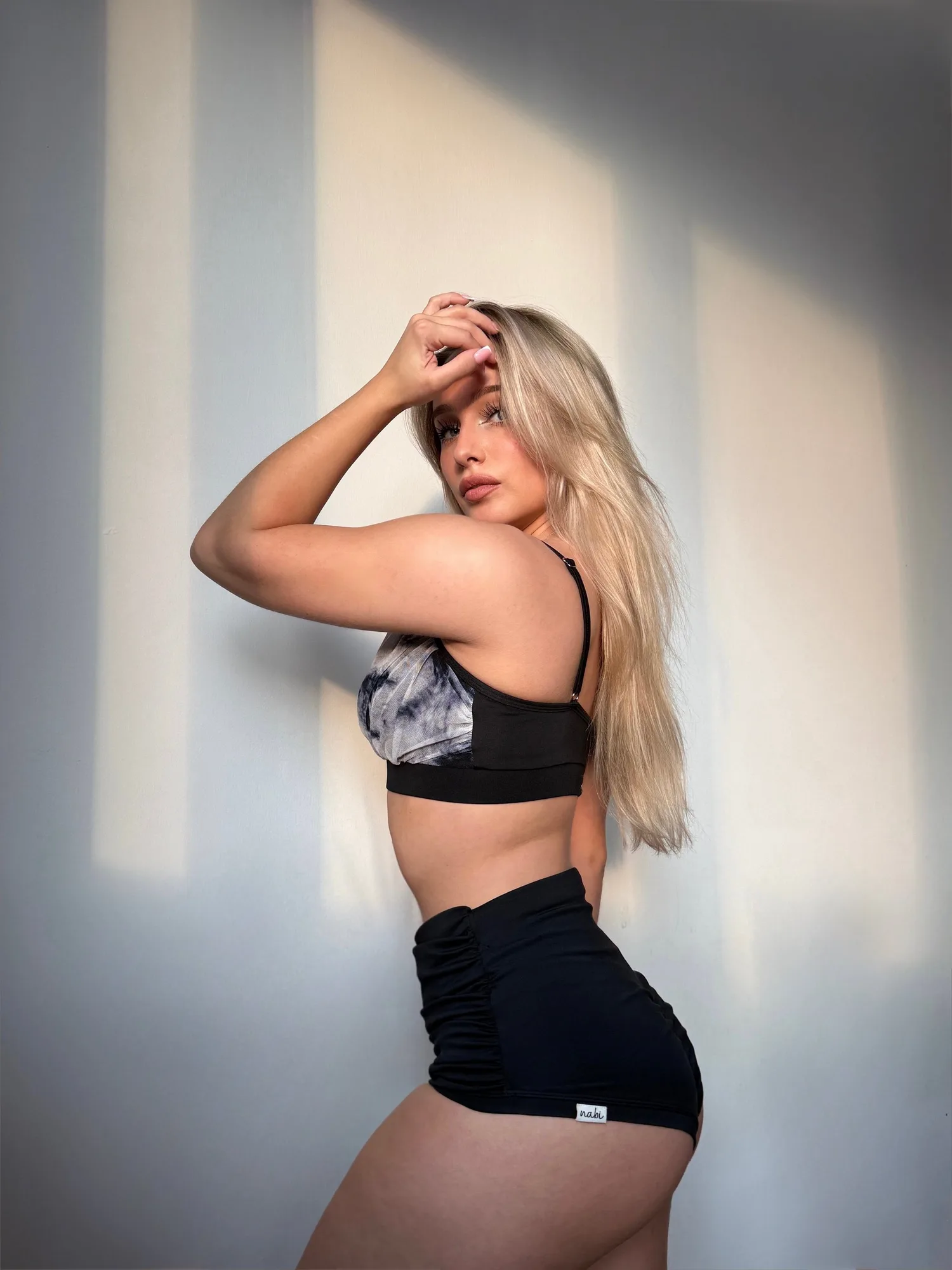
- NABI POLEWEAR - Top Cloud: Crossed cut for secure support and a soft mesh overlay; made from ultra-soft recycled stretch fabric. The crossed design helps the top stay put during dynamic moves, while the recycled fabric balances comfort and durability for long training sessions.
- LES POLETTES - Short Polette: Second-skin fit, comfortable cut, and total freedom of movement; suitable for pole dance and other training. A second-skin short reduces shifting during inversions and floor work, making it a reliable base for competition routines.
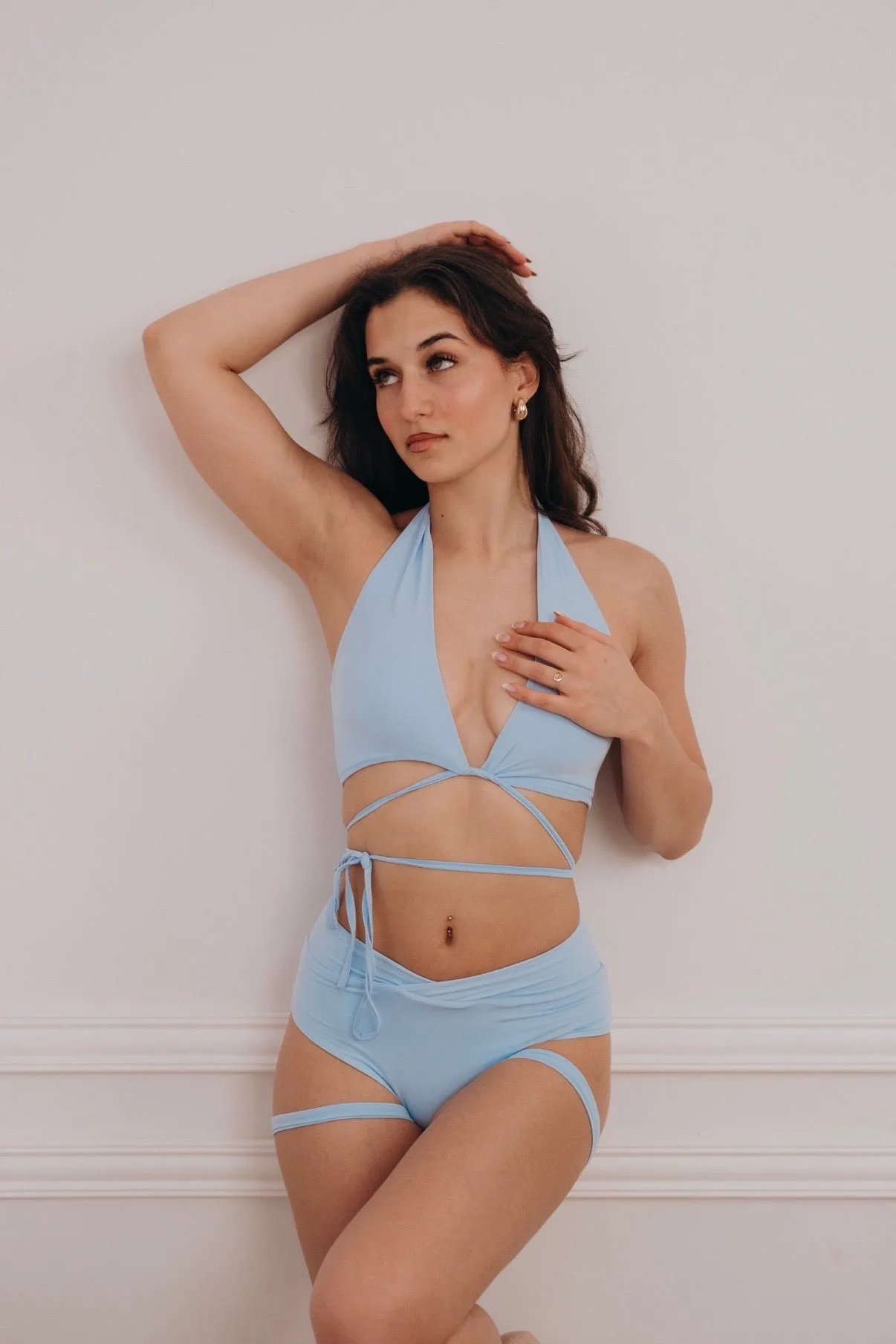
- MOVS - Top Dancy: Can be tied in different ways to adapt to your silhouette; made from high-quality polyamide with a second-skin feel. Adjustable tying lets you customize coverage and support, but you must test the knots thoroughly to ensure they hold during a routine.
Who this guide is for
Best for
- Competitors preparing for their first or next pole competition
- Dancers who want a reliable competition pole outfit that stays put
Not for
- Casual studio wear where coverage and grip demands are lower
- Performers looking for purely decorative costumes without functional testing
Choose competition pole dance wear by testing fit, coverage, and grip under real conditions. Start with secure basics, then add style. A reliable outfit you've rehearsed in will always outperform a new one you're trying for the first time.