Quick answer
Start with what you must carry, then choose the smallest structured purse that holds those items and complements your gown's neckline and fabric. If you need more than a phone, card, and lipstick, size up before you fall for a decorative finish.
Size follows your essentials, not the dress code label
Evening dress codes tell you how formal to be, not how much you need to carry. A small purse for a wedding guest often needs to hold a phone, card, and lipstick; a bride may also need tissues, a compact, and a touch-up item. Measure your phone and the longest item you plan to carry before you shop, then compare those dimensions with the purse's listed length and width. If a product page omits interior pocket details, treat that as an unknown rather than assuming organization.
Structure protects a formal look and your essentials
A structured purse for formal events keeps its shape against satin, crepe, or tulle, so it photographs cleanly and will not collapse when set down. Soft pouches can be more forgiving if you need to squeeze in extras, but they may show bulges. For black-tie or bridal portraits, favor a firm body and a clean closure; for a relaxed garden evening, a softer shape is a reasonable trade-off.
Coordinate the finish with your gown, not just your jewelry
Choosing a purse for a gown is easier when you match the purse's metal tone to your jewelry and the gown's embellishments. A silver or mixed-metal purse can bridge cool and warm tones, while a single-tone purse looks more deliberate with matching hardware. If your gown has heavy beading or a busy print, keep the purse quieter; if the gown is plain, a jeweled or textured purse can carry the detail.
Decision rules for choosing an evening or bridal purse
- Rule 1: Fit the essentials first: Lay out your phone, card, lipstick, and any must-have touch-up item. Choose a purse whose listed length and height exceed the longest and tallest items by at least half an inch. If the purse has no listed interior dimensions, size up or ask the seller before committing. If your essentials do not fit, no finish will fix it.
- Rule 2: Match structure to formality: For black-tie, bridal, or photographed events, choose a structured body that holds its shape. For a relaxed evening or a long dinner, a softer purse is acceptable if it still closes securely. Structure is a formality signal; decide it before color.
- Rule 3: Coordinate metal tone with jewelry: If you wear silver jewelry, choose a silver-tone purse; if gold, choose gold-tone. A mixed-metal purse is the flexible choice when you change jewelry between events or want one purse for several outfits. Mixed metal buys versatility; single tone buys polish.
- Rule 4: Let the gown set the detail level: Plain gown: a jeweled or textured purse can add interest. Beaded, printed, or heavily embellished gown: choose a simpler purse so the two do not compete. If you are unsure, match the purse's shine to the gown's shine rather than adding more. One focal point per outfit is enough.
- Rule 5: Test the carry before the event: Fill the purse with your planned items and carry it for ten minutes at home. Check that the closure stays shut, the strap or hand carry feels secure, and the purse does not snag on your gown's fabric. If it fails at home, it will fail at the event. A dry run is cheaper than a wardrobe malfunction.
Product facts to weigh
-
LEONIE PURSE: Measures 8 inches long, 3 inches high, and 2 inches wide, with a mixed metal silver base and antique gold finish. This compact rectangular shape holds evening essentials without dominating a gown, and the mixed-metal finish lets it work with either silver or gold jewelry.
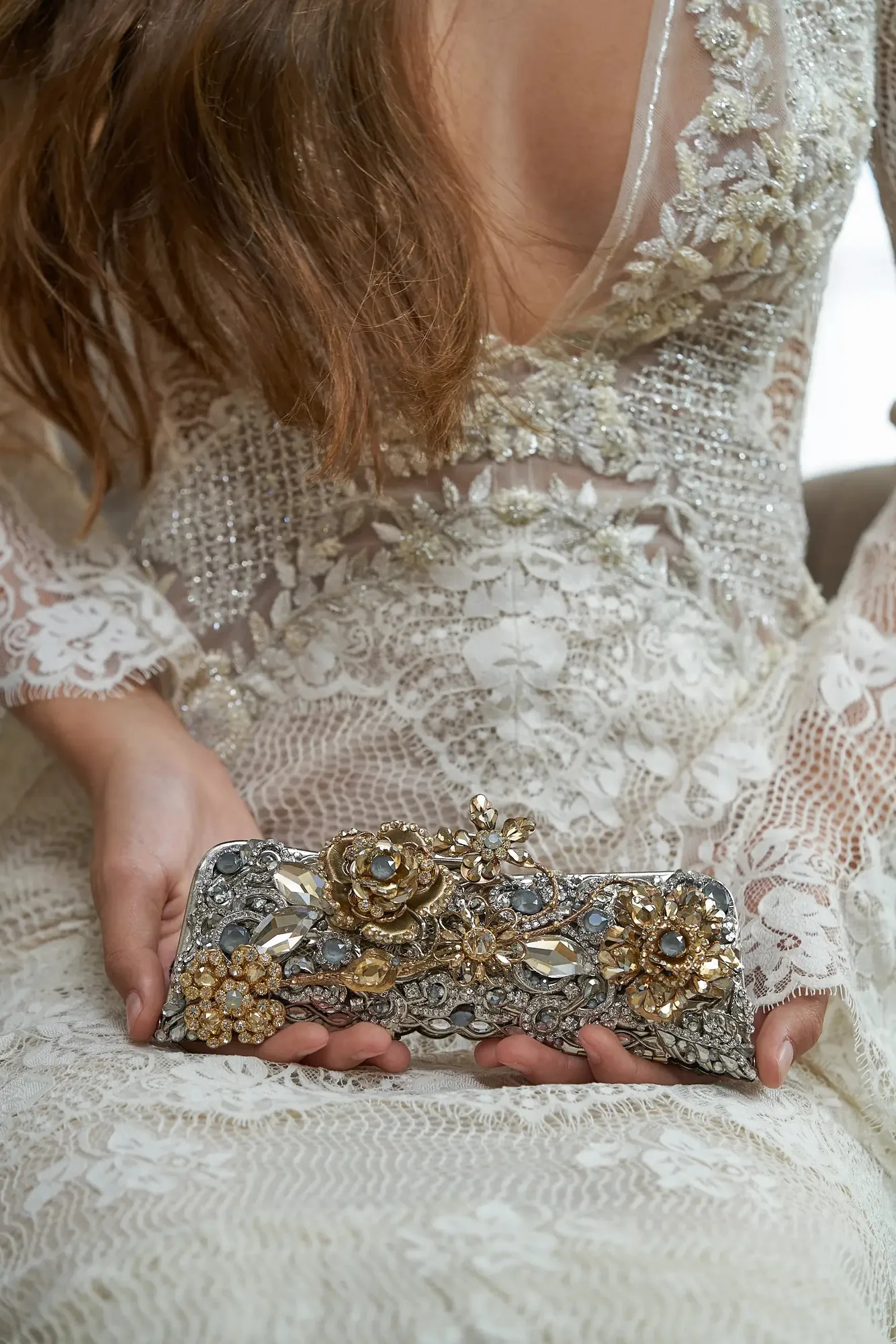
LEONIE PURSE
Who this approach suits
Best for
- Brides who want a structured, jeweled purse that photographs well with a formal gown
- Wedding guests who need a small purse for essentials and want a finish that works with silver or gold jewelry
Not for
- Anyone who must carry a full makeup bag, a large phone, or a tablet; choose a larger evening bag or a tote instead
- Shoppers who refuse to measure essentials and prefer to buy by look alone