Demolition vs Metal Cutting: Start with Tooth Count
The first decision when choosing a reciprocating blade for demolition versus metal cutting is tooth count. Blades with fewer teeth per inch (TPI) cut faster but leave a rougher edge, making them ideal for demolition where speed matters more than finish. Higher TPI blades produce a cleaner cut, which is preferable for metal cutting where precision and burr reduction are important.
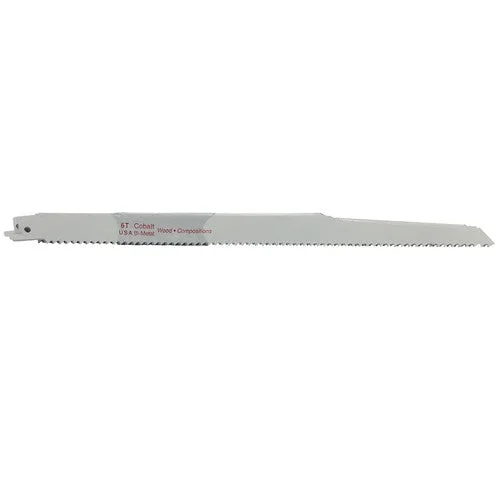
For demolition work, a 6 TPI blade like the 12" x .050" x 6T Bi-Metal Reciprocating Blade clears through wood, nail-embedded lumber, and even ferrous metals quickly. Its wider tooth spacing removes material aggressively, and the thicker .050" body adds rigidity for heavy prying and twisting. For metal cutting, a 14 TPI blade such as the 4" x .035" x 14T Bi-Metal Reciprocating Blade delivers finer teeth that engage the workpiece more gradually, reducing vibration and producing a cleaner edge on pipe, angle iron, or sheet metal.
Bi-Metal Recip Blade Options for Different Tasks
-
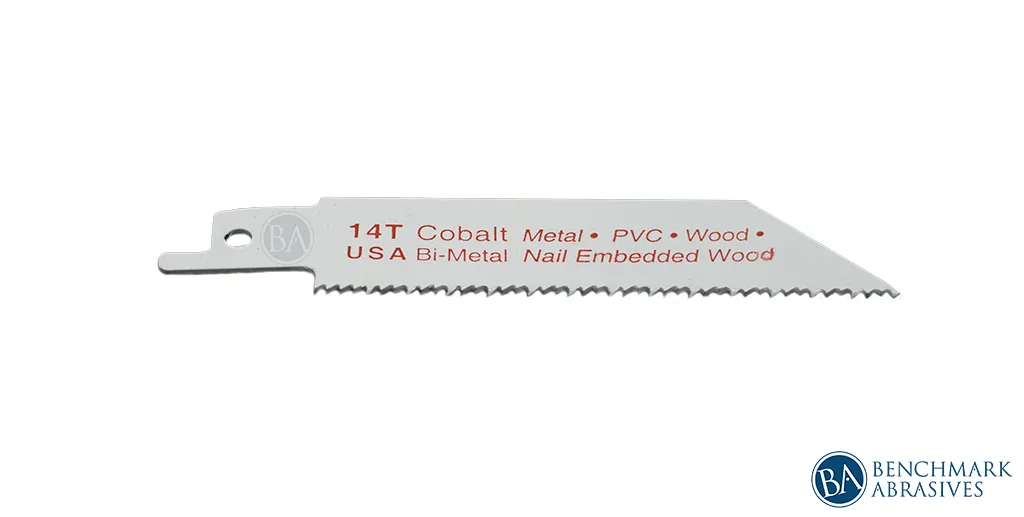
4" x .035" x 14T Bi-Metal Reciprocating Blade - 10 Pack: 4" x .035" x 14T Bi-Metal Reciprocating Blade – 10 Pack. Length: 4", thickness: 0.035", teeth per inch: 14. Made in USA. Suitable for wood, plastic, ferrous metals, PVC, and nail-impregnated wood. The 14 TPI and shorter 4" length make this blade ideal for precise metal cutting in tight spaces, such as cutting bolts, rebar, or thin-wall conduit. The bi-metal construction with 8% cobalt high-speed steel edge resists heat and wear.
4" x .035" x 14T Bi-Metal Reciprocating Blade - 10 Pack
-
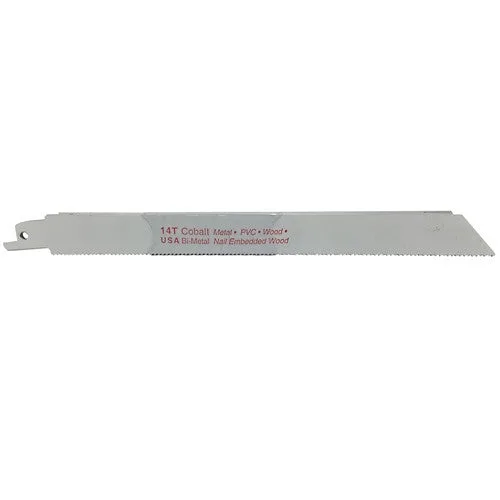
9" x .035" x 14T Bi-Metal Reciprocating Blade - 10 Pack: 9" x .035" x 14T Bi-Metal Reciprocating Blade – 10 Pack. Length: 9", thickness: 0.035", teeth per inch: 14. Made in USA. Suitable for wood, plastic, ferrous metals, non-ferrous metals, fiberglass, and nail-impregnated wood. The 9" length offers a middle ground for metal cutting through pipe or channel that is farther from the saw body, while still providing a clean finish. The 14 TPI keeps cuts smooth on ferrous and non-ferrous metals.
9" x .035" x 14T Bi-Metal Reciprocating Blade - 10 Pack
-
12" x .050" x 6T Bi-Metal Reciprocating Blade - 10 Pack: 12" x .050" x 6T Bi-Metal Reciprocating Blade – 10 Pack. Length: 12", thickness: 0.050", teeth per inch: 6. Made in USA. Suitable for wood, plastic, ferrous metals, non-ferrous metals, fiberglass, and nail-impregnated wood. The 6 TPI and 12" length make this blade a demolition specialist. Its thick .050" body resists bending when cutting through studs, joists, or nail-embedded lumber, and the scroll-style tip helps start cuts in tight corners.
Blade Length: Match to Material Thickness and Access
Blade length directly affects what you can cut and how easily. Shorter blades (4") are easier to control and less likely to bend, making them a good choice for metal cutting in confined areas or for flush cuts. Longer blades (9" or 12") provide more reach, which is helpful for demolition where you need to cut through thick lumber, insulation, or multi-layer assemblies.
For demolition, a 12" blade allows you to cut through a 2x4 stud from one side without repositioning the saw. For metal cutting, a 4" or 9" blade keeps the stroke short and reduces vibration, which improves cut quality on materials like steel pipe or aluminum channel.
Material Compatibility and Blade Construction
All three blades featured here are bi-metal, meaning they have a high-speed steel cutting edge (with 8% cobalt) bonded to a heat-treated steel body. This construction makes them shock-resistant and shatter-resistant, which is important for both demolition (where you may hit nails or knots) and metal cutting (where the blade sees high heat and intermittent loads).
The 4" 14T blade is confirmed for use on wood, plastic, ferrous metals, PVC, and nail-impregnated wood. The 9" and 12" blades also cover non-ferrous metals and fiberglass. If you regularly cut mixed materials like nail-embedded lumber or steel-reinforced plastic, any of these bi-metal blades will handle the job, but the tooth count and length should match your primary task.
Safety and Practical Tips
Always wear proper PPE, including safety glasses, hearing protection, respirator, and hand protection when using reciprocating blades. Keep all guards in place on your machine. For finer finishes on metal, choose a blade with more TPI (14 or higher). For faster demolition cuts where edge finish is less important, use a blade with fewer TPI (6).
The supplied evidence confirms that blades with fewer teeth cut faster but leave a less finished edge, while higher TPI blades produce a smoother cut. Use this principle to match your blade choice to the priority of your job: speed for demolition, finish for metal cutting.