Quick Answer
Measure your underbust snug and your bust at the fullest point, then subtract the underbust from the bust to get your cup size. Round the underbust to the nearest even number for your band. Try one band size and one cup size around that result, and lean toward a t-shirt or contour style if you want an easy, forgiving first fit.
A fitting room is convenient, not essential. With a soft tape measure, a mirror, and ten minutes, you can find your b.tempt'd bra size at home and order with far more confidence.
The trick is measuring in the right order and knowing which numbers matter most. This guide walks through the process step by step, flags the mistakes that throw measurements off, and explains how to translate your numbers into a style that actually fits.
Measure Your Underbust First
Wrap the tape around your ribcage, directly under your bust, keeping it level all the way around your back. Breathe out normally and pull the tape snug, not tight. This number sets your band size, and it is the measurement people most often rush.
Write the number down in inches. If it lands on an odd number, round to the nearest even number to get a standard band. A 31-inch underbust, for example, points you toward a 32 band rather than a 30 or 34.
- Checkpoint: the tape should sit level in back. If it rides up, your band number will read too small.
Measure Your Bust at the Fullest Point
Keep the tape level and measure around the fullest part of your bust, usually across the nipple line. Stand relaxed with your arms down. Do not pull the tape tight here, and do not let it gap away from your body either.
If your bust measurement differs noticeably from side to side, measure each side and use the larger number. That keeps the cup from digging in on one side once the bra is on.
- Common mistake: measuring over a padded or molded bra. Measure on bare skin or in a thin, unpadded bra for the cleanest number.
Turn the Difference Into a Cup Size
Subtract your underbust from your bust. Each inch of difference generally equals one cup size step, starting at A. A one-inch difference points to an A cup, two inches to a B, three to a C, and so on up the scale.
This is the part of the b.tempt'd bra size guide people skip, and it is why so many orders come back. Band and cup work together: if you go down a band, the cup usually needs to go up one letter to hold the same volume.
- Checkpoint: if your calculated cup feels too small in the fitting room, try one cup up before switching band sizes.
Test the Band Before the Cups
A bra should feel secure on the loosest hook, not tight. Most of the support comes from the band, so if it rides up in back or you can pull it more than an inch away from your ribs, the band is too big, regardless of how the cups look.
Fasten the bra on the loosest hook when it is new. That leaves tighter hooks available later as the elastic relaxes, which extends the life of the bra and keeps the fit consistent.
- Common mistake: judging fit by the straps. Tightening straps to fix a loose band just puts pressure on your shoulders.
Match the Style to Your Shape and Routine
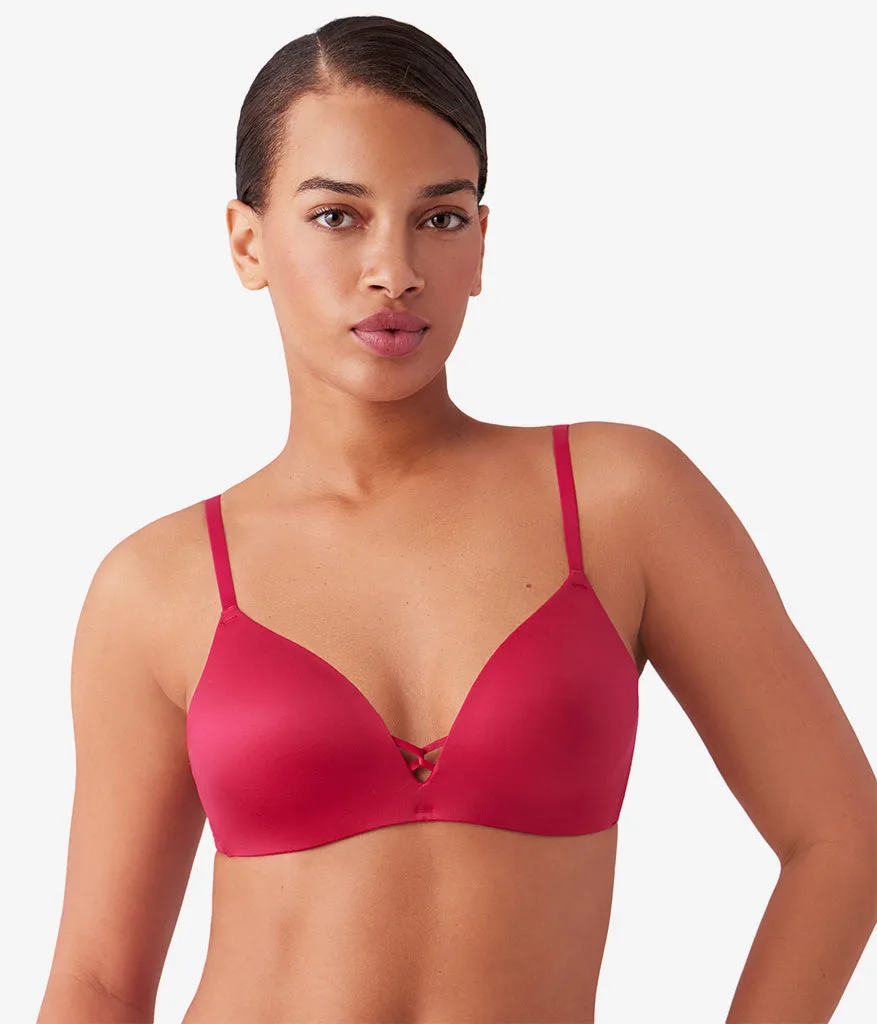
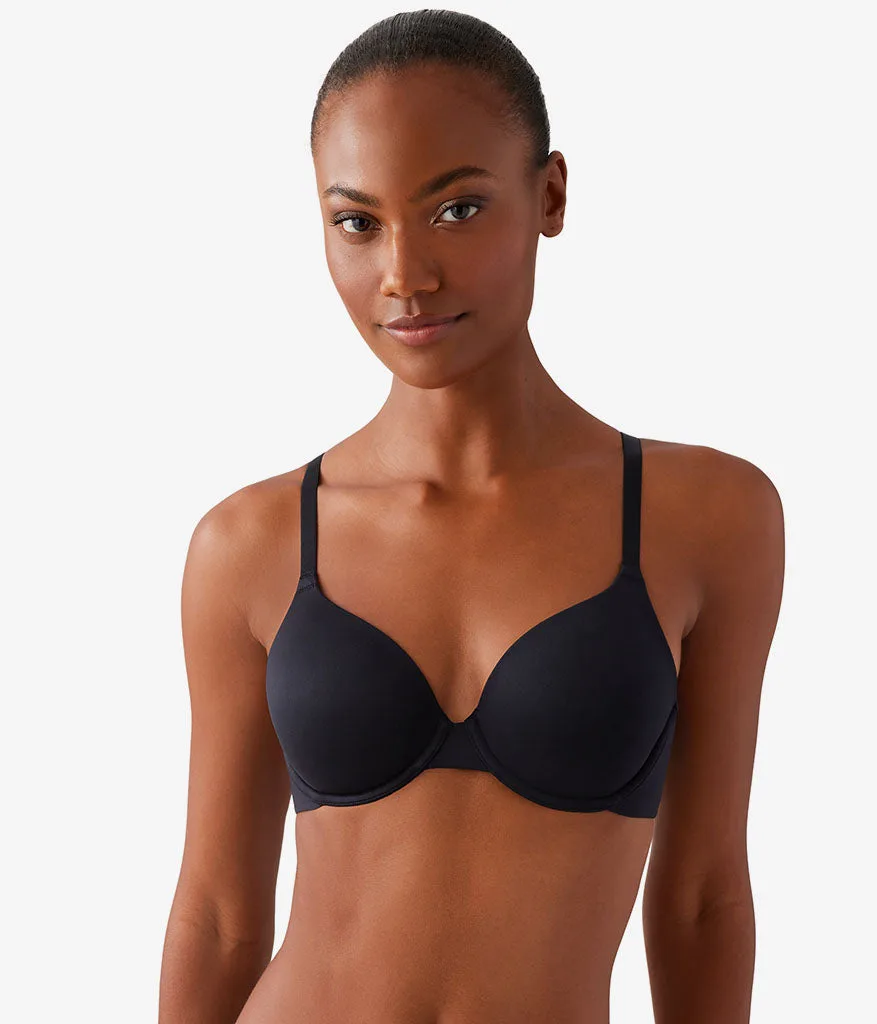
Once you have your numbers, style matters as much as size. A t-shirt bra with smooth, lightly lined cups disappears under knits and gives a rounded shape, which makes it a forgiving choice if you are between cup sizes. A contour bra with stretch foam cups does something similar while adding lace and detail.
If you are ordering your first b.tempt'd bra and you are unsure between two sizes, start with the style that has more stretch in the cup. Softer, more flexible cups adapt to small measurement differences better than rigid, structured ones.
- Practical tip: order two sizes in one style rather than two styles in one size. You learn more about your fit that way.
Check the Fit When It Arrives
Put the bra on, fasten the loosest hook, and adjust the straps so they lie flat without digging. The center front should sit against your chest, and the underwire, if there is one, should follow the base of your bust rather than sitting on breast tissue.
Wear it for a full day before deciding. Bands relax slightly with body heat, and a bra that feels borderline at 8 a.m. often feels right by afternoon. If it still digs, gaps, or rides up after a day, change one variable at a time.
- Checkpoint: if the cups gap at the top, try one cup size down before you change the band.
Your Six-Step Home Fitting Routine
- Measure the underbust: Wrap a soft tape snugly under your bust, level in back, and note the number in inches. Round odd numbers to the nearest even band size.
- Measure the bust: Measure around the fullest point with the tape level and your arms relaxed at your sides. Measure on bare skin or a thin, unpadded bra.
- Subtract to find the cup: Bust minus underbust gives the cup step: one inch for A, two for B, three for C, and so on. If you change band size, adjust the cup letter to match.
- Test the band on the loosest hook: The band should feel secure and stay level in back, with no more than an inch of give. A band that rides up is too big, no matter how the cups look.
- Pick a style that suits your routine: Choose a smooth t-shirt or contour style for everyday wear, and favor stretch cups if you are between sizes. Order two sizes in one style instead of two styles in one size.
- Wear it for a full day before deciding: Check the center front, the underwire line, and the straps after several hours of wear. Still uncomfortable after a day? Change one size variable at a time and recheck.
Styles Worth Knowing About
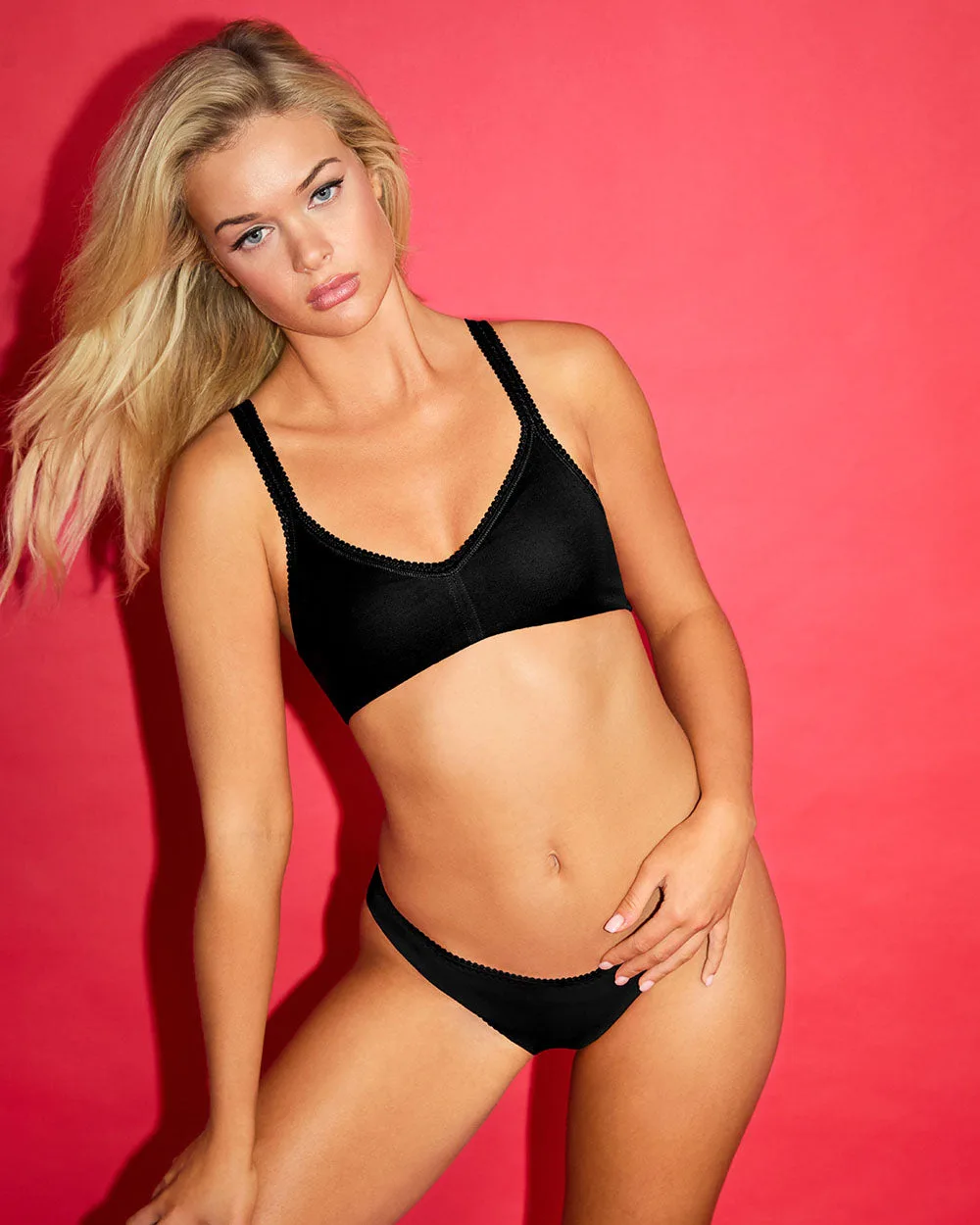
- Future Foundation T-Shirt Bra: Night: Our best-selling, lightweight t-shirt bra featuring ultra soft fabric with a subtle sheen hugs your curves and offers the most comfortable flexible fit. The flexible, lightly structured build makes this an easy first pick if you are between sizes or want a smooth line under everyday tops.
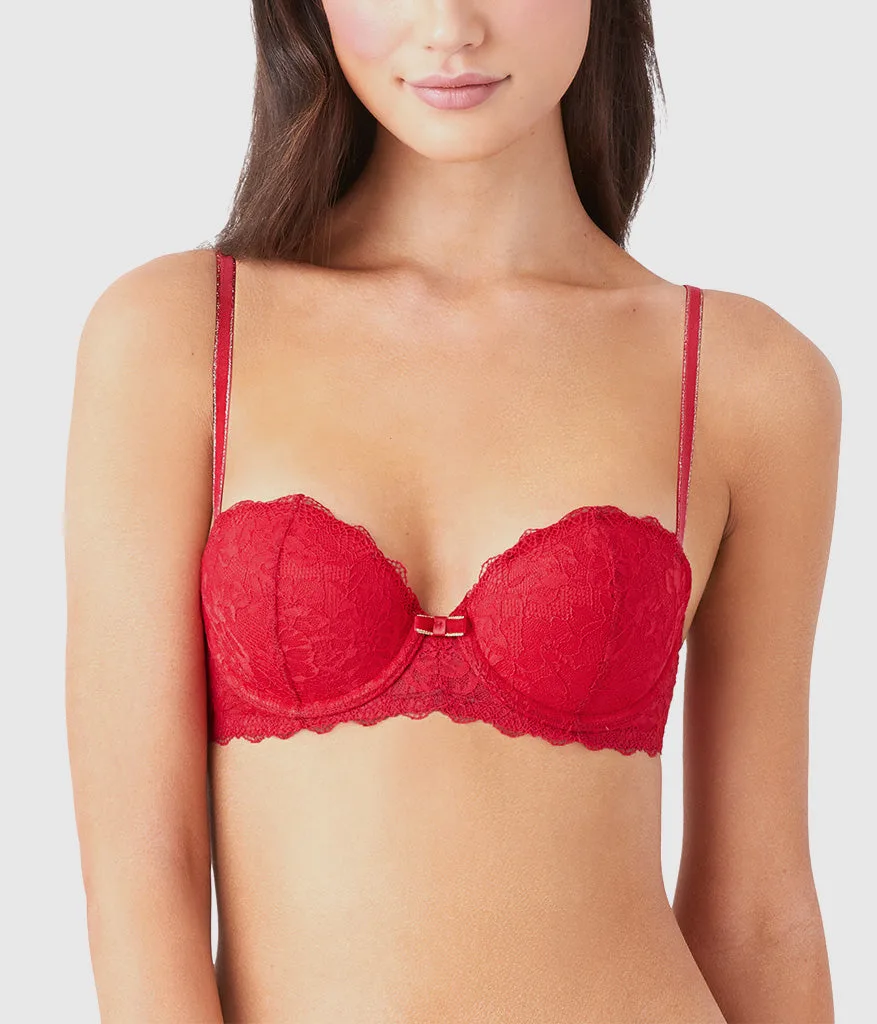
- Lace Encounter Contour Bra: This contour bra with stretch foam cups and smoothing mesh around the back and sides is completely covered in lace. Gold hardware, velvet straps and a bow accent are small details that make a big style impact. Stretch foam cups follow your shape rather than fighting it, so this style tolerates small measurement differences while still giving a polished finish.
Your measurements are a starting point, not a verdict. Measure carefully, choose one flexible style to test, and adjust a single size at a time until the band sits level and the cups lie smooth. That process will get you a better fit than a rushed fitting room ever would.