Quick answer
Choose blade span by room size: up to 75 sq ft use 29–36 inches, 76–144 sq ft use 36–42 inches, 145–225 sq ft use 44–50 inches, 226–400 sq ft use 52–56 inches, and above 400 sq ft use 56 inches or more. Then check ceiling height: under 8 feet, use a flush mount or low-profile fan; 8–9 feet, a standard mount works. For most bedrooms, 44–52 inches is the sweet spot.
Start with room square footage, not the old blade-span rule
Measure the room's length and width in feet, then multiply them to get square footage. That number, not the fan you saw in a photo, determines the blade span you need. A fan that is too small will feel weak and run at high speed constantly; one that is too large can feel drafty and waste energy in a small room.
Use this ceiling fan sizing chart as a starting point: up to 75 sq ft, 29–36 inches; 76–144 sq ft, 36–42 inches; 145–225 sq ft, 44–50 inches; 226–400 sq ft, 52–56 inches; over 400 sq ft, 56 inches or more, or use two fans. For open-plan spaces, treat each functional zone as its own room and size accordingly.
Adjust for ceiling height and mounting type
Blade span is only half the decision. The other half is how the fan hangs. In rooms with ceilings under 8 feet, a flush mount or low-profile fan keeps blades close to the ceiling and out of headroom. With 8–9 foot ceilings, a standard downrod mount is usually fine. Above 9 feet, you need a longer downrod so the fan sits 8–9 feet above the floor for effective air movement.
If you have a low ceiling, do not simply buy a smaller fan to gain clearance. A low-profile fan with the right blade span for the room will move air better than an undersized standard-mount fan. Measure from the floor to the ceiling before you shop, and note whether the ceiling is flat or sloped, since sloped ceilings may need a special mounting kit.
Match blade span to the room's job
A bedroom fan is often run at low speed overnight, so a 44–52 inch fan is usually enough for a typical 10x12 or 12x12 bedroom. In a living room that is 15x20 feet (300 sq ft), a 52–56 inch fan will circulate air more evenly without blasting one seating area. For a home office, a 44–50 inch fan can keep you comfortable without blowing papers around.
Outdoor or patio spaces need damp- or wet-rated fans, and the same sizing chart applies. If the space is screened or covered, a damp-rated fan is usually sufficient; fully exposed areas need a wet-rated model. Never assume an indoor fan is safe for outdoor use.
Check the details that affect real-world performance
Motor type matters as much as size. DC motors are generally quieter and more energy-efficient than AC motors, which is helpful in bedrooms and offices. Look for a reversible motor if you want to use the fan in winter to push warm air down. Dimmable LED lighting and smart controls are convenience features, not sizing factors, but they can simplify installation if you want one fixture to do two jobs.
Blade material also plays a role in style and durability. Lightweight wooden blades suit a warm, natural look, while ABS blades with a wood finish resist moisture and hold their shape in humid or covered outdoor areas. Neither is automatically better; pick based on where the fan will live.
Decision rules for ceiling fan size
- Room under 75 sq ft: Choose a 29–36 inch fan; a 20-inch caged flush mount can work in closets or laundry rooms. Do not oversize; small rooms feel drafty with large blades.
- Room 76–144 sq ft: Choose 36–42 inches. A 42-inch low-profile fan fits bedrooms and offices with standard or low ceilings. Check ceiling height before choosing mount type.
- Room 145–225 sq ft: Choose 44–50 inches. A 45-inch smart fan with a DC motor balances airflow and quiet operation. Prioritize a quiet motor if the room is a bedroom.
- Room 226–400 sq ft: Choose 52–56 inches. A 52-inch five-blade fan with light covers most living rooms and large bedrooms. Confirm the fan's light output is enough for the whole room.
- Ceiling under 8 feet: Use a flush mount or low-profile fan regardless of span; standard downrods will hang too low. Low-profile fans are not just smaller—they are designed for low ceilings.
- Ceiling 9 feet or higher: Use an extension downrod so blades sit 8–9 feet above the floor; do not simply buy a bigger fan. Proper height matters more than extra blade span in tall rooms.
Fans that match common room sizes
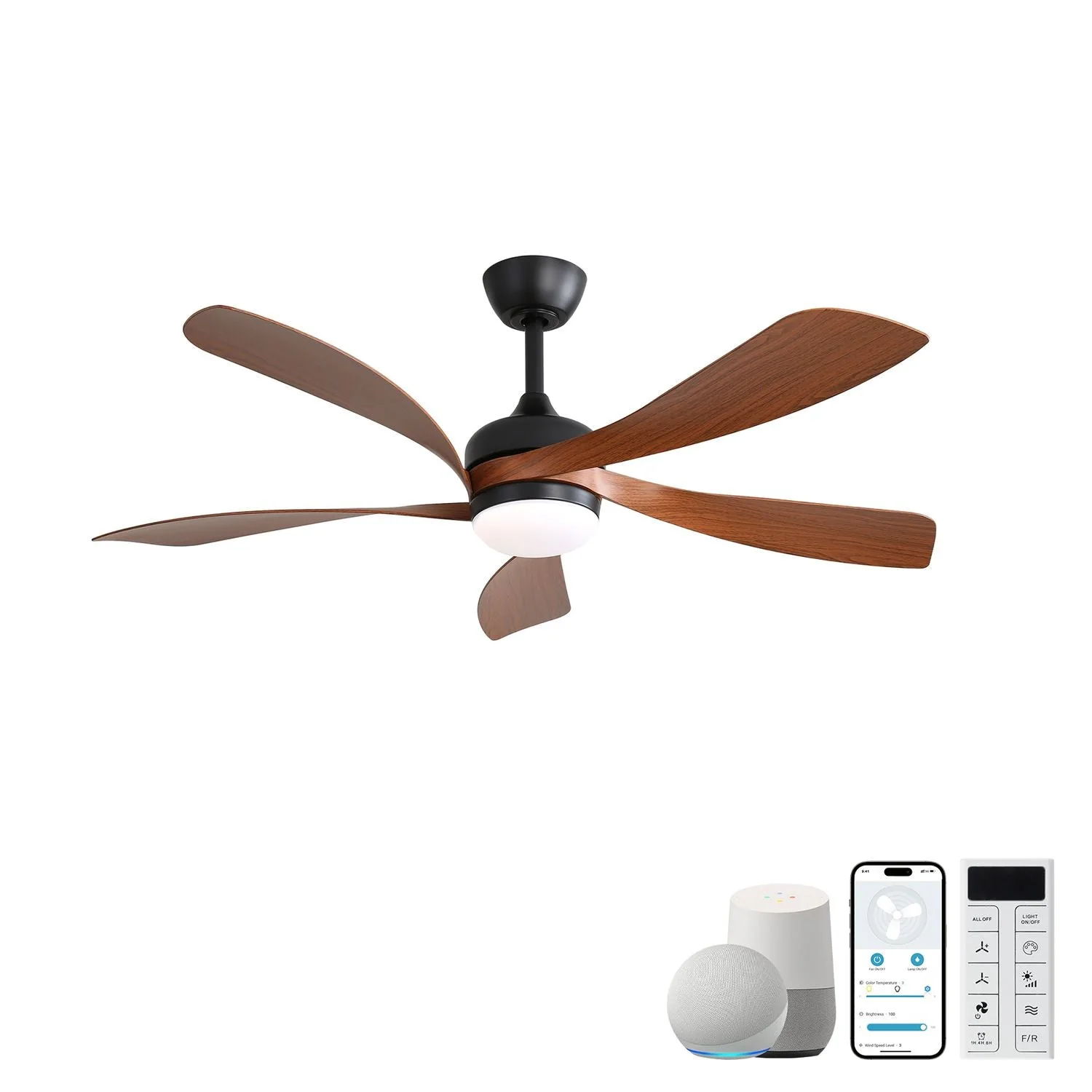
- 52'' Low Profile 5 Blades Smart Ceiling Fan: 52-inch five-blade smart ceiling fan with light, lightweight wooden blades, dimmable and adjustable color temperature, priced at USD 277.19. A 52-inch span fits large bedrooms and living rooms around 226–400 sq ft, and the dimmable light covers the room without a separate fixture.
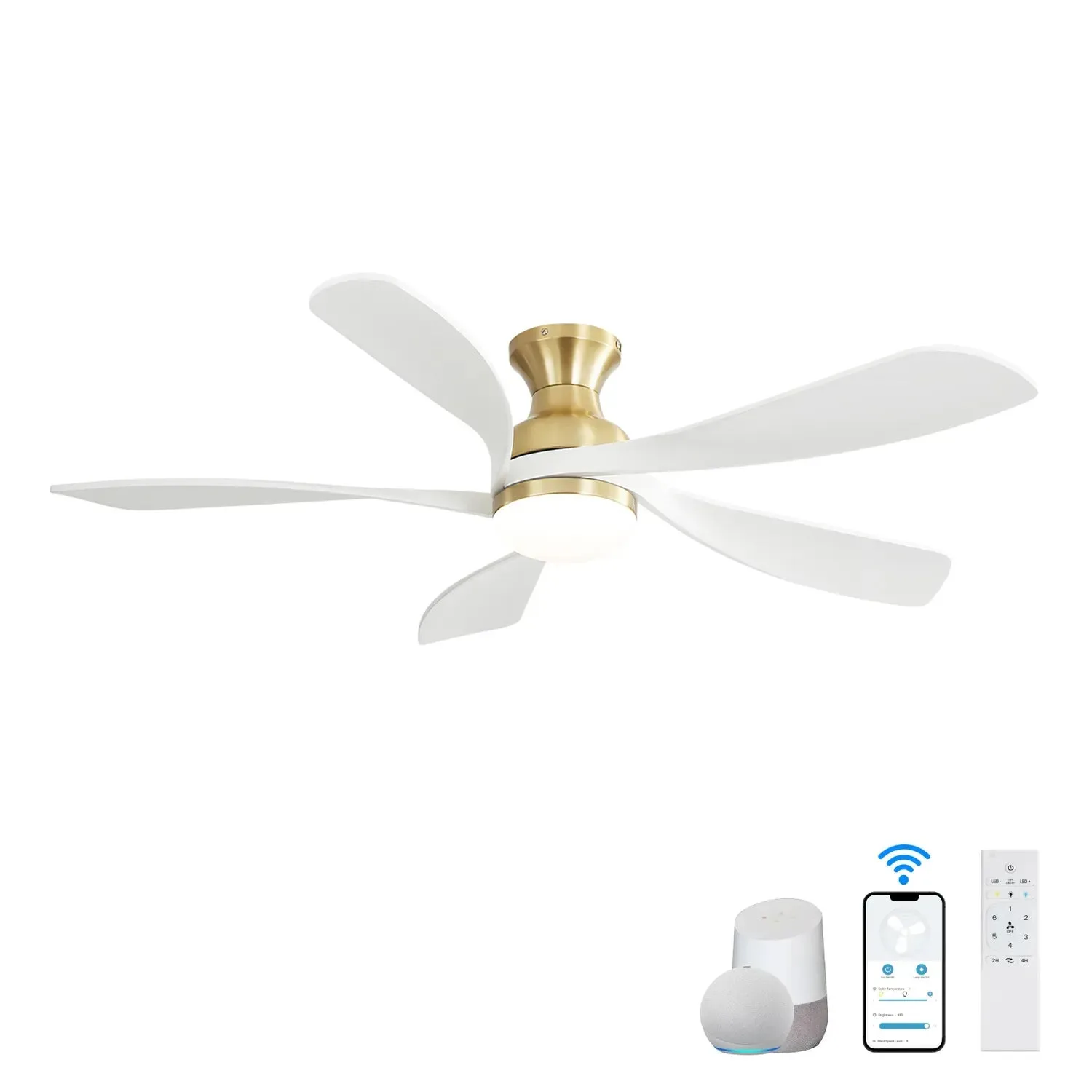
- Sofucor 45" Smart ABS Blades Ceiling Fan with Light: 45-inch smart ceiling fan with ABS wood-look blades, whisper-quiet DC motor, and dimmable LED lighting with memory, priced at USD 291.27. The 45-inch span suits medium rooms and the DC motor keeps noise low for bedrooms, while ABS blades handle humid or covered patio conditions better than natural wood.
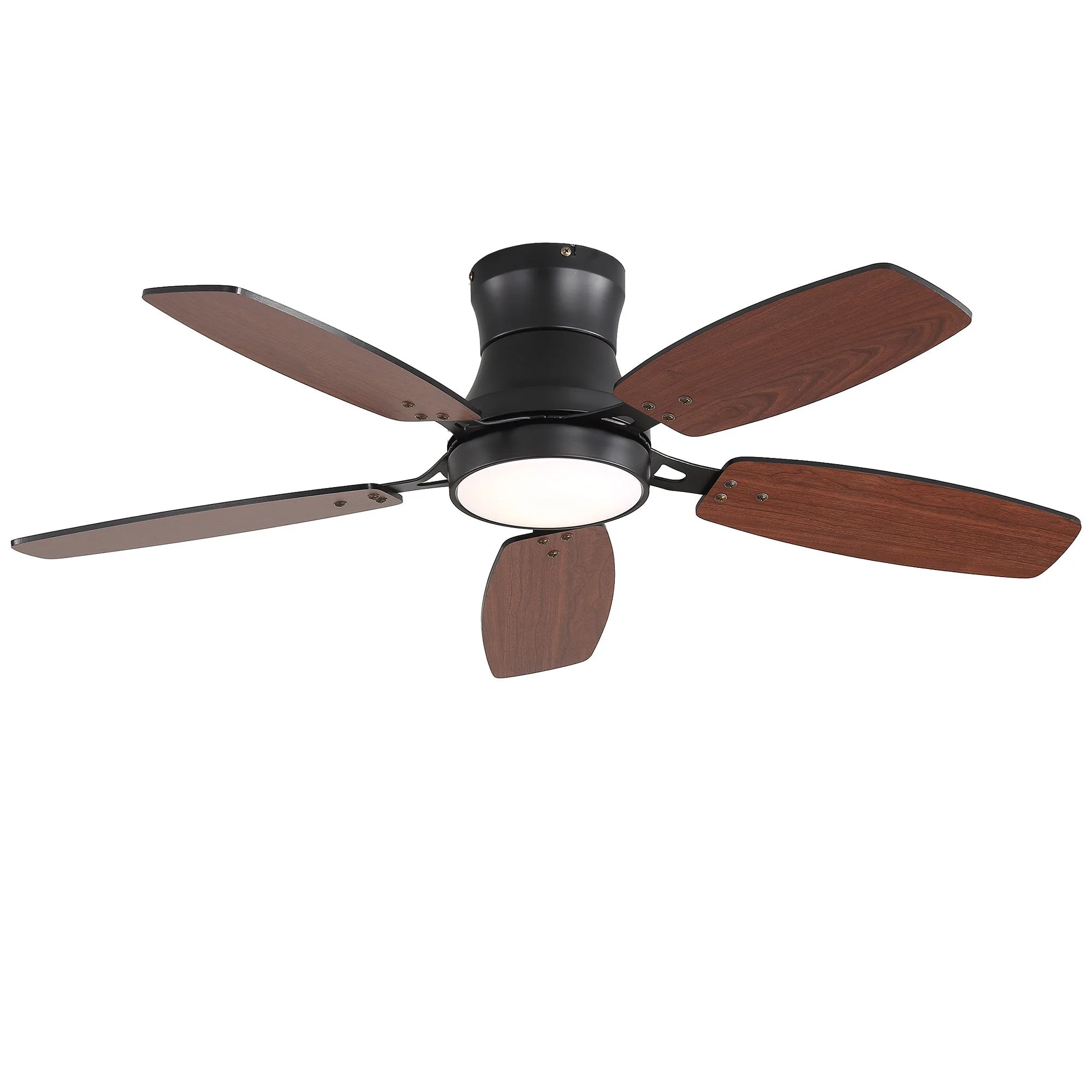
- Sofucor 42" 2-Color Blade Low Profile Ceiling Fan with Light: 42-inch low-profile ceiling fan with five 2-color MDF blades and a quiet DC motor, priced at USD 98.99. The compact 42-inch span and low-profile mount fit smaller rooms and low ceilings where a standard downrod fan would hang too close to head height.
- 20″ Caged Flush Mount Ceiling Fan: 20-inch caged flush mount ceiling fan with energy-saving DC motor, noise level below 35 dB, and lifespan exceeding 15 years, priced at USD 197.20. A 20-inch fan is best for very small spaces like walk-in closets, laundry rooms, or tight nooks where a full-size fan would overwhelm the room.
Who this sizing approach fits
Best for
- Homeowners replacing a fan in a specific room who want the right span the first time
- Anyone with low ceilings who needs a flush mount or low-profile fan
- Shoppers comparing 42-inch, 45-inch, and 52-inch fans for bedrooms and living rooms
Not for
- Buyers who need a wet-rated fan for a fully exposed outdoor location
- Commercial or industrial spaces requiring high-volume low-speed fans
- Anyone who has not measured the room and ceiling height yet