Quick answer
Choose classroom table legs that match your table size, provide the correct seat-to-table height, and use secure metal-to-metal hardware for wobble-free stability. For most preschool and elementary settings, solid birch legs with sturdy braces offer the best balance of durability and value.
Why leg material and hardware matter
The material of your table legs directly affects how long they last and how stable they feel. Solid birch is a common choice because it is strong yet lightweight, making it easy for teachers to rearrange furniture without sacrificing durability.
Hardware is just as important. Legs that attach with metal-to-metal connections resist loosening over time, which prevents wobbling and keeps tables safe for daily use. Sturdy leg braces also help avoid warping, especially in humid classrooms.
Matching legs to your table top
Not all legs fit all tabletops. Before buying, check the manufacturer's compatibility notes. Some legs are designed specifically for a particular table system, like EdQ Tables, which ensures the mounting holes and hardware align correctly.
If you are mixing and matching from different brands, measure the distance between mounting holes and compare it to the leg's base plate. A mismatched fit can lead to instability or even damage to the tabletop.
Height considerations for different age groups
The right table height depends on the age of the children using it. Toddlers and preschoolers need lower tables so their feet can rest flat on the floor, while older kids need taller surfaces to prevent hunching.
If you have a mixed-age classroom, consider adjustable table legs. They let you change the height as children grow or as different groups use the same table. However, adjustable mechanisms can add cost and complexity, so weigh that against your budget and needs.
Decision rules for choosing table legs
- Check compatibility first: Only buy legs that are explicitly compatible with your tabletop brand and model. If using a system like EdQ Tables, choose the matching legs to guarantee a proper fit. Write down your table's model number before shopping.
- Match height to the child's age: For toddlers and preschoolers, the table height should allow a child to sit with feet flat on the floor and elbows at a comfortable 90-degree angle. For older kids, raise the table accordingly. If your class spans multiple ages, choose adjustable legs. Measure the seated height of your smallest and largest students.
- Prioritize sturdy materials and hardware: Choose solid wood legs (like birch) with metal-to-metal connections and leg braces. These resist loosening and warping, ensuring long-term stability. Avoid plastic or flimsy metal that may bend or break. Check the leg braces are included or available as an add-on.
Product spotlight
-
EdQ Classroom Table Legs: EdQ Classroom Table Legs are designed to pair with EdQ Tables (sold separately) and are made from solid birch with metal-to-metal hardware and sturdy leg braces. This combination ensures a secure, wobble-free connection that holds up to daily classroom use, so you won't have to constantly retighten or replace legs.
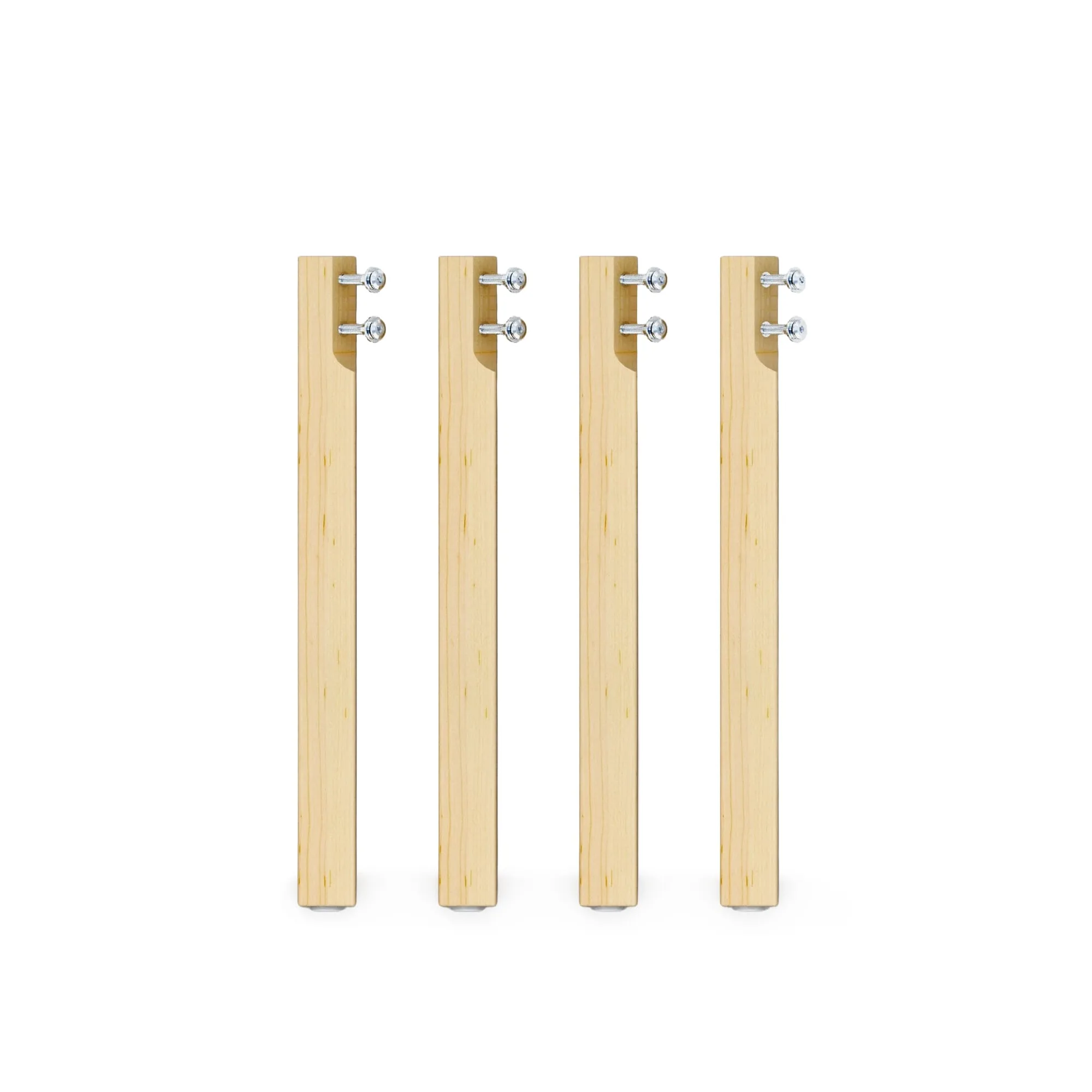
EdQ Classroom Table Legs
Who should choose what
Best for
- Classrooms using EdQ Tables that want guaranteed compatibility and durable solid birch legs
- Preschools and homeschools needing sturdy, lightweight legs that are easy to move and clean
Not for
- Mixed-age classrooms that require frequent height adjustments—consider adjustable legs instead
- Very large or heavy tabletops that may need extra support or a central leg