Quick answer
Choose a rotor that matches your frame and fork's maximum size, your hub's mount type (6-bolt or CenterLock), and the thickness your brake pads and caliper are designed for. When in doubt, replace like-for-like with the same diameter and mount style.
Rotor size: more power, more responsibility
Larger rotors increase braking leverage and heat capacity, but they also add weight and can change how the bike handles. Before sizing up, check your frame and fork manufacturer's maximum rotor size—exceeding it can void warranties or cause dangerous clearance issues.
If you ride steep descents or carry heavy loads, a larger front rotor often helps. For flat terrain and lighter riders, the stock size is usually sufficient and keeps weight down.
Thickness and wear limits
Rotors have a minimum thickness stamped on the spider or edge. Using a rotor below that limit risks warping, poor braking, and damage to pads or caliper pistons. Always measure with a caliper tool before reinstalling a used rotor.
New rotors must match the thickness your brake system expects. Mixing a thick rotor with narrow pad clearance can cause drag; a thin rotor may retract too far and feel spongy.
Mount type: 6-bolt vs CenterLock
6-bolt rotors attach with six T25 bolts to a hub with a six-bolt pattern. CenterLock rotors use a splined interface and a lockring, which is faster to install but requires the matching hub and tool. Adapters exist, but they add complexity and cost.
Match the rotor to your hub—not the other way around. If you're buying a new wheelset, decide on the mount type early to avoid adapters later.
Pad and caliper compatibility
Rotor thickness and material must work with your brake pads. Resin pads generally suit most rotors, while sintered metallic pads may wear rotors faster and require a rotor rated for them. Check your brake manufacturer's recommendations.
Caliper alignment and pad clearance also affect performance. A rotor that's too thick for the caliper can rub; too thin and the lever may feel long. When replacing rotors, it's wise to inspect pads and bleed the system if needed.
Decision rules for buying a disc brake rotor
- Match the mount: Count the bolts on your hub: six bolts mean a 6-bolt rotor; a splined hub with a lockring means CenterLock. Buy the matching rotor type to avoid adapters. If your hub has six bolt holes, choose a 6-bolt rotor.
- Stay within max size: Check your frame and fork manuals for the maximum rotor diameter. Never exceed it, even if you want more power. When increasing rotor size, confirm clearance and warranty first.
- Respect thickness: Use a rotor that meets your brake system's minimum thickness and pad clearance specifications. Replace any rotor worn below the stamped minimum. Measure thickness with a caliper before reuse.
- Match pad material: If you use sintered metallic pads, choose a rotor rated for them; resin pads are more forgiving. Follow your brake maker's guidance. Check pad compatibility before buying a rotor.
Product facts
-
Disc Brake Rotors: Tektro disc brake rotors are made from corrosion-resistant stainless steel and include six mounting bolts and a T25 torque tool. Stainless steel resists rust for year-round riding, and the included hardware means you have what you need for a 6-bolt install.
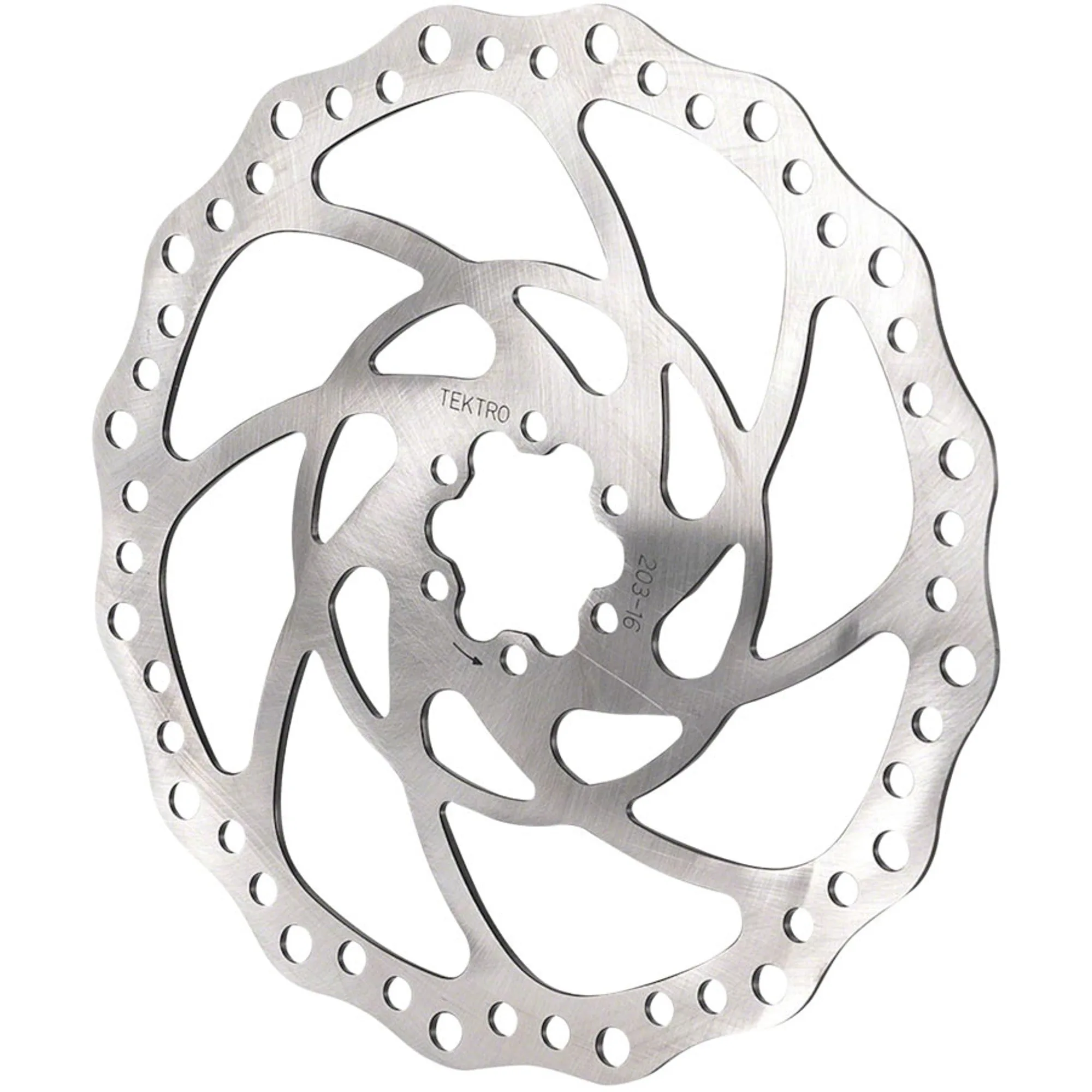
Disc Brake Rotors
Who should buy which rotor
Best for
- Riders replacing a worn rotor on a 6-bolt hub who want a durable stainless steel option
- Commuter or recreational riders seeking a straightforward, corrosion-resistant rotor with included hardware
Not for
- Bikes with CenterLock hubs, unless you use an adapter
- Riders needing a specific oversized rotor for downhill or heavy touring beyond their frame's limit