Quick Answer
For DMC 6-strand cotton floss, use a size 7 or 8 embroidery needle for most projects; switch to size 5 for heavier threads or size 10 for fine detail work.
Why Needle Size Matters for DMC Floss
DMC 6-strand cotton embroidery floss is a 100% cotton thread that can be separated into individual strands. The needle eye must be large enough to hold the number of strands you are using without fraying, yet small enough to avoid leaving visible holes in your fabric. A needle that is too small will shred the floss; one that is too large can distort the weave.
DMC embroidery needles (sizes 5–10) are made of nickel-plated steel and range from 1¼ to 1½ inches long. Each size corresponds to a different eye width and shaft thickness, so choosing the right one depends on both your thread count and fabric type.
Common Mistakes When Picking a Needle
A frequent error is using the same needle for all embroidery work. If you switch from a single strand to all six strands without changing needles, the floss will twist and knot at the eye. Another mistake is choosing a needle based only on the fabric thickness—ignoring the number of floss strands can cause uneven tension.
When working with DMC floss packs that include 16 assorted colors, you may be tempted to keep one needle for the whole project. Instead, match the needle to each strand count as you go, especially when blending colors or adding metallic threads.
How to Choose the Right Needle Size in 4 Steps
- 1. Decide how many floss strands you will use: Separate the DMC 6-strand floss into the number of strands your pattern calls for. Common counts: 1–2 strands for fine details, 3–4 for standard stitching, and 6 for bold outlines or filling. Using more than 6 strands usually requires a larger needle like size 5, but check your fabric weave first.
- 2. Match the needle size to the strand count: For 1–2 strands, choose a size 10 needle (fine eye). For 3–4 strands, use a size 7 or 8. For 6 strands, go with a size 5 or 6. The floss should pass through the eye without being forced or sliding loosely. If the floss bunches at the eye, the needle is too small. If it wobbles side to side, the needle is too large.
- 3. Test the needle on a fabric scrap: Thread your chosen needle with the floss and stitch through a scrap of your project fabric. The needle should glide through without resistance, and the hole should close up when you remove the needle. If the fabric puckers or the thread squeaks, try the next smaller size.
- 4. Adjust for special techniques: When using metallic or blended threads, go up one needle size to reduce friction. For very tight weaves (like linen or evenweave), use a size 10 to keep the holes small. A needle that works for one fabric may not work for another—always test on the actual fabric you plan to use.
Products That Help You Get It Right
-
DMC 1765/3 | Embroidery Needles Size 5-10: DMC 1765/3 Embroidery Needles Size 5-10 are 1¼– 1½ inches long and made of premium grade nickel plated steel. Having the full size range (5–10) in one pack lets you test the fit for different strand counts without buying separate needles.
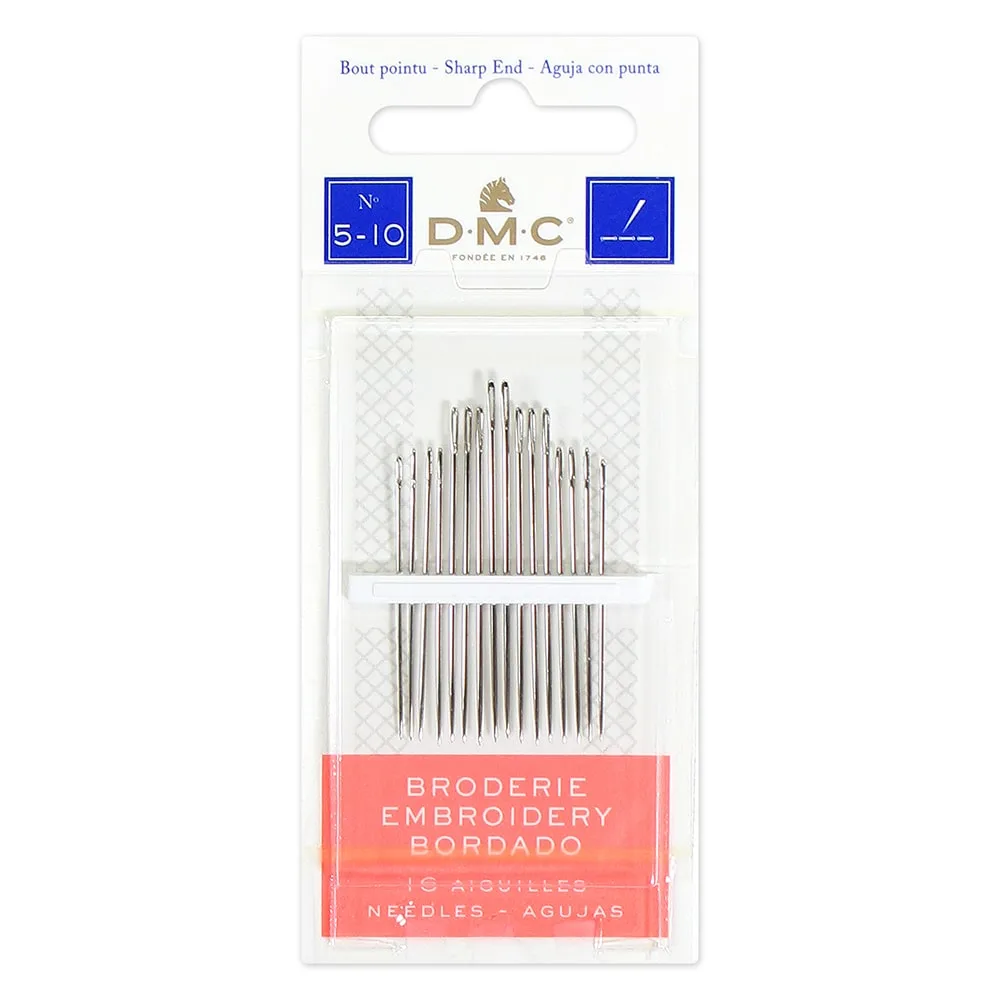
DMC 1765/3 | Embroidery Needles Size 5-10
-
DMC 6-Strand Cotton Embroidery Floss Pack | 16 Colors: DMC 6-Strand Cotton Embroidery Floss Pack includes 16 assorted skeins of 100% cotton thread, each 8–8.7 yards long. A multi-color pack gives you the flexibility to practice needle sizing across different thread counts before committing to a large project.
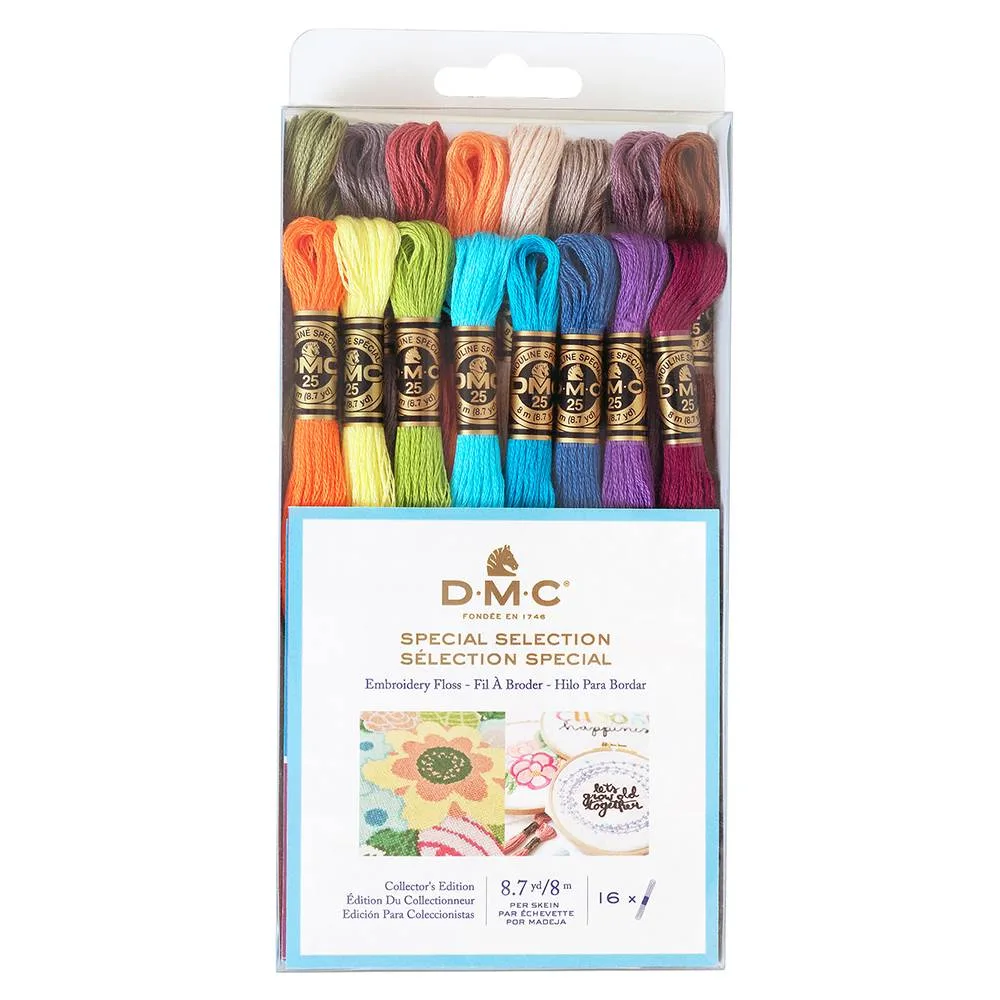
DMC 6-Strand Cotton Embroidery Floss Pack | 16 Colors