Quick answer
To choose the right insole, start by checking your current shoe's removable insole, then match the new insole to your arch type, foot width, and activity. OluKai's replacement insoles offer a simple upgrade for compatible models.
Why insole fit matters more than cushioning
Many people pick insoles based on padding alone, but the real test is how well the insole fits inside your shoe. An insole that is too long or wide will curl up at the edges, causing blisters and discomfort. A too-small insole leaves gaps that reduce support and shift under your foot. Always compare the new insole's length and shape to the original that came with your shoe.
Arch support vs. full footbed: what you need
Arch support insoles target the midfoot, while full footbeds support the heel, arch, and forefoot. If you have flat feet or high arches, a contoured footbed like OluKai's anatomical design can cradle your heel and fill the arch. If you only need mild correction, a flat insole with a small arch bump may be enough. The wrong type can cause pain in your knees or hips over time.
6 steps to choose the right insole
- 1. Remove the original insole: Take out the existing insole from your shoe. Lay it flat on a table. This is your template for size and shape. If the original insole is glued down, you may need to replace it with a compatible model.
- 2. Identify your arch type: Wet your foot and step on a paper bag. A full footprint means low arches; a narrow print with a gap means high arches. Choose an insole that matches your arch height. Low arches need firm arch support; high arches need deep heel cups and cushioning.
- 3. Measure shoe interior space: Check if your shoe has a removable insole and enough depth. Some athletic shoes have thin liners; others have thick ones. A thick insole may make the shoe too tight. If the shoe feels snug after inserting the new insole, try a thinner model or remove the original liner first.
- 4. Match insole to activity: Walking insoles need more heel cushioning; running insoles need shock absorption. For casual wear, a balanced footbed works best. Using a running insole for standing all day can feel too soft and cause fatigue.
- 5. Test for heel slip: Put the insole in the shoe and walk around. Your heel should not lift or slide inside the shoe. If it does, the insole is too thick or the wrong shape. Heel slip can cause blisters; trim the insole if it is too long, but never cut the heel cup area.
- 6. Break in gradually: Wear the new insoles for 2–3 hours on the first day, then increase by an hour each day. Your feet need time to adjust to the new support. If pain persists after a week, the insole may be the wrong type or size for your foot.
Insole options that work
-
Women’s Sneaker Insole - Tan: Our anatomical insoles are inspired by the sensation of bare feet slowly sinking into wet sand. They cup the heels and fill the arches while the toes splay out. This design provides immediate arch support and heel stability, making it a good choice for people with flat feet or those who need extra foot support during long walks.
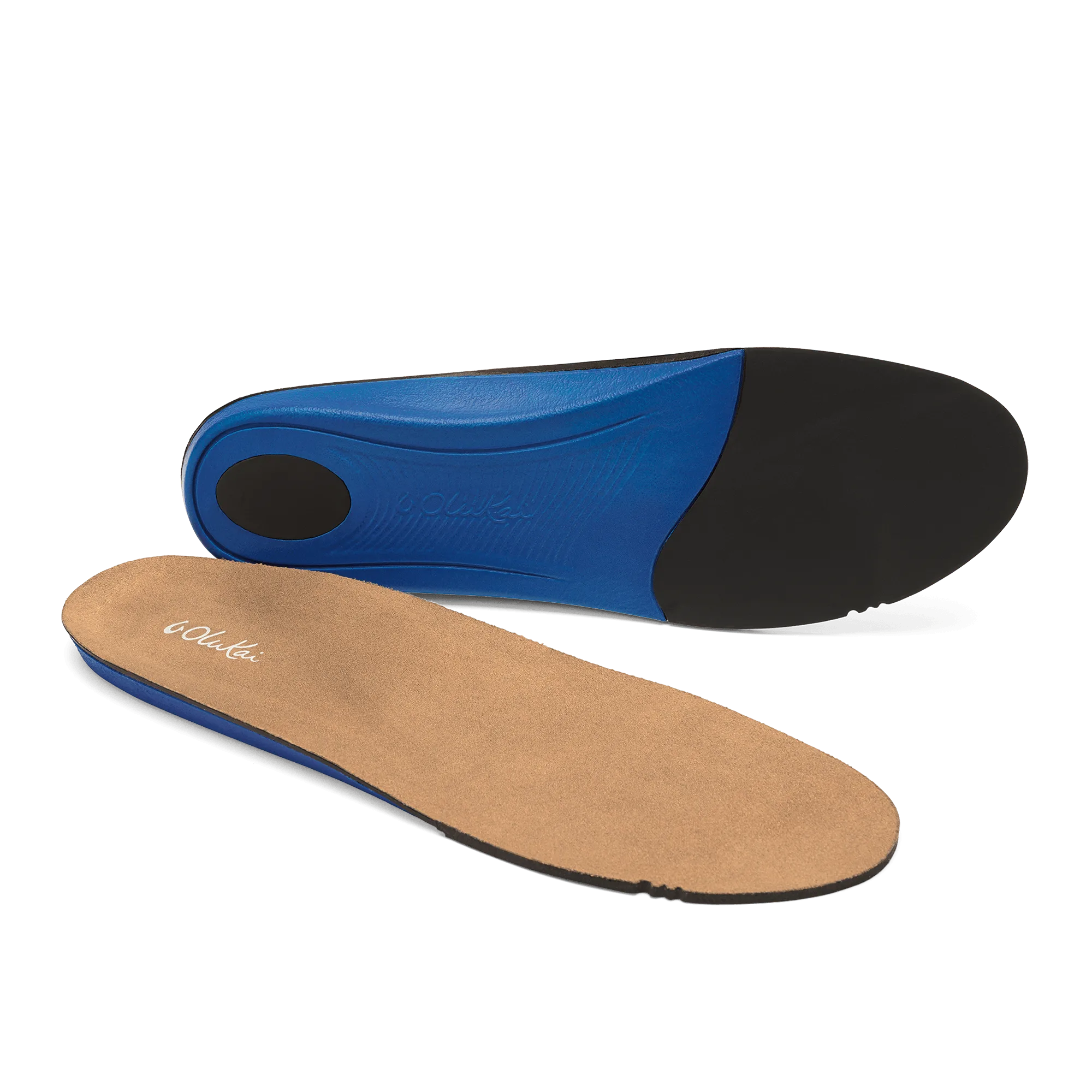
Women’s Sneaker Insole - Tan