Quick Answer
Choose a pickleball paddle that matches your skill level and play style: lighter paddles offer control and maneuverability, while heavier ones provide more power. Consider grip size for comfort and material for durability and feel.
Why Paddle Weight Matters Most
Paddle weight is the biggest factor in how a paddle feels and performs. Lighter paddles (around 7.0–7.5 oz) are easier to swing and offer more control, making them ideal for beginners and players who rely on finesse. Heavier paddles (8.0 oz and up) generate more power with less effort, but they can be tiring and slower to react at the net.
As a rule of thumb, if you prioritize quick hands and placement, choose a lighter paddle. If you want to add pace to your shots without swinging harder, a heavier paddle may suit you. Many players find a midweight option (7.6–8.0 oz) balances both worlds.
Grip Size and Comfort
Grip size affects both comfort and control. A grip that is too small can cause you to grip tighter, leading to wrist strain, while a grip that is too large reduces wrist action and makes it harder to generate spin. Measure from the middle crease of your palm to the tip of your ring finger to find your approximate grip size.
Most paddles come in standard grip sizes, but you can adjust with overgrips to increase thickness. Test the grip by holding the paddle: you should be able to slide a finger between your fingertips and palm. Comfort is key, especially for longer sessions.
Material and Durability
Paddle materials affect durability, feel, and price. Fiberglass faces are common and offer a good balance of power and control, while graphite faces are lighter and provide a softer feel. Polymer or aluminum cores absorb vibration and reduce noise, making them popular choices.
If you play outdoors often, look for a paddle with a durable face that can withstand rough court surfaces. A well-constructed paddle can last for years, so investing in a quality option is worthwhile.
Decision Rules for Choosing Your Paddle
- If you are a beginner: Choose a lightweight or midweight paddle (7.0–8.0 oz) with a larger sweet spot to help you develop control and consistency. Focus on control first; power can come later as you improve.
- If you play a power game: Opt for a heavier paddle (8.0 oz+) to generate more pace without extra effort, but be prepared for slower hand speed. Test a friend's heavier paddle before buying to see if it feels manageable.
- If you prioritize control and finesse: Select a lighter paddle (7.0–7.5 oz) with a graphite or fiberglass face for quick reactions and precise placement. Lighter paddles reduce fatigue during long matches.
- If you have a small or large hand: Measure your grip size and adjust with overgrips if needed. A comfortable grip prevents injury and improves control. Test the grip feel before purchasing, if possible.
Cuyana Pickleball Paddle
-
Pickleball Paddle: This paddle features a fiberglass face and signature alpaca artwork, custom-made for Cuyana by Recess. Fiberglass provides a durable and responsive surface, suitable for recreational players who want a stylish and long-lasting paddle.
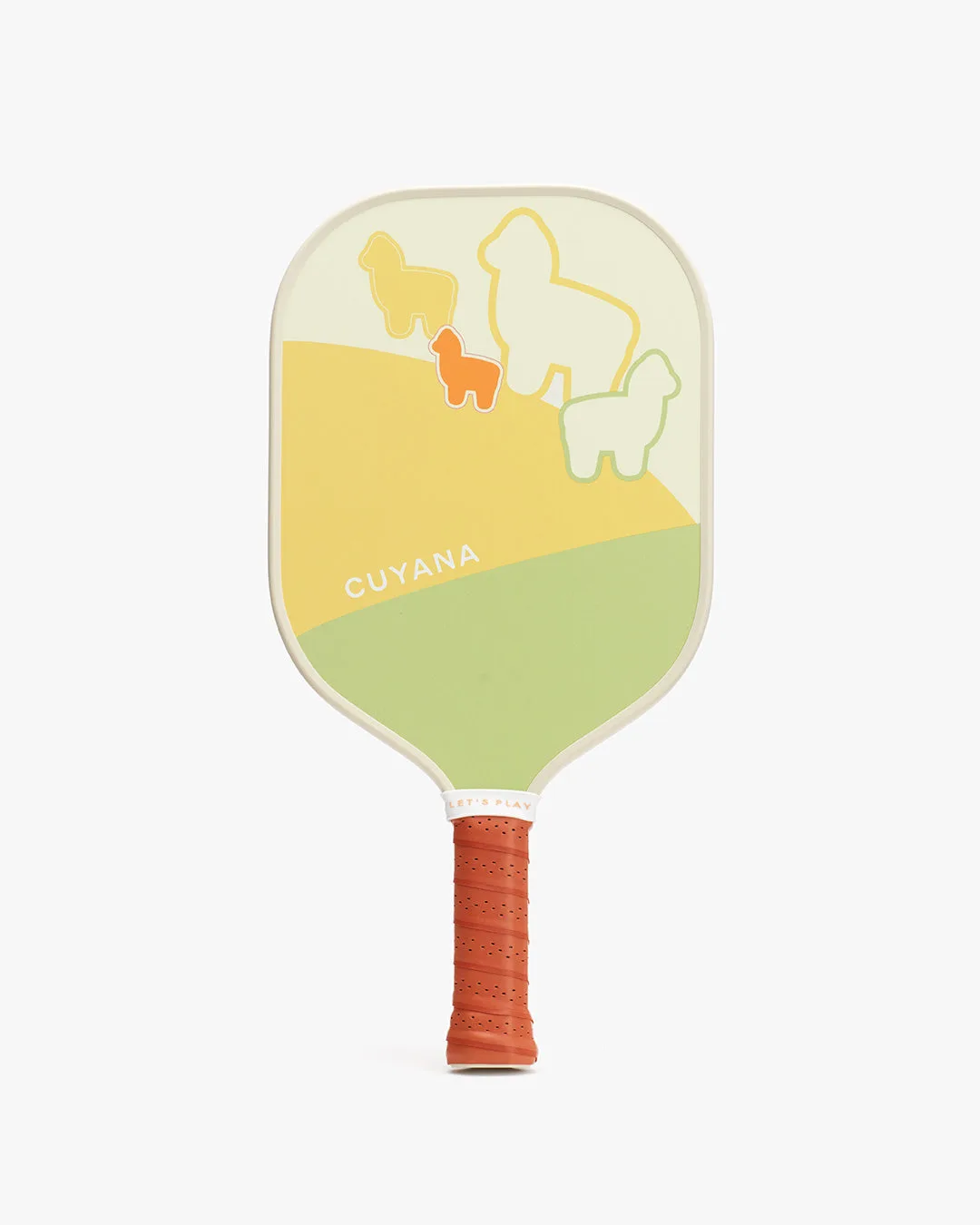
Pickleball Paddle
Is This Paddle Right for You?
Best for
- Recreational players who want a stylish, durable paddle for casual games
- Beginners looking for a balanced option to learn the game
Not for
- Competitive players who need a specific weight or advanced materials
- Players with a strong preference for graphite or carbon fiber surfaces